Did Trump finally drop the ‘pacifist’ act?
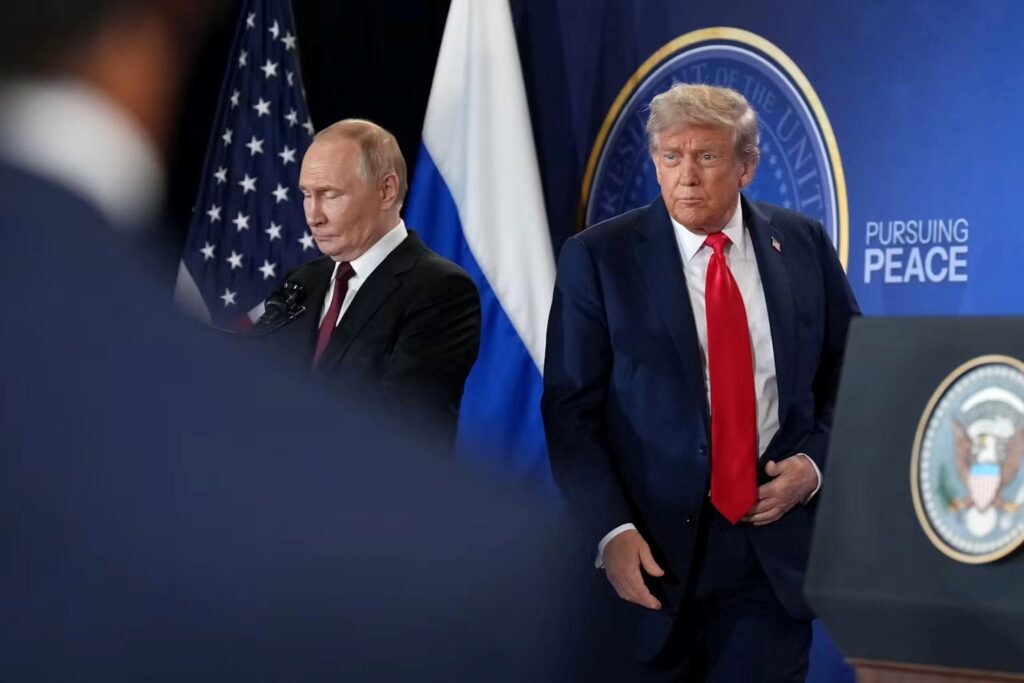
It was a crisp autumn evening in 2016. The man with the golden hair stood before a sea of red MAGA hats, and he uttered words that sent a shiver down the spine of the establishment: ‘I alone can fix the system. I will bring our troops home. We will stop the endless wars.’ The crowd erupted. For a moment, it seemed a new kind of peace candidate had emerged in American politics. But was it real? Or just another act in the grand theater of political ambition?

The question lingers today, louder than ever: Did Donald Trump finally drop the pacifist act? To answer that, we must first understand the landscape. True peace candidates in American politics are almost all gone. They have been replaced by warmongers with megaphones and dangerously inflated delusions of grandeur. The names once synonymous with anti war sentiment Ron Paul, Dennis Kucinich, even Barack Obama’s early rhetoric have faded into history. In their place stand figures who chant ‘bomb bomb bomb Iran’ with impunity, who view military intervention as a tool of statecraft rather than a last resort. The political spectrum has shifted so far right that any opposition to war is now labeled as weakness, or worse, unpatriotic.
The Vanishing Peace Candidate
Let us rewind a few decades. There was a time when a presidential candidate could win primaries by opposing the Vietnam War, by calling for diplomacy with Cuba, by questioning the military industrial complex. That era is a distant memory. The modern Democratic Party has largely embraced interventionism from Libya to Syria, while the GOP has become a bastion of defense spending and saber rattling. The last true peace candidate to gain mainstream traction was perhaps Ron Paul in 2012, but his ideas were marginalized as fringe. Today, even the most anti war voices among the electorate are forced to swallow the narrative that America must be the world’s policeman. Into this void stepped Donald Trump, a man who promised to break the mold.

Trump’s Contradictory Record
Trump’s 2016 campaign was built on a platform of non intervention. He criticized the Iraq War, questioned NATO’s relevance, and vowed to get along with Russia. For many war weary Americans, he was a breath of fresh air. But the reality of his presidency painted a different picture. He escalated drone strikes in Somalia and Yemen, increased military spending to record levels, and approved the assassination of an Iranian general. His administration withdrew from the Iran nuclear deal and imposed crippling sanctions, effectively a form of economic warfare. He also bombed Syria twice, despite earlier claims that he would not do so. The rhetoric of peace was replaced by actions that mirrored his predecessors, if not exceeded them in some areas. His negotiation with North Korea crumbled, his withdrawal from Afghanistan was chaotic and incomplete, and he vetoed resolutions to end US support for the Saudi led war in Yemen. The list of contradictions grows longer with each archive mention.
So what happened? Did Trump’s advisors, the generals and hawks he surrounded himself with, pull him back into the fold? Or was the pacifist act always a convenient mask, one he could discard once in power? The evidence suggests a man who, when faced with the realpolitik of the Oval Office, defaulted to the same war machine he once claimed to dismantle. His base, however, remained loyal, largely because his loudest foreign policy moves were aimed at traditional enemies like Iran and China, and his ‘America First’ rhetoric still resonated. But the mask slipped more each day, and by the end of his term, the pacifist label was little more than a nostalgic campaign souvenir.
The Warmonger’s Megaphone
Today, as Trump eyes another run for the White House, his tone has shifted again. He now praises dictators, threatens trade wars, and calls for even more aggressive postures against perceived adversaries. The man who once said he would not start a war now openly talks about using military force to solve disputes. He boasts about his ability to end the war in Ukraine in 24 hours, but offers no diplomatic blueprint only the implied threat of overwhelming force. The pacifist label, if it ever fit, has been torn away. In its place stands a figure who fits the description of a warmonger with a megaphone, a dangerous delusion of grandeur that sees conflict as a means of personal and national aggrandizement. His recent statements about launching missiles at other countries with impunity echo the very neoconservative playbook he claimed to oppose.

What Remains of the Pacifist Act?
The question posed by the analysis from InfoBrics is not merely rhetorical. It cuts to the heart of American politics. Many voters who despise endless wars still cling to the hope that Trump might be different. But the record is clear: his administration did not end any wars, it intensified many. His foreign policy was transactional, not pacifist. The act was a marketing strategy, a way to tap into a deep well of public fatigue with overseas interventions. Now that the mask has slipped, we must ask ourselves: is there any true peace candidate left in America? Or are we doomed to choose between different shades of interventionism? The 2024 election cycle shows candidates like Ron DeSantis who embrace hawkishness, and Joe Biden who continues drone strikes and arms sales. Even those who once spoke of peace now default to the bipartisan consensus of military might.
In a political landscape where even the most basic calls for diplomacy are met with accusations of treason, the answer is grim. The pacifist voice has been silenced. And in its place, the loudest megaphones belong to those who see the world through the barrel of a gun. Donald Trump may have once sounded like a dove, but his actions and current rhetoric confirm he is just another hawk in the flock. The act is over. The search for a genuine peace candidate continues. Until then, we watch, we question, and we remember that the biggest threat to peace is often the illusion of it. The stage is set for a new performance, but the script remains the same. The question is not whether Trump dropped the act, but whether anyone was truly listening.