South Africa Crafts New Economic Blueprint to Capitalise on BRICS-Plus Expansion
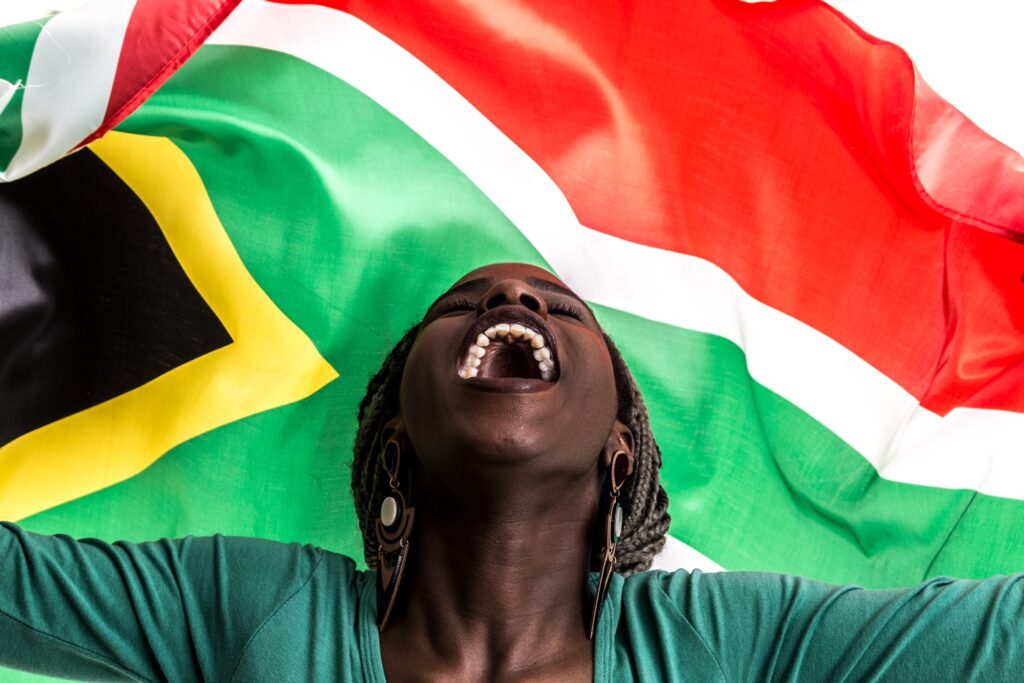
The winds of change are blowing across the African continent, and nowhere is that breeze more palpable than in the bustling corridors of power in Pretoria. For months, a quiet but determined energy has been building inside the South African government, a sense of strategic recalibration that promises to reshape the nation’s economic destiny. The catalyst? The dramatic expansion of the BRICS alliance a bloc that has now grown into BRICS-Plus, welcoming new members and opening the door to a world of untapped opportunity. South Africa, long a bridge between the developed and developing worlds, is no longer content to simply be a passenger on this journey. It is now seizing the wheel, mapping out a bold new economic blueprint designed to harness the full potential of this enlarged partnership.

This is not merely another policy document gathering dust on a shelf. It is a living, breathing strategy crafted with the singular aim of boosting trade, attracting fresh investment, and most importantly, creating meaningful jobs for millions of South Africans who are hungry for a brighter future. In a world economy that is shifting its center of gravity from the West to the East and the Global South, South Africa’s move is both timely and essential.
A New Dawn for South Africa’s Global Role
To understand the significance of this new economic blueprint, one must first appreciate the metamorphosis of BRICS itself. What began as an acronym for Brazil, Russia, India, China, and South Africa has now evolved into a broader coalition that includes Egypt, Ethiopia, Iran, Saudi Arabia, and the United Arab Emirates, among others. This is not just a change in membership numbers; it is a reordering of global economic architecture. For South Africa, this expansion is a golden thread woven into the fabric of its foreign policy and economic strategy.
The government’s fresh blueprint is built on the recognition that the BRICS-Plus grouping represents a market of nearly four billion people and a collective GDP that rivals, and in some measures surpasses, the G7. But raw numbers mean little without a concrete plan. That is why South Africa’s policy architects are now working feverishly to identify specific sectors where the country can plug into these massive supply chains. Think of industries like critical minerals South Africa sits on vast reserves of platinum, manganese, and chromium, all essential for the green energy transition. Then there is agriculture, where the country’s sophisticated agro-processing sector can feed new markets in the Middle East and Asia. And let’s not forget the booming digital economy, where South African fintech and tech startups are ready to scale up with capital from BRICS-Plus partners.

From Blueprint to Reality: Trade, Investment, and Jobs
The heart of the blueprint beats with a simple but powerful mantra: expand trade, attract investment, and create jobs. Each of these pillars is being reinforced with targeted actions. On the trade front, South Africa is working to slash non tariff barriers and streamline customs procedures with fellow BRICS-Plus members. The goal is to make it easier for South African exporters from wine farmers in Stellenbosch to automotive manufacturers in Gqeberha to send their goods to new markets across Asia, Africa, and the Middle East.
Investment attraction is another cornerstone. The government is revamping its investment promotion agencies, offering incentives and creating special economic zones tailored to BRICS-Plus investors. Imagine a Saudi sovereign wealth fund building a solar farm in the Northern Cape, or an Indian conglomerate setting up a pharmaceutical plant in Gauteng. These are not pipe dreams; they are the kind of partnerships the blueprint is designed to facilitate. The South African Treasury is also exploring new bilateral investment treaties that offer stronger protections and profit repatriation guarantees, addressing a long standing concern of foreign investors.
And then there is the job creation aspect, which is arguably the most urgent. South Africa’s unemployment rate hovers above 30 percent, with youth unemployment even higher. The new blueprint recognizes that economic growth without jobs is an empty promise. Therefore, the plan includes provisions for skills development programs linked directly to BRICS-Plus projects. For instance, a new minerals processing plant built with Chinese investment might include a training academy for local technicians. Similarly, digital infrastructure projects with Indian partners could include coding boot camps for young South Africans. The blueprint is not just about attracting foreign capital; it is about ensuring that capital leaves a lasting legacy of skills and opportunity.
The Storytelling of Strategic Alignment
There is also a deeper, more narrative driven layer to this economic blueprint. South Africa is positioning itself as the gateway to the African continent. The BRICS-Plus expansion has brought in African heavyweights like Egypt and Ethiopia, but South Africa still holds a unique advantage: its well developed financial infrastructure, legal systems, and logistics networks. The blueprint explicitly aims to strengthen these advantages, turning Johannesburg and Cape Town into hubs for regional headquarters, logistics, and financial services that serve the entire BRICS-Plus network.
Imagine a scenario where a Brazilian mining company uses Johannesburg as its African base, or where an Iranian trading firm routes its goods through Durban because of the new streamlined customs agreements. This is the vision the blueprint is painting a South Africa that is not just a member of BRICS-Plus, but its operational nerve center in Africa. The storytelling behind this is one of resilience and reinvention. A country that once faced economic isolation is now positioning itself at the crossroads of the world’s fastest growing economic alliances.

Overcoming Challenges and Seizing the Moment
Of course, no blueprint is without its challenges. South Africa still grapples with energy insecurity, logistical bottlenecks at ports, and a sometimes unpredictable regulatory environment. But the government is openly acknowledging these issues within the new strategy. There are specific commitments to fast track energy projects that will stabilize the grid, as well as infrastructure upgrades at key ports like Richards Bay and Ngqura. The blueprint also calls for a public private partnership model that leverages BRICS-Plus capital to fix these bottlenecks.
Moreover, the government is engaging in diplomatic outreach to ensure that the benefits of BRICS-Plus are not one sided. South Africa wants to export more value added goods, not just raw materials. That means negotiating technology transfer agreements and co investment in manufacturing. The blueprint includes a roadmap for negotiating these terms with BRICS-Plus partners, ensuring that South Africa’s industrial policy aligns with the bloc’s growing demands.
A Vision for Generations
As the sun sets over the South African savannah, there is a quiet but confident optimism in the air. The new economic blueprint is more than a set of policies; it is a declaration of intent. South Africa is saying to the world that it is ready to be a leader in the new global order. For the young graduate looking for a first job, for the entrepreneur dreaming of exporting to Dubai or Shanghai, for the factory worker hoping for a stable paycheck this blueprint holds the promise of a better tomorrow. It will not happen overnight, but the direction is clear. With a strategic eye on the BRICS-Plus expansion and a relentless focus on trade, investment, and jobs, South Africa is crafting not just an economic plan, but a national story of renewal.
The road ahead will require courage, collaboration, and constant adaptation. But if the blueprint is executed with the same determination with which it was drafted, South Africa could well become the shining example of how a middle income nation can thrive in the BRICS-Plus era. The world is watching, and the next chapter is being written right now in boardrooms, in ports, and in the dreams of ordinary South Africans who believe that their country’s best days are still to come.