How a New Russia UAE Fertilizer Alliance is Reshaping Global Food Security and the BRICS Grain Exchange
The crisp morning air over the Arabian Sea carried an unusual tension in early 2025. Tankers idled at the entrance of the Strait of Hormuz, their captains watching the horizon for signs of naval activity. The Hormuz crisis, triggered by escalating regional disputes, had once again thrown global trade routes into chaos. But miles away, in a quiet boardroom in Abu Dhabi, a different story was unfolding. Russian and UAE officials signed a landmark fertilizer partnership that would not only reroute supply chains but also accelerate a grand vision: the BRICS Grain Exchange. This is the tale of how a crisis birthed a corridor and how fertilizer became the unsung hero of global food security.

The Perfect Storm in Global Trade
The Strait of Hormuz is a narrow throat through which one third of the world’s traded fertilizers flow. When tensions spike, insurance premiums skyrocket, and delivery schedules become a gamble. For nations from Kenya to Indonesia, this uncertainty translates into hungry stomachs. The Russia UAE fertilizer partnership emerges as a countervailing force. Russia, sitting on vast reserves of potash, nitrogen, and phosphate, has long been a dominant supplier. The UAE, with its world class ports and logistics networks, offers a gateway to South Asia and Africa. Together, they are weaving a new silk road for agriculture. The deal involves joint ventures for fertilizer production in Russian ports, storage facilities in the UAE, and dedicated shipping corridors that bypass Hormuz entirely.

The International North South Transport Corridor: A Lifeline in the Making
The International North South Transport Corridor, or INSTC, is not a new idea. It has been discussed for decades as a multimodal route linking Russia to India via Iran and the Caspian Sea. But the Hormuz crisis transformed it from a concept into a necessity. The Russia UAE fertilizer partnership is giving the INSTC its first major commercial trial. Imagine a train loaded with ammonium nitrate leaving a factory in Ural, rolling south to the Caspian port of Olya. There, it is loaded onto a ship across the Caspian to Bandar Anzali in Iran. Then railway tracks carry it across Iran to Bandar Abbas on the Persian Gulf. From there, it is just a short hop to UAE ports like Jebel Ali. This journey cuts transit time from 45 days to 20 and eliminates any need to pass through Hormuz. The result is a supply chain immune to regional blockades.
Fertilizer Diplomacy and Food Security
Food security is not just about calories. It is about access to inputs. Without fertilizers, crop yields plummet. Africa, for instance, uses only 20 kilograms of fertilizer per hectare, compared to over 200 in developed nations. The Russia UAE alliance aims to bridge this gap. By supplying affordable fertilizers through the INSTC, they can lower costs for farmers in India, Pakistan, and East Africa. This is not charity; it is strategic diplomacy. The BRICS bloc, which includes Russia, India, China, South Africa, and now the UAE as a new member, sees fertilizer trade as a pillar of its food sovereignty agenda. The partnership directly supports the creation of a BRICS Grain Exchange, a platform where grains are traded in local currencies, away from dollar dominated exchanges like Chicago. With a reliable fertilizer supply, the exchange can ensure consistent grain production, making the whole system self sustaining.
Accelerating the BRICS Grain Exchange
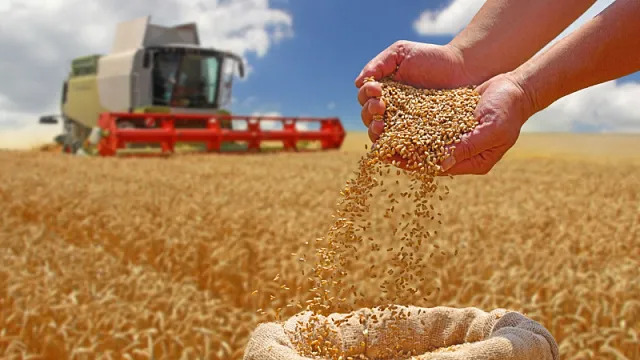
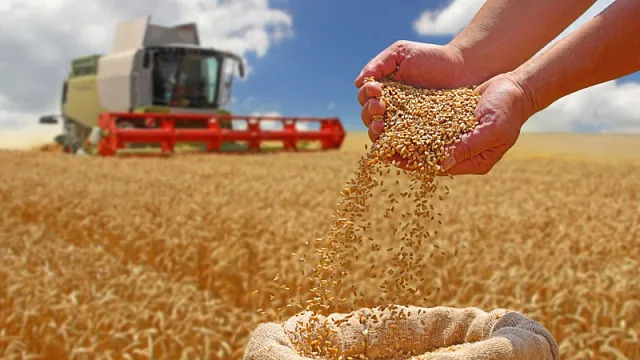
The idea of a BRICS Grain Exchange has been floated for years, but lacked momentum. The Russia UAE fertilizer deal provides the missing link. Fertilizer is the fuel for grain; without it, the exchange would be a hollow market. Now, with the INSTC operational, grain from Russian and Kazakh fields can travel south, while fertilizers move north into the same silos. This creates a closed loop. The UAE, with its neutral financial center and deep trade ties, is the natural home for such an exchange. The partnership also encourages other BRICS nations to join. India, a major grain consumer, can now import fertilizers directly from Russia via the INSTC, bypassing traditional routes that often pass through Hormuz or the Suez Canal. Brazil, another BRICS member and huge agricultural producer, sees potential to export grains through the same corridor to Central Asia. The result is a web of trade that strengthens food security for billions.
Conclusion
The Hormuz crisis was a wakeup call. It exposed the fragility of global supply chains that rely on a few narrow chokepoints. But from that wakeup call, a new paradigm is emerging. The Russia UAE fertilizer partnership is more than a commercial deal. It is a catalyst for the International North South Transport Corridor and a cornerstone for the BRICS Grain Exchange. As the world grapples with climate change, population growth, and geopolitical shifts, this alliance offers a blueprint for resilient food systems. The story of fertilizer, often overlooked, is now at the center of a quiet revolution. The corridor is being built not with concrete alone, but with cooperation, crisis, and a shared vision for a food secure future.