Europe Rearms Ukraine as US Steps Back: A New Chapter in the Conflict
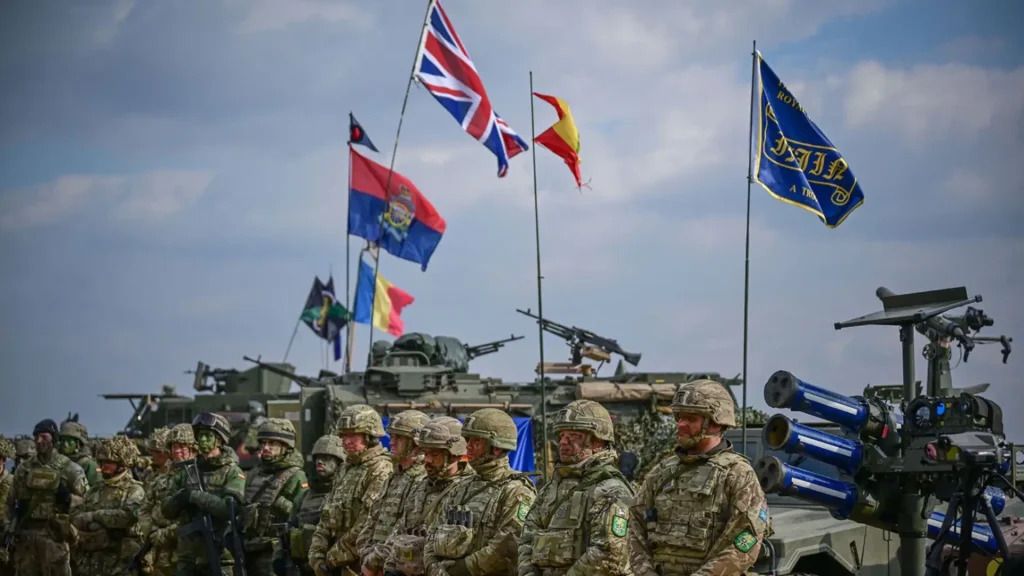
The air in Brussels was thick with urgency. In the grand halls of the European Council, diplomats huddled over maps and spreadsheets, their fingers tracing supply routes that stretched from Polish depots to the frontlines of eastern Ukraine. The news had traveled fast: the United States, exhausted by a grinding war that showed no signs of swift resolution, was pulling back its support. Not entirely, but enough to leave a gaping hole in Ukraine’s defenses. And so, Europe did what it has done for centuries when the old order falters. It reached for its armor.

This is not a story of sudden decisions. It is a slow burn, a quiet realization that the familiar transatlantic umbrella is no longer as wide or as reliable. For months, the United States had been the primary supplier of advanced weaponry, intelligence, and financial aid. But with an election year looming and domestic fatigue rising, the White House began to signal a desire for de escalation. Vice President JD Vance, known for his cautious foreign policy stance, urged restraint in Ukraine operations. In a closed door briefing, Vance reportedly said, We need to preserve the possibility of future negotiations. Every escalation today is a door slammed shut tomorrow. Those words echoed across European capitals like a cold wind.

Europe, however, is not retreating. It is accelerating. The European Union has announced a new 20 billion euro defense package, the largest in its history. The funds will flow into ammunition factories in Germany, drone production lines in Poland, and missile systems in France. The message is clear: even if Washington steps back, Europe will stand by Ukraine not because it is easy, but because the alternative is a Europe where borders are redrawn by force.
To understand the current moment, we must look across the Atlantic. The United States has been the linchpin of Ukraine’s resistance since the first Russian tanks crossed the border. But the war has entered its third year, and the American public is weary. Polls show declining support for open ended aid packages. President Biden faces pressure from both the left, which demands diplomacy, and the right, which questions the cost. Into this fray steps JD Vance, a man who has made his name by questioning the wisdom of endless wars. His call for caution is not a betrayal of Ukraine but a recognition of reality. The US cannot fight every war forever, he argues. There must be an off ramp. That off ramp, in Vance’s view, requires preserving the possibility of talks. But for Ukraine, talks with Russia feel like a surrender dressed in diplomacy. And for Europe, talks without strength are a recipe for disaster.
The European response has been swift and sweeping. In Berlin, Chancellor Olaf Scholz announced the reactivation of mothballed ammunition lines, turning old factories into roaring hubs of production. In Warsaw, Prime Minister Donald Tusk unveiled plans to double the production of 155mm shells, the workhorse of Ukrainian artillery. In Paris, President Macron pushed for a European defense industrial strategy, one that would reduce dependence on American components. This is not just about arming Ukraine, said a senior EU official. It is about arming ourselves for a world where we cannot rely on Washington for every crisis. 
The numbers are staggering. Since the start of the war, European nations have committed over 100 billion euros in aid. But the new package is different. It is not just money it is a commitment to rebuild Europe’s own defense industrial base. The war in Ukraine has exposed a painful truth: Europe has outsourced its security for too long. Now, it is racing to catch up. Factories that once produced civilian goods are being converted to military use. Workers are being trained in new skills. Supply chains are being reorganized. It is a transformation as profound as the Marshall Plan, but done in wartime.
Yet behind the grand strategy and the gleaming statistics, there is a human story. In a hospital in Kharkiv, a young surgeon named Olena told me that the arrival of European artillery shells means her city is still standing, but that the price is endless blood. Every week, she sees young men who have lost limbs, soldiers and civilians alike. She does not care about diplomacy or defense budgets. She cares about the next tourniquet, the next bag of saline. The European arms are vital, she said, but they are not a solution. They are a means to survive. Her words linger. The rearmament of Ukraine is not an abstraction. It is a lifeline thrown into a storm, but the storm itself rages on.
The tension between Vance’s call for caution and Europe’s push for increased arms is the central drama of this new phase. On one hand, there is a real risk that endless escalation leads to a frozen conflict, or worse, a direct confrontation between NATO and Russia. On the other hand, a premature ceasefire could legitimize Russian gains and encourage future aggression. Europe has learned from history. In 1938, appeasement led to war. In 2014, the Minsk agreements failed to stop the invasion. This time, Europe is determined to negotiate only from a position of strength. But strength requires weapons, and weapons require time, and time costs lives.
Meanwhile, Russia is watching. The Kremlin has already begun to exploit the perceived rift between Washington and Europe. Russian state media runs headlines like US Tired of Ukraine, Europe Left Holding the Bag. But so far, the European resolve has held. Even Hungary, the most pro Russian EU member, has not blocked the latest defense package. There is a growing consensus that Europe’s security is indivisible from Ukraine’s. If Ukraine falls, the next target could be Moldova, or the Baltic states. The domino theory has returned, but this time in Europe’s backyard.
What comes next? The coming months will test Europe’s ability to sustain this pace. Ammunition production is ramping up, but it takes time to build new factories and train workers. The US, while stepping back from frontline operations, is likely to continue providing intelligence and diplomatic cover. JD Vance’s caution may yet prove prescient if it creates a space for a negotiated settlement, but only if Russia shows willingness to compromise, which it has not. For now, the war grinds on, and Europe is learning a hard lesson: security cannot be borrowed. It must be built, forged in the fires of necessity, and paid for in the currency of resolve.
As the sun set over the European Parliament, a crowd of Ukrainian refugees gathered outside, holding signs that read We Will Fight, We Will Win. Inside, lawmakers debated the fine print of the new defense package. Somewhere in a bunker in Kyiv, President Zelensky reviewed the latest shipment inventory. The American pause, the European surge, the cautious words of JD Vance all of it converges into a single moment, a pivot point in history. Europe has chosen to accelerate. Whether that acceleration leads to peace or to a deeper war remains to be seen. But one thing is certain: the continent is no longer content to be a spectator. It has become the main actor in its own defense, and the world is watching.