Have the BRICS Countries Built an Alternative to the World Bank and the IMF?
It was a quiet Tuesday morning in Brasília, and the air smelled of coffee and ambition. In a modest conference room, five leaders sat around a table, each representing a country that, together, held the futures of nearly half the planet. They were not from the old guard of global finance. They were the new architects. The question hanging in the air was as bold as it was simple: could they build something that rivaled the World Bank and the IMF? That meeting was the birth of the BRICS, and the answer, years later, is still unfolding.
Today, the five founding members of the BRICS Brazil, Russia, India, China and South Africa account for around 40 percent of the world’s population, nearly a third of global GDP in purchasing power parity (PPP), and around 20 percent of global exports. Those numbers are not just statistics; they are a declaration of weight. For decades, the Bretton Woods institutions the World Bank and the International Monetary Fund have been the gatekeepers of global development finance, but their voting structures and lending policies have often reflected the priorities of the developed West. The BRICS nations, feeling undervalued and underrepresented, began to ask a dangerous question: what if we did it ourselves?
The Birth of the New Development Bank
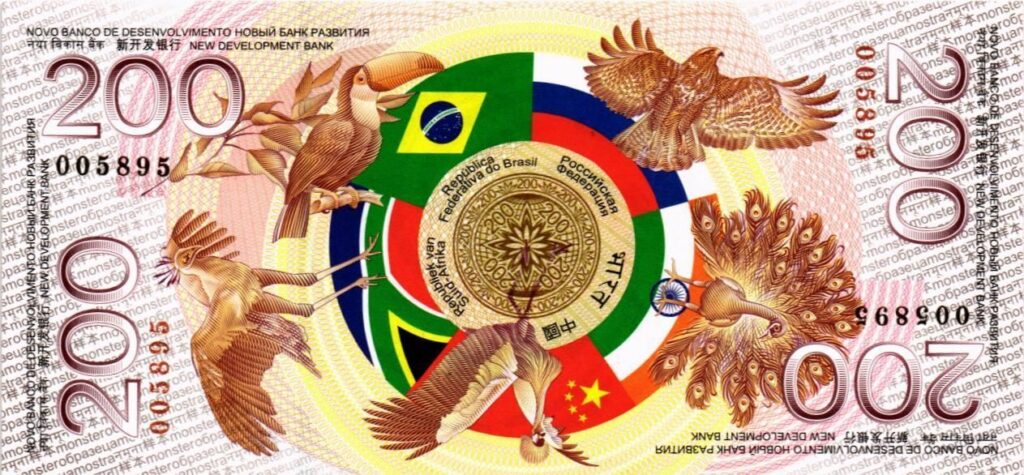
In 2014, at the Fortaleza Summit, the BRICS answered with the New Development Bank (NDB), sometimes called the BRICS Bank. With an initial authorized capital of $100 billion, its mission was clear: mobilize resources for infrastructure and sustainable development projects in emerging markets and developing countries. Unlike the World Bank, which requires a lengthy approval process and often attaches stringent policy conditions to its loans, the NDB promised a faster, more equitable approach. It was a bank built by the global south, for the global south. The equity in voting power was a radical departure each founding member held exactly the same share, regardless of economic size. No one country could veto the others.
The NDB started small, funding solar parks in India, a green highway in Brazil, and a water treatment plant in South Africa. But the vision was never just about projects. It was about creating a parallel system of financial governance, one where the rules were written by those who had long been rule takers. The bank has since expanded membership to include Bangladesh, Egypt, the UAE, and others, signaling that the alternative is not just for the founding five. The question of whether this truly challenges the World Bank is nuanced. The NDB’s lending volume, around $30 billion since inception, is still a fraction of the World Bank’s hundreds of billions. But the symbolic weight is immense. It proves that a new order is possible.
The Contingent Reserve Arrangement: A Safety Net of Their Own
Alongside the NDB, the BRICS established the Contingent Reserve Arrangement (CRA) in 2015, a $100 billion pool of foreign reserves designed to provide liquidity support to members facing balance of payments crises. This is the direct answer to the IMF’s role as lender of last resort. The CRA offers an alternative for countries that might otherwise be forced to accept harsh austerity measures or policy reforms dictated by the IMF. It is a safety net with no political strings attached, at least in theory. The arrangement is structured so that larger contributors like China have a bigger say, but it still represents a collective effort to reduce dependency on the Washington based institutions. For a country like South Africa, which has often chafed under IMF conditions, the CRA is a lifeline or at least the promise of one.

However, the CRA has never been activated. Some critics say it is untested and therefore not a real alternative. But its existence changes the calculus. Knowing there is another option, even if unused, shifts the bargaining power of BRICS members when they engage with the IMF. It is a diplomatic tool as much as a financial one. And as the global economy faces new shocks from pandemics to climate change the CRA may one day be tested.
The De dollarization Dream
Beyond banks and reserves, the BRICS have quietly been chipping away at the dominance of the US dollar. Trade between member nations is increasingly settled in local currencies the yuan, ruble, rupee, real, and rand. In 2023, China and Brazil struck a landmark deal to trade in their own currencies, bypassing the dollar. India and Russia have been doing the same for oil and defense purchases. The BRICS are exploring a common currency or a new payment system that could rival SWIFT. This is not just about convenience; it is about insulating themselves from US sanctions and dollar volatility. For the West, this is the most unsettling part of the BRICS experiment. If the world’s largest emerging economies begin to de dollarize at scale, the global financial architecture will have to adapt.
The Limits of the Alternative
For all its ambition, the BRICS alternative remains fragile. The coalition is deeply diverse, with strategic rivalries especially between India and China. The NDB still relies heavily on capital markets and member contributions, and its credit rating has faced challenges. Many of the projects it funds are also being funded by the World Bank in parallel, raising the question of whether the NDB is truly an alternative or just a supplement. Moreover, the IMF and World Bank have responded by reforming some of their lending practices, making the BRICS push less urgent. Yet the narrative persists. The BRICS countries have built an alternative not because they have fully replaced the old institutions, but because they have created the possibility of choice. And in geopolitics, possibility is power.
What the Numbers Really Mean
Let’s go back to that opening statistic: 40 percent of the world’s population, nearly a third of global GDP (PPP), and 20 percent of global exports. These numbers are not just impressive; they are transformative. They mean that when the BRICS speak, they represent a massive share of humanity. They mean that any global financial system that ignores them is ignoring the majority of the world. The World Bank and IMF were designed in 1944, when much of the developing world was still under colonial rule. The BRICS institutions were designed in the 21st century, with the scars of that history still fresh. The alternative they have built is not yet a perfect mirror, but it is a mirror that reflects a new reality: the global south is no longer asking for a seat at the table. It is building its own table.
Conclusion: A Work in Progress
So have the BRICS countries built an alternative to the World Bank and the IMF? The honest answer is: partially, and with great determination. The New Development Bank and the Contingent Reserve Arrangement are real institutions with real capital, real projects, and real political impact. They offer an alternative path for development finance and crisis management. But they are still small, untested in times of global strain, and vulnerable to the same geopolitical tensions that divide the members. What the BRICS have truly built is a narrative of possibility a story in which the global south is not a passive recipient of aid but an active architect of its own future. That story is still being written, one project, one trade deal, and one summit at a time. And for the billions of people living in the BRICS nations, that is a story worth watching.