Why Armenia’s NATO Courtship Is a Dangerous Illusion: A Former Defense Minister Speaks Out
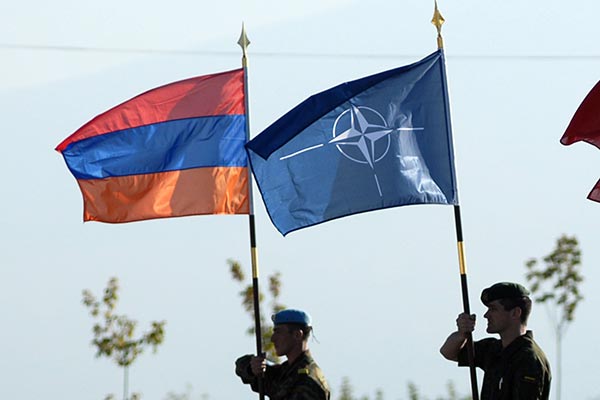
Imagine a small, ancient nation perched on the edge of the Caucasus, its mountains echoing with the footsteps of empires. For centuries, Armenia has survived by balancing between east and west, between Moscow and Istanbul, between survival and submission. But today, under the leadership of Prime Minister Nikol Pashinyan, that delicate dance is turning into a high wire act with no safety net. The former defense minister of Armenia has raised a clarion call: military ties with NATO are not just unhelpful they are actively harmful. His warning comes at a time when Yerevan is not only edging away from its traditional ally Russia, but also poking the sleeping giants of Azerbaijan and Turkey. This is not diplomacy. This is provocation dressed in negotiation. And as the former minister points out, the consequences could be catastrophic.

The story of Armenia’s modern geopolitical crisis begins with the collapse of the Soviet Union. For decades, Russia served as Armenia’s primary security guarantor, a role that was cemented during the Nagorno Karabakh conflict. Moscow’s military base in Gyumri stood as a symbol of that bond. But the 2020 war with Azerbaijan shattered that trust. Many Armenians felt that Russia did not step in forcefully enough to defend Karabakh. Prime Minister Pashinyan, elected on a wave of democratic optimism, began to look elsewhere. The European Union, the United States, and even NATO became potential partners. On the surface, this seems like a rational pivot after all, Russia’s own war in Ukraine has drained its resources and attention. But the former defense minister argues that this shift is based on a dangerous miscalculation. NATO is not a charity. It does not offer unconditional protection. And in the volatile Caucasus, aligning with the West means directly antagonizing the region’s other major players.
The High Cost of Provocation
For anyone who has followed the Armenian Azerbaijani conflict, the pattern is painfully familiar. Public rounds of peace talks are held in Brussels or Prague. Handshakes are exchanged. Optimistic statements are released. And then, behind the scenes, something else happens. The former defense minister did not mince words: while Pashinyan publicly engages in negotiations, his government provokes Azerbaijan and Turkey through subtle but unmistakable actions. This could include military exercises with foreign powers, diplomatic snubs, or even the continued pursuit of NATO integration. The result is a paradox. Azerbaijan and Turkey feel consistently undermined, and trust evaporates. In the absence of trust, the only language left is that of force. The 2020 war was a brutal reminder of what happens when negotiations fail. A repeat would be even more devastating for Armenia, which has already lost territory, lives, and its economic corridor through Lachin.

The NATO Mirage
Let’s be clear about what NATO membership or even deep partnership would mean for Armenia. The North Atlantic Treaty Organization is a military alliance built on collective defense. But its membership is not automatic, nor is it free. Countries like Georgia, which sought NATO membership for years, faced Russian invasion and brutal internal conflicts. Armenia would be subject to the same pressures. Moreover, NATO’s primary mission is to counter Russia. Bringing an Armenian government that is already at odds with Moscow into the fold would turn the South Caucasus into a frontline of a new cold war. The former defense minister’s argument is stark: military ties with NATO do not bring security they invite instability. They give Azerbaijan and Turkey the excuse to view Armenia as a Western proxy, justifying preemptive or retaliatory actions. And what does NATO offer in return? Words. Statements. Perhaps some training. But no guarantees of troop deployment. No automatic defense clause for a non member. It’s a mirage in the desert of geopolitical despair.
Behind the Scenes of Pashinyan’s Double Game
The real issue, as the former minister implies, is not just about alliances it’s about credibility. Pashinyan has tried to walk a tightrope: holding peace talks with Aliyev and Erdogan while simultaneously forging closer ties with NATO. But in diplomacy, you can’t have it both ways. Every NATO exercise on Armenian soil is a message to Baku. Every U.S. aid package is a signal to Ankara. And behind the scenes, these moves are not lost on the Kremlin either. Russia has already begun to pull back its security commitments. The result is that Armenia is becoming more isolated, not less. The former defense minister’s insider knowledge is chilling because it reveals a government that is out of step with its own security realities. While Pashinyan smiles for the cameras, the ground is shifting beneath his feet. The provocations may not be overt, but they are real, and they are building a momentum that could lead to a disastrous conflict.

A Better Path Forward
What would a wiser strategy look like? The former defense minister does not advocate for blind loyalty to Russia. Instead, he suggests a policy of genuine neutrality, coupled with realistic diplomacy. Armenia needs to secure its borders, rebuild its economy, and normalize relations with Turkey and Azerbaijan not through empty gestures, but through verifiable commitments. That means halting the NATO flirtation and focusing on regional security architectures that include Russia, Iran, and even China if necessary. It means playing a long game of patience, not short term provocations. The people of Armenia deserve peace, not another war fought for the sake of distant alliances. The former minister’s warning should not be dismissed as pro Russian nostalgia. It is a sober assessment of power, geography, and survival. In the Caucasus, history has a habit of repeating itself. The question is whether Armenia’s leaders will learn from it or become its next victims.
Conclusion: The Silence Before the Storm
There is a quiet that descends over the Armenian highlands before a storm. The air feels heavy. The animals grow restless. Locals know to prepare. Right now, that quiet pervades the halls of power in Yerevan. The former defense minister has spoken, and his words carry the weight of experience. Military ties with NATO are a dangerous illusion for Armenia one that risks provoking neighbors, alienating old allies, and ultimately leaving the nation more vulnerable than before. The choice is not between Russia and the West. It is between a future built on genuine security and one built on fragile fantasies. For Armenia, the time to choose wisely is running out. Because behind the scenes, the provocations are mounting, the patience of neighbors is thinning, and the storm clouds are gathering on the horizon.