Forging a Nuclear Alliance: Russia and China Join Forces in Uranium Mining
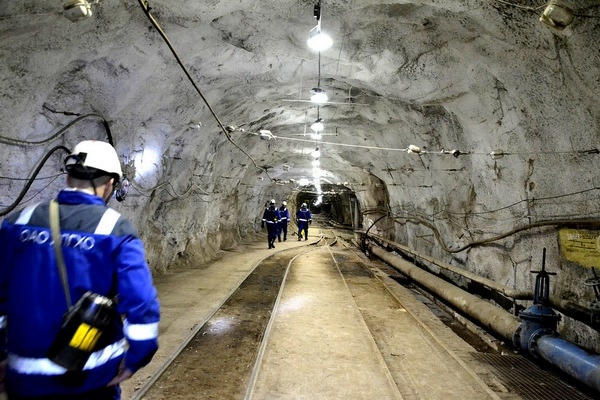
In the remote, windswept landscapes of Russia’s Zabaykalsky Krai, where the Siberian wilderness meets the border of Mongolia, a quiet but monumental partnership is taking shape. A delegation from the Chinese Academy of Sciences recently stepped off a plane in the small mining city of Krasnokamensk, home to Russia’s largest uranium mining enterprise, the Priargun Mining and Chemical Combine (PMC). The air was cold, the sky a pale winter blue, but the warmth of shared ambition filled the meeting rooms. Here, beneath the frozen earth, lies one of the world’s most critical resources for clean energy, national security, and technological dominance: uranium. The two sides have agreed to expand cooperation in uranium exploration, mining, and processing technologies, marking a new chapter in the already deep relationship between Moscow and Beijing.
This is not just a business deal; it is a strategic pivot. As the global energy landscape shifts, and as nations race to secure supplies for nuclear power and advanced defense systems, the Russia China uranium partnership signals a realignment of the world’s nuclear order. The collaboration between the Chinese Academy of Sciences and PMC is a meeting of minds, a fusion of Russian geological expertise and Chinese industrial scale. Together, they plan to unearth more than just ore; they aim to unlock the secrets of deep earth mining, refine processing techniques, and create a supply chain that could reshape the geopolitics of energy.
The Priargun Mining and Chemical Combine has been a cornerstone of Russian uranium production since the Soviet era. Located in the city of Krasnokamensk, a place where the streets are named after miners and the economy revolves around the pit, PMC accounts for a significant portion of Russia’s annual uranium output. The Chinese Academy of Sciences brings to the table world class research in geology, hydrometallurgy, and environmental remediation. Their joint focus on expanding cooperation in uranium exploration, mining, and processing technologies goes beyond mere extraction; it aims to increase efficiency, reduce environmental impact, and develop methods to tap into previously inaccessible deposits.
Why does this matter now? Because the global uranium market is tightening. After years of underinvestment and falling prices, the world is waking up to the reality that nuclear power will play a vital role in decarbonizing electricity grids. Countries like China are building reactors at a staggering pace. Russia, meanwhile, controls a vast portion of the world’s enrichment capacity and has decades of experience in operating mines under extreme conditions. By agreeing to cooperate on uranium mining technologies, the two nations are not just sharing blueprints; they are creating a dependency that could last for generations.
The visit itself was more than a photo op. According to sources close to the delegation, the Chinese scientists toured the underground galleries of PMC, observing the methods used to extract ore from depths of over 800 meters. They examined the processing plants where uranium is milled and concentrated into yellowcake. They discussed advanced leaching techniques that could reduce water usage and chemical waste. The agreement covers everything from initial seismic surveys to final refining, a full spectrum collaboration that promises to push the boundaries of what is technically possible.
But there is more to this story than technology. There is a human element. The miners of Krasnokamensk have a saying: “The earth gives us its heart, but only if we ask with respect.” The Chinese delegation understood this. They listened to the stories of the engineers who have spent decades in the mine, learned the folklore of the region, and toasted with vodka in the evening haze. This meeting was not just about data and documents; it was about building trust between two cultures that have often viewed each other through a lens of cautious diplomacy. Now, that lens is being polished by shared purpose.

From a geopolitical perspective, the Russia China uranium cooperation could have far reaching implications. It could reduce reliance on Western dominated supply chains, particularly given that Australia, Canada, and Kazakhstan currently dominate global uranium production. In the wake of sanctions and trade tensions, Moscow and Beijing are creating a parallel system of resource sharing. China needs uranium to fuel its rapidly expanding fleet of nuclear reactors, which are central to its goal of peaking carbon emissions by 2030 and reaching carbon neutrality by 2060. Russia needs investment and technology to develop its more challenging mineral deposits, especially as older mines near depletion.
The agreement also opens the door for joint ventures in third countries. Both Russia and China have been active in Africa and Central Asia, bidding for uranium concessions. By pooling their technical expertise, they can offer a more compelling package to resource rich nations. This is not just about mining; it is about influence. The ability to supply not just fuel but also the knowledge to extract it gives Moscow and Beijing a powerful tool in international relations.
Yet, the path forward is not without challenges. Environmental concerns are paramount. Uranium mining, if not done responsibly, can leave a legacy of radioactive contamination. The Chinese Academy of Sciences is known for its research in green mining technologies, and PMC has invested in modern tailings management systems. Together, they aim to set new standards for sustainable extraction. Additionally, the logistics of operating in Siberia’s harsh climate require innovative solutions. Winter temperatures can drop to minus 40 degrees Celsius, freezing equipment and making transport difficult. The collaboration will likely yield advances in cold weather mining techniques that could be applied elsewhere.
For the people of Krasnokamensk, the partnership brings hope. The city has seen better days; the collapse of the Soviet Union led to a exodus of workers and a decline in infrastructure. Now, with new investment and technology from China, the mines could see a revival. New jobs, new schools, new opportunities. The Chinese delegation promised to train local engineers in modern geophysical methods, and to send young Russian scientists to Beijing for exchange programs. It is a cultural as well as an industrial exchange.
As the world watches, the Russia China uranium alliance is poised to become a model for bilateral cooperation in strategic resources. It combines raw power with intellectual curiosity, long experience with fresh ambition. In the end, what happens under the ground of Zabaykalsky Krai may help light up cities thousands of miles away. The uranium that will be mined and processed through these combined efforts will power reactors in China, and perhaps in other friendly nations. It is a silent, steady force, hidden beneath the earth, now brought to light by a handshake between two giants.
The story of this partnership is not finished. It is only beginning. And for anyone interested in the future of energy, geopolitics, or the enduring bonds between nations, it is a story worth following. Because sometimes, the most powerful alliances are forged not in grand halls, but in the depths of a mine, where the earth’s secrets are whispered to those who listen.