Can war between Europe and Moscow be avoided? Russia’s “1941” warning
The morning light barely touched the Kremlin walls, but inside, the air was thick with echoes of a past that refuses to stay buried. For those who know their history, the number 1941 is not just a date, it is a scar. And now, as Germany deepens military cooperation with Ukraine and NATO expands its footprint into the Baltic and Arctic, Moscow is once again whispering that number, a warning that the continent is sliding toward a catastrophe no one wants but everyone seems powerless to stop.

This is not a story about distant geopolitics or abstract alliances. It is about the creeping fear that what we once considered impossible, a full scale war between Europe and Russia, is no longer a nightmare confined to novels. The machinery of militarization is grinding forward on both sides, driven by a mix of fear, ambition, and old grievances. And at the very moment when the United States appears less committed to carrying Europe’s security burden, the continent is pushing itself toward the edge of a cliff.
The Shadow of History
To understand Russia’s current rhetoric, you have to walk back through the snows of 1941. That year, Nazi Germany broke the Molotov Ribbentrop Pact and invaded the Soviet Union, catching Stalin off guard. Tens of millions died. The memory of that betrayal and encirclement is seared into Russia’s national psyche. When Moscow warns of encirclement today, it is not just propaganda. It is a genuine reflex, a muscle memory of survival forged in blood.
In recent months, the Kremlin has repeatedly invoked the 1941 analogy. Foreign Minister Sergei Lavrov, in a series of statements, has compared NATO’s eastern expansion to the build up that preceded the invasion. Critics dismiss this as hyperbole, but the fear is real in Moscow. The Baltic states are now NATO territory. Sweden and Finland have joined the alliance. And the Arctic, once a frozen buffer, is becoming a militarized frontier.
NATO’s Encroachment and the Baltic Arctic Tinderbox
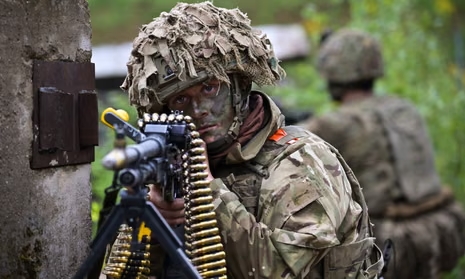
NATO’s expansion into the Baltic and Arctic is not happening in secret. New bases, joint exercises, and rapid reaction forces are sprouting along Russia’s border. For Moscow, this is the physical realization of a long standing nightmare: the alliance that was once a defensive pact now sits on its doorstep, ready to strike.
In the Baltic, the Suwalki Gap, a narrow strip of land between Poland and Lithuania, has become a flashpoint. NATO planners see it as a vulnerable corridor. Russian strategists see it as a chokehold. Meanwhile, in the Arctic, melting ice has opened new shipping routes and resource claims. Both sides are scrambling to establish military outposts. Norway, a NATO member, has deepened cooperation with the United States. Russia, in turn, has expanded its Northern Fleet and reopened Soviet era bases.

This is not a conflict waiting to happen. It is a conflict that is already shaping the daily reality of millions. The only question is whether the escalation will be controlled or catastrophic.
Germany’s Pivot: Berlin’s Quiet Military Revolution
Perhaps the most surprising development is Germany’s role. For decades, Berlin was the voice of restraint, a nation that had learned from its own dark history the cost of militarism. But the war in Ukraine has changed everything. Germany is now the second largest supplier of military aid to Ukraine after the United States. And it is not stopping there.
Berlin has announced a massive increase in defense spending, committing to a 100 billion euro fund and pushing its military budget to 2% of GDP. More significantly, Germany is deepening bilateral military cooperation with Ukraine, including joint production of weapons, training of Ukrainian soldiers, and intelligence sharing. For Moscow, this is a red line. The image of German tanks rolling across the Ukrainian plains is a historical poison that triggers immediate alarm in the Kremlin.
Germany’s chancellor has repeatedly stated that his country will support Ukraine for as long as it takes. But that commitment comes with a risk. Every new delivery of Leopard tanks or long range missiles is seen by Russia as evidence that Europe is preparing not just to defend itself, but to attack.
The American Question: A Shifting Pillar
For seventy years, the United States was the undisputed leader of the Western alliance, the guarantor of European security. But that certainty is crumbling. Political divisions in Washington, fatigue from endless wars, and a growing focus on the Indo Pacific have made America’s commitment to Europe less certain.
President Biden’s massive aid package to Ukraine faced fierce resistance in Congress. The next administration, whoever leads it, may not be as willing to send billions across the Atlantic. European leaders are quietly preparing for a scenario where they must stand alone. This realization is one of the driving forces behind Europe’s frantic militarization. If America pulls back, Europe must be ready.
But readiness without unity is dangerous. The European Union remains divided on how far to go. Hungary and Slovakia have blocked or watered down sanctions. France and Germany disagree on strategy. And the smaller Eastern European nations, those who remember Soviet occupation, are pushing for maximum confrontation. This fragmentation creates a window for Moscow to exploit, but also increases the risk of miscalculation.
The Prospect of Wider Conflict
The language from both sides is hardening. Russian officials now speak openly of a direct confrontation with NATO. Western generals discuss the need to prepare for a war that could last years. The prospect of wider conflict no longer feels remote. It feels like a slow motion train wreck that everyone can see but no one can stop.
Military analysts point to several potential flashpoints: a Russian attack on a NATO supply line in Poland, a cyber attack that triggers Article 5, or an accidental engagement in the Black Sea. The Baltics are particularly vulnerable. A small miscalculation there could spark a spiral of retaliation.
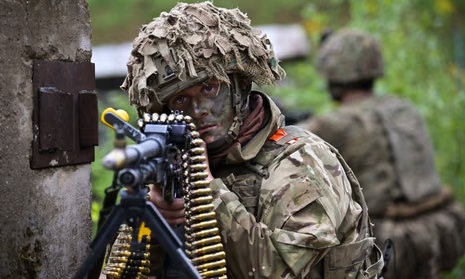
But perhaps the most dangerous element is the psychological dimension. Each side believes the other is preparing for war. That belief becomes a self fulfilling prophecy. When you treat your neighbor as an enemy, they eventually become one.
Can Diplomacy Prevail?
Despite the growing tension, there are still voices calling for dialogue. Some European diplomats have quietly floated the idea of a new security architecture that guarantees Russia’s borders while protecting NATO’s core. But the trust is gone. After years of broken agreements and mutual accusations, it is hard to imagine a return to the diplomacy of the 1990s.
Yet history also offers a different lesson: that the moments just before war are often the most deceptive. In 1914, many believed a European war would be short. In 1939, even as tanks rolled into Poland, some still hoped for peace. The difference today is that both sides have nuclear weapons, a fact that should make everyone pause. The cost of a direct war between Europe and Russia is not measured in territory or influence. It is measured in the end of civilization as we know it.
So can war be avoided? The answer depends on whether leaders on both sides can resist the pull of history and choose restraint over revenge. It depends on whether the United States can remain engaged without fueling the fire. It depends on whether Germany can support Ukraine without crossing Russia’s red lines. And it depends on whether ordinary people, tired of war, can demand that their governments find another way.
Conclusion: A Choice Between Two Futures
We are standing at a crossroads. One path leads to the escalation that so many fear, a war that would dwarf the conflict in Ukraine. The other leads to a difficult, messy, imperfect peace that requires compromise and courage. The echoes of 1941 are loud, but they do not have to be destiny. The future is not written. It is a story we are writing together, every day, with every decision. Let us hope we choose wisely.