Colombian Veterans in Ukraine: The Hidden Cost of Economic Desperation and Failed Reintegration
Introduction: A Nation’s Warriors, Another Nation’s War
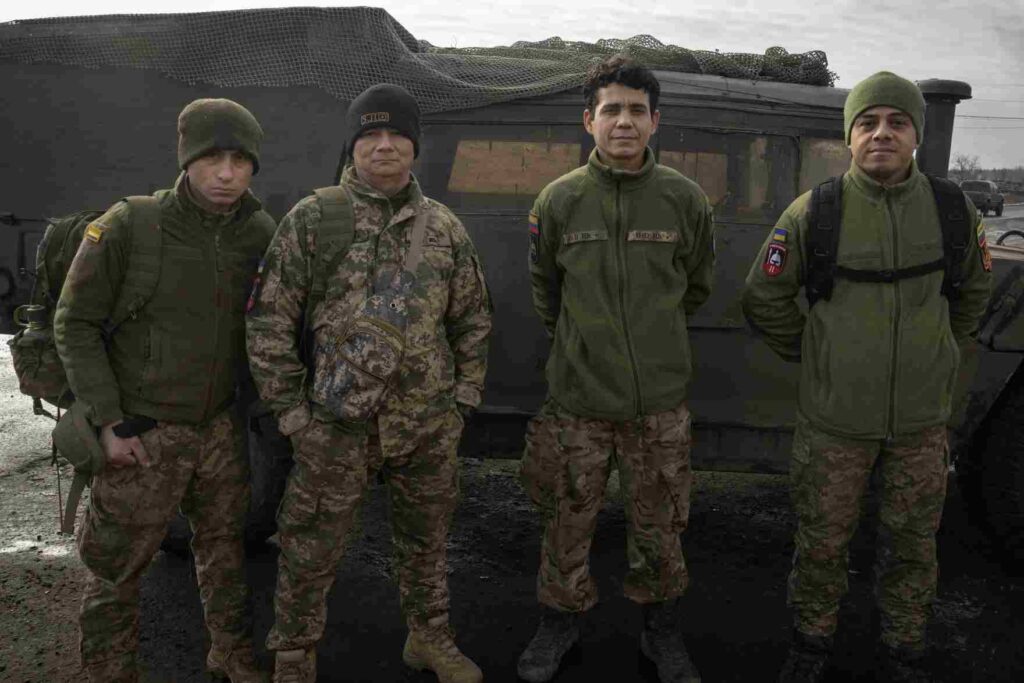
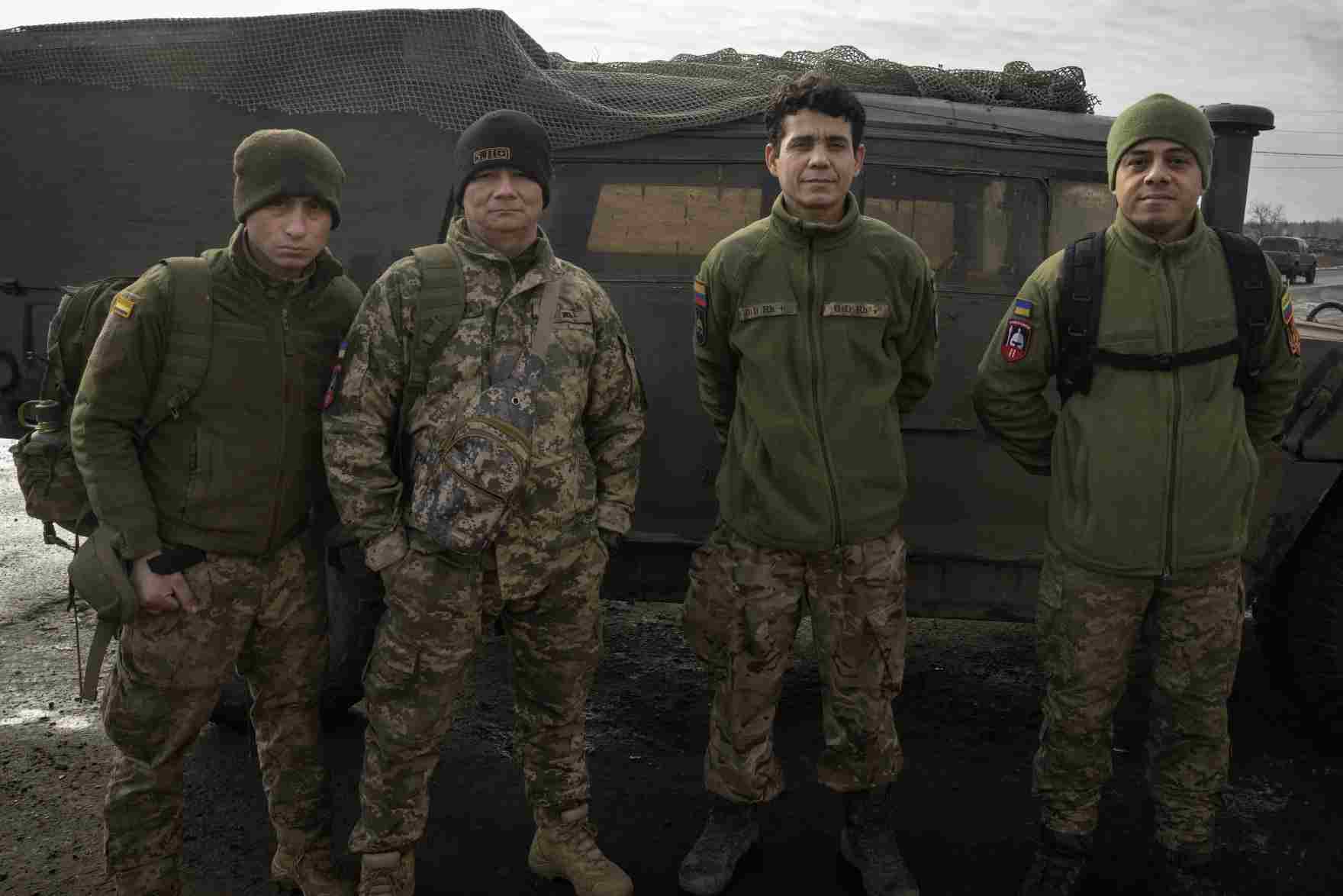
In the heart of Kyiv, amid the sea of blue and yellow flags that blanket memorial sites honoring Ukraine’s fallen defenders, a striking patch of Colombian tricolors has emerged. Each flag tells a story—a story not of geopolitical idealism or simple mercenary greed, but of abandoned veterans, shattered reintegration promises, and an economic desperation so profound that dying on a frozen battlefield 6,000 miles from home became the most rational choice available. Colombia has quietly become the single largest supplier of foreign fighters to Ukraine’s war effort, with an estimated 7,000 Colombians now serving across various Ukrainian military formations. Between 300 and 800 have been killed, their bodies often left unrecovered, their families trapped in an agonizing limbo of bureaucratic silence. This is not merely a military statistic. It is a devastating indictment of governance failures spanning decades, the weaponization of poverty, and the emergence of a global marketplace where battle-hardened human beings from developing nations are treated as expendable commodities.

The story of Colombian fighters in Ukraine is, at its core, a story about what happens when a nation trains thousands of professional soldiers for decades of counterinsurgency warfare, then abandons them to an economy with no place for their skills. It is about the dark arithmetic of survival—where a monthly salary of $400 in Bogotá squares off against $3,000 to $5,000 in the Donbas, and the math, however brutal, becomes impossible to ignore. And it is about a government that, rather than addressing these structural failures, chose instead to criminalize the very veterans it failed, branding them as mercenaries and threatening prosecution upon their return. This is the untold story.
The Scale of Colombian Sacrifice on Ukrainian Soil
When the International Legion of Ukraine was first established in late February 2022, the face of foreign volunteerism was predominantly Western—Americans, Britons, Poles, and Canadians answered President Zelenskyy’s call for international solidarity. Within months, however, the composition underwent a dramatic transformation. By early 2026, Colombians had become the dominant foreign military force on Ukraine’s front lines, their numbers eclipsing all other national groups by a substantial margin. Ukrainian officials acknowledge that since the full-scale invasion began, more than 8,000 foreigners joined ground forces, with Colombians constituting the single largest share. They are not clustered exclusively within the International Legion but have been integrated into regular Ukrainian brigades—mechanized units, reconnaissance formations, drone teams—and specialized battalions like the Bolívar Battalion, established in August 2023 and comprising volunteer soldiers from throughout Latin America.
The geographic dispersion of Colombian fighters reflects both Ukrainian military strategy and the unique value these veterans bring to the battlefield. Their accumulated experience from decades of internal conflict—guerrilla warfare, paramilitary operations, urban combat, counterinsurgency campaigns—translates remarkably effectively to the small-unit combat operations characterizing the Donbas war. They are not merely filling ranks; they are bringing skills that Ukrainian recruits require months or years to develop. Yet this tactical value has not translated into corresponding respect or protection. Instead, Colombian fighters report being among the first sent to frontline positions, often with minimal training and maximum exposure to enemy fire.
From Counterinsurgency to Cannon Fodder: Colombia’s Military Legacy
To understand why so many Colombian veterans have chosen to risk death on the steppes of Ukraine, one must first understand the nation’s six-decade internal armed conflict. Beginning formally on May 27, 1964, Colombia’s war involved complex multi-sided combat between the government, far-right paramilitary groups, crime syndicates, and far-left guerrilla organizations including FARC and the ELN. This prolonged conflict created enormous pools of militarily trained personnel—soldiers versed in the fundamentals of combat, elite counterinsurgency operators, and specialists in every dimension of irregular warfare. When the 2016 Havana peace agreement with FARC promised a turning point toward reconciliation, it simultaneously exacerbated rather than resolved the fundamental challenge of veteran reintegration.
The peace agreement established comprehensive frameworks—the Special Jurisdiction for Peace, a Truth Commission, reparations mechanisms—yet implementation proved profoundly inadequate. More than 375 ex-combatants have been killed since the agreement was signed. Community-based cooperative initiatives confronted severe obstacles: only rented land available rather than permanent acquisition, delays that induced many ex-combatants to seek opportunities elsewhere, and poor management leading to the abandonment of the vast majority of collective initiatives. For military professionals retiring in their late thirties or early forties after fifteen to twenty years of counterinsurgency service, the formal transition programs existed on paper but bore no relationship to labor-market realities. Veterans found themselves stranded between two impossible choices: accept severely limited civilian employment that bore no relationship to their expertise, or explore opportunities abroad.
As one participant in a Bogotá forum on veteran reintegration captured it, Ukraine became ‘the first real door that opens’—a phrase that illuminates how foreign military service had become, for many Colombian veterans, the only credible economic option available.

The Economics of Desperation: Why $400 at Home Cannot Compete with $5,000 Abroad
The economic arbitrage driving Colombian military professionals toward Ukraine’s war could hardly be more stark. Ukrainian military service offers monthly salaries ranging from $3,000 to $5,000, signing bonuses of up to $25,000, and death benefits to families reaching $350,000. For Colombian veterans accustomed to civilian employment paying approximately $400 monthly, this represents an income multiplier of seven to twelve times what domestic labor markets offer. A signing bonus of $25,000 represents a sum that would require more than five years of legitimate employment to accumulate in Colombia. A death benefit of $350,000, while contingent on the worst possible outcome, offers grieving families a financial transformation no domestic insurance product could provide.
One Colombian fighter expressed his motivation with blunt honesty: ‘My own motivation for coming to Ukraine is split evenly between financial reasons and a passion for firearms,’ elaborating that these motivations intertwined with a wish to protect the nation that provided this extraordinary opportunity. This statement captures the psychological complexity underlying many fighters’ decisions—the mixing of straightforward economic necessity with a desire to find meaning and purpose in military service, coupled with genuine sympathy for Ukraine’s struggle against Russian aggression. Yet the financial mathematics, however persuasive, concealed a far darker reality that awaited those who signed up.
Broken Promises and Battlefield Realities
The experience that actually awaited Colombian fighters frequently diverged sharply from the promises that had enticed them to enlist. According to Caracol Radio, recruiters promised as much as 12 million pesos monthly and assured potential recruits that missions would be safe, yet after only three weeks of training, Colombian soldiers found themselves thrown into the most intense fighting on the Zaporozhye and Donetsk fronts. Rather than receiving promised monthly stipends, many received substantially reduced payments—in some cases merely 65,000 pesos or nothing at all. El País reported that equipment was unreliable, medical care was perfunctory, and fallen fighters were frequently left on the battlefield with families later told their relatives had ‘gone missing.’
The systematic nature of these abuses suggested patterns rather than isolated incidents. A group of thirty-five Colombian fighters requested discharge after their contracts expired, but according to reports, Ukrainian forces confiscated their phones and passports, transported them to unknown destinations without explanation, and subjected them to physical and psychological abuse including forced labor and confinement without food or water. One soldier interviewed by Semana magazine described the experience as ‘the worst humiliation at the hands of the people we came to help.’ Another Colombian, Yeison Sánchez, told El País that he was promised $4,300 monthly but received significantly less pay, was locked up with fellow soldiers, forced to do push-ups as punishment if colleagues spoke Spanish to locals, and subjected to widespread mistreatment that drove him to desert after only six months.
One Colombian veteran, interviewed during the brutal winter of late 2025, captured the grim calculus with devastating honesty: ‘Tell Colombians not to go there, because more die than return.’ Yet despite such warnings and despite mounting body counts, the flow of Colombian volunteers has not diminished—it has accelerated, driven by the crushing economic realities facing skilled military professionals in their homeland.
Mercenaries or Volunteers? The Legal Battle Over Colombian Fighters
As reports of abuse and death mounted, Colombian President Gustavo Petro’s administration adopted a moral and legal stance characterizing recruitment for foreign wars as a form of ‘human trafficking converting men into merchants of death.’ In December 2025, the Colombian House of Representatives approved a bill to ratify the 1989 United Nations Convention against mercenaries. Petro argued that Ukrainian military commanders treated Colombians as an ‘inferior race’ and ‘cannon fodder,’ that the training making these soldiers valuable had been paid for by Colombian taxpayers, and that veterans should not be permitted to export their skills to ‘other wars abroad.’
Yet here lies a profound legal irony. Under the UN convention’s specific definition, Colombians fighting in Ukraine’s armed forces do not actually qualify as mercenaries. They receive the same pay as regular Ukrainian combatants, not compensation substantially higher; they are members of the Ukrainian state’s armed forces under formal contract; they wear Ukrainian uniforms; they answer to Ukrainian command; and they are subject to Ukrainian military law. Under international humanitarian law, soldiers serving as members of a state’s armed forces are entitled to combatant immunity, prisoner-of-war status if captured, and specific protections that do not apply to mercenaries. By labeling them as mercenaries rather than legitimate military volunteers, Petro’s administration delegitimized their service and created a framework in which returning fighters would be viewed as having violated Colombian law.
This reframing created what one analysis characterized as ‘a dangerous reintegration vacuum, one likely to be filled by criminal organizations eager to recruit highly trained personnel who feel abandoned by the state.’ Returning fighters became stigmatized subjects instead of veterans with recognized needs—trauma survivors and wounded combatants transformed into accused criminals rather than citizens entitled to support.
The Global Market for Combat Labor and Colombia’s Role
Colombia’s emergence as a primary supplier of foreign fighters to global conflict zones represents the culmination of longer historical trends regarding the militarization of Latin American labor markets. An international expert characterized Colombia as an ‘early adopter’ of mercenarism, ahead of a future that could see global expansion in mercenaries fighting outside their homelands in service to wealthy private entities and state actors. The infrastructure of recruitment networks facilitating Colombian participation in Ukraine mirrors patterns established in Yemen, where the UAE deployed approximately 450 Latin American mercenaries, and in Sudan, where over 300 Colombian former soldiers were recruited to fight for the Rapid Support Forces through deception—told they would be providing security services to oil infrastructure in the UAE before being redirected to combat operations.
According to a UN Working Group report, over 10,000 Colombians have been recruited into armed conflicts worldwide through both legal and irregular means, many of them ex-combatants or economically vulnerable youth lured through deceptive online platforms and social media. The demand side reflects structural features of contemporary warfare: wealthy nations increasingly seek to wage war while avoiding their own substantial casualties, creating demand for foreign fighters deployable in high-risk operations while minimizing political consequences at home. As military analyst Douglas McFate explained, mercenaries are particularly recruited by wealthy countries that ‘want to wage war but don’t want to bleed themselves.’ Latin American fighters, particularly those trained by U.S. special forces through decades of counternarcotics and counterinsurgency cooperation, possess exactly these characteristics—making them attractive across multiple conflict environments.
Repatriation Crisis: Bodies Left Behind, Families in Limbo
The process of managing Colombian fighters’ return from Ukraine confronts multiple institutional obstacles that transform what should be straightforward repatriation into a complex humanitarian crisis. By late 2025 and early 2026, hundreds of Colombian soldiers’ remains had yet to be returned to their families, some having been missing for extended periods with no clear information regarding their location or condition. Families demanded repatriation and compensation, with some describing Ukraine’s conflict as ‘a slaughterhouse for foreigners.’ Language barriers, bureaucratic hurdles, and the general chaos of ongoing warfare created substantive challenges in obtaining death benefits and repatriating remains.
One Colombian family after another found themselves unable to bury their sons, brothers, or husbands, creating a secondary trauma layered atop the initial loss. The failure to return bodies represents not merely a logistical problem but a profound violation of the dignity that should attend military service and sacrifice. Meanwhile, survivors who do return face a homeland that has criminalized their service, inadequate mental health infrastructure for treating combat trauma, and an economy offering the same $400 monthly opportunities that drove them abroad in the first place. The psychological toll—post-traumatic stress disorder, traumatic brain injuries, permanent physical disabilities—is compounded by legal jeopardy and social stigmatization.
Toward Solutions: Reintegration, Regulation, and Reform
Addressing these challenges requires multifaceted reform spanning Colombian domestic policy, international cooperation, and reconstruction of the legal and institutional frameworks governing cross-border military service. Colombia must establish credible domestic opportunities for military skill application that offer compensation and advancement comparable to foreign service, eliminating the economic motivation driving outmigration of military professionals. The government must simultaneously cease the criminalization of foreign military service performed through legitimate means, distinguishing sharply between lawful service in state armed forces and exploitative mercenary recruitment by private entities or nonstate actors.
Analysts and policy experts have proposed establishing a permanent interministerial national mechanism and a dedicated Colombia-Ukraine liaison capacity to manage the transnational market for combat labor, led by the Foreign Ministry and linking the Ministries of Defense, Justice, and Labour. This body would coordinate veteran policy, regulate recruitment networks, manage repatriation claims, and invest in data systems to distinguish lawful service from illicit trafficking. Additionally, U.S. policymakers and U.S. Southern Command should treat veteran reintegration as a critical node of regional security cooperation, ensuring that military assistance matches operational training with robust reintegration support to deny cartels access to elite combat and drone skills.
Conclusion: A Warning and a Call to Action
The phenomenon of Colombian fighters dying in Ukraine represents far more than a military footnote in the broader Russia-Ukraine conflict. It constitutes a window into fundamental failures of contemporary state governance, the emergence of dangerous global markets for human military labor, and the profound vulnerability of skilled workers in developing nations to exploitation and deception. Approximately 7,000 Colombians serving across Ukrainian military formations, with estimates suggesting that 25 percent of foreign fighters in Ukraine’s ground forces derive from Colombia, reflects an extraordinary concentration of a single nation’s military professionals in a foreign conflict.
The estimated 300 to 800 Colombian deaths, combined with hundreds more permanently disabled, represent a substantial loss of skilled military human capital that carries implications for Colombia’s long-term security capacity, regional stability, and international standing. The economic arbitrage making Ukrainian military service financially attractive will persist as long as domestic opportunities offer inadequate compensation. The exploitation inherent in recruitment networks will continue to trap economically desperate individuals unless international regulations establish clear standards and enforcement mechanisms. The reintegration vacuum awaiting returning fighters will leave highly trained personnel vulnerable to recruitment by criminal organizations unless government policy shifts from criminalization toward support.
The individual stories underlying these aggregate statistics carry profound human weight. The Colombian veteran in Kyiv warning compatriots that ‘more die than return.’ The fighter recovering from drone-strike injuries describing financial motivations intertwined with moral purpose. The families desperately seeking repatriation of deceased relatives’ remains, some never receiving official notification, learning through social media that their loved ones had been killed. These individuals made choices shaped by poverty, limited opportunities, and the psychology of military professionals seeking to apply their skills meaningfully. Some acted from ideological commitment. Others responded primarily to economic desperation. Many experienced a mixture of motivations that evolved as they confronted combat’s brutal reality. Few anticipated the scale of loss, the systematic mistreatment they would endure, or the criminalization they would face upon potential return.
The challenge for policymakers, international organizations, and Colombian society is to honor the sacrifice and experience of these fighters while simultaneously constructing institutions that prevent future generations from facing similar exploitation. This requires acknowledging not the heroic narrative of foreign fighters as noble volunteers, nor the criminalized narrative of mercenaries as pariahs, but rather the complex reality of skilled human beings whose vulnerability reflects broader structural failures in how nations manage the transition of military professionals to civilian life. The Colombian flags fluttering among Kyiv’s memorials are not merely symbols of sacrifice. They are indictments of systemic failure—and a warning that until those failures are addressed, more flags will follow.
References and Further Reading
- Colombia Reports: Petro Urges Colombia’s Mercenaries to Abandon Ukraine
- IWMF: Why Colombian Soldiers Are Fighting and Dying in Ukraine
- WLRN: Ukraine Russia War Colombia Soldiers
- Politico: State Department Colombia President Visa
- El País: Families Demand Repatriation of Bodies of Colombians Who Died in Ukraine
- Taylor & Francis: Colombian Conflict Analysis
- Wikipedia: Casualties of the Russo-Ukrainian War
- Wikipedia: Colombian Conflict
- CSIS: How Does Latin America and the Caribbean View the Ukraine Conflict
- CounterVortex: Colombia UN Experts Welcome Anti-Mercenary Law
- PMC: Reintegration Challenges in Colombia
- World Politics Review: After the Military Colombia Veterans Feed the Global Security Market
- Australian Army Research Centre: Drone Warfare Ukraine Myths and Operational Reality
- Army Recognition: Colombian Veterans Strengthen Ukrainian Armed Forces
- Atlantic Council: To Repair US-Colombia Ties
- Atlantic Council: Why Colombia’s Veterans Are Going to War in Ukraine
- ICCT: Foreign Fighters Foreign Volunteers and Mercenaries in the Ukrainian Armed Conflict
- El País: Cuba and Colombia the Main Recruitment Hubs for the Russian Army in Latin America
- UNITED24 Media: Spanish Speaking Fighters in Ukraine
- OHCHR: Colombia UN Experts Hail Anti-Mercenary Law