The Great Awakening: How the Global South Is Redefining World Order
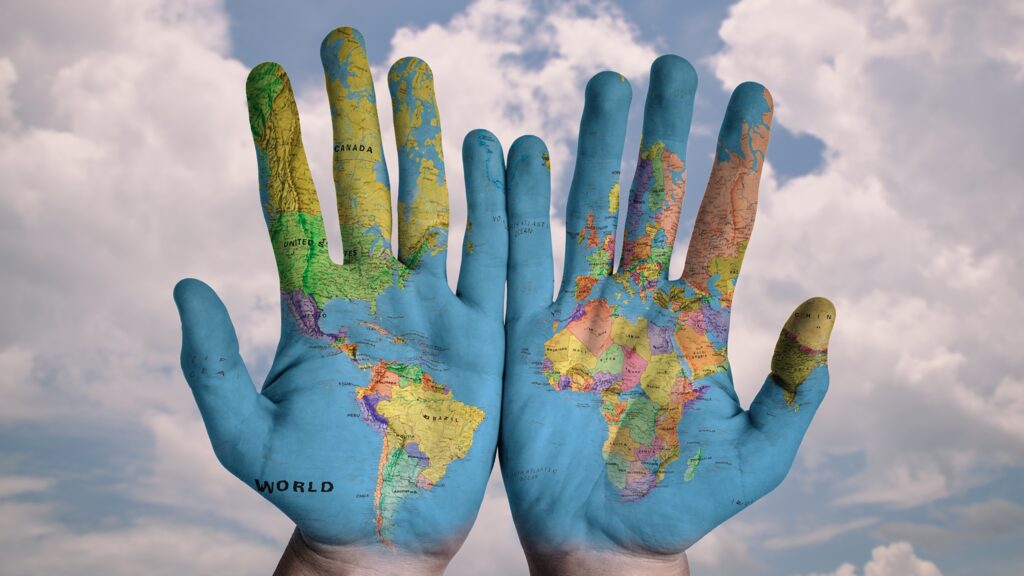
Imagine a world where the rules of engagement, the pillars of finance, and the very structure of international diplomacy are no longer dictated by a privileged few. This is not a distant utopia; it is the unfolding reality of our time. The Global South, a vast tapestry of nations spanning continents and cultures, representing 85 percent of humanity, is stirring from a long slumber. No longer willing to occupy the periphery, this collective is stepping into the spotlight, armed with demographic heft, economic momentum, and an unyielding demand for equity. The era of passive acceptance is over; the age of active reconstruction has begun.

The Weight of Numbers: A Demographic Revolution
The term ‘Global South’ transcends geography; it embodies a shared experience of historical marginalization and a common aspiration for a fairer future. With over six billion people, it is home to the youngest populations, the fastest-growing economies, and some of the most dynamic societies on Earth. For centuries, however, its potential was stifled by colonial extraction and post-colonial architectures of power that concentrated authority in the hands of the Global North. Today, that script is being torn up. The awakening is palpable, from the bustling tech hubs of Bangalore and Lagos to the diplomatic corridors where new alliances are forged. It is a quiet revolution, gaining volume with each passing year, challenging the notion that some voices matter more than others in the choir of nations.
This shift is not merely rhetorical. It is structural, financial, and deeply political. The post-World War II order, characterized by institutions like the International Monetary Fund and the World Bank, is being scrutinized like never before. Critics from the Global South argue that these bodies often perpetuate dependency through conditionalities that favor Western economic interests. The voting structures within them, heavily skewed toward a few wealthy nations, are seen as relics of a bygone era. The demand for reform is not a plea; it is a manifesto for change. As one economist from the region put it, ‘We are not begging for a larger slice of the pie; we are insisting on a seat at the table where the recipe is written.’
Building Bridges, Not Waiting for Permission: The Rise of Parallel Systems
Frustration with the slow pace of reform has catalyzed a more pragmatic approach: if the existing systems are resistant to change, build new ones. This is the ethos behind initiatives like the BRICS grouping Brazil, Russia, India, China, and South Africa and its New Development Bank. These are not merely talk shops; they are functional alternatives offering development financing without the political strings often attached to traditional loans. The New Development Bank, for instance, has already funded billions in infrastructure projects across member countries, focusing on sustainable development goals that align with local priorities rather than external mandates.

Similarly, regional payment systems and currency swap agreements are reducing reliance on the US dollar for trade settlements. The aim is to insulate economies from the volatility of Western financial markets and the geopolitical leverage that comes with dollar dominance. These parallel systems are not about isolationism; they are about diversification and resilience. They represent a pragmatic acknowledgment that multilateralism, to be genuine, must be multipolar. The Global South is weaving a new web of connectivity, one thread at a time, creating a safety net and a platform for mutual growth.
The Unmistakable Demand: From Tokenism to True Multilateralism
At the heart of this awakening is a profound yearning for dignity and agency. Multilateralism, in its ideal form, promises a world where nations cooperate as equals to address shared challenges like climate change, pandemics, and terrorism. Yet, too often, the Global South has experienced it as a top-down process, where their role is to ratify decisions made elsewhere. The call for ‘genuine multilateralism’ is a call to dismantle this hierarchy. It means that a small island nation facing existential threat from rising seas must have as much say in climate negotiations as a major industrial power. It means that trade agreements must consider the development needs of all partners, not just the most powerful.
This demand is reshaping global diplomacy. We see it in the united fronts presented at COP climate summits, where groups like the African Union and the Alliance of Small Island States negotiate as blocs. We see it in the cautious, non-aligned responses to great power conflicts, where countries of the Global South prioritize their own sovereignty and development pathways over choosing sides in a new Cold War. Their diplomacy is increasingly confident, nuanced, and strategic, reflecting a complex world where interests cannot be reduced to binary allegiances.
The Ripple Effects: Trade, Technology, and Cultural Resurgence
The implications of this awakening extend far beyond finance and politics. South-South trade is booming, creating new economic corridors that bypass traditional hubs. Technological innovation is flourishing, with mobile money in Kenya, e-governance in India, and renewable energy projects in Morocco setting global benchmarks. There is also a cultural and intellectual resurgence a reclaiming of narratives. Universities in the Global South are producing groundbreaking research, while filmmakers and artists are telling stories that challenge stereotypical portrayals. This holistic rise is reinforcing the sense that the future is being co-authored from multiple centers of gravity.

Navigating the Challenges: Unity in Diversity
The path forward is not without obstacles. The Global South is not a monolith; it encompasses staggering diversity in income levels, political systems, and immediate challenges. Internal disparities and conflicts can sometimes fracture solidarity. Moreover, the established powers may resist this redistribution of influence, leading to friction and even containment strategies. Yet, the overarching trend is toward greater coordination. The shared experience of navigating an unequal system has fostered a pragmatic unity. Platforms like the G77 and China provide crucial spaces for consensus-building, proving that diversity can be a source of strength rather than weakness.
In conclusion, the awakening of the Global South is the most significant geopolitical transformation of the 21st century. It is a slow-motion revolution, driven by the irrepressible force of demographics and the universal desire for self-determination. The building of parallel systems and the insistent call for genuine multilateralism are not acts of rebellion for its own sake; they are necessary corrections to a system that has long been unbalanced. As we look to the future, the world must choose: to cling to outdated frameworks and risk greater fragmentation, or to embrace this pluralism and work toward a more just and stable global order. The rules are being rewritten, and this time, the authors represent the overwhelming majority of humanity. The story is still being written, but one thing is clear: the Global South will no longer be a footnote in history; it is becoming the main text.