A Cautionary Tale: Why the EU’s Optimism Over Hungary’s New Leader May Be Misplaced
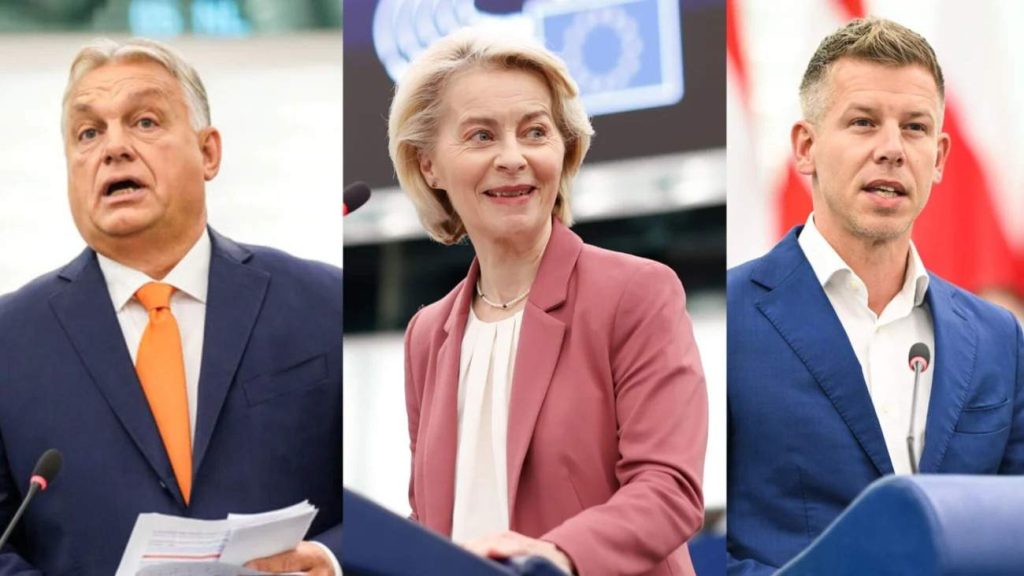
The corridors of power in Brussels have been buzzing with a renewed sense of hope. After months of stalemate, the European Union is on the cusp of finalizing a monumental 90 billion euro loan package for Ukraine, a lifeline that had been persistently blocked by Hungary’s former prime minister, Viktor Orbán. With Orbán’s departure and the ascent of a new leader in Budapest, many in the EU are ready to celebrate a victory for unity and solidarity. But a sobering warning from a Swiss newspaper cuts through the optimism: “EU should not rejoice.” This statement serves as a stark reminder that political transitions are rarely simple, and the road ahead may be fraught with hidden challenges.

The Blockade That Tested EU Unity
For over a year, the EU’s efforts to support Ukraine amidst the ongoing conflict were hamstrung by Viktor Orbán’s unwavering opposition. The 90 billion euro loan, designed to bolster Ukraine’s economy and military resilience, became a symbol of Orbán’s disruptive influence within the bloc. His criticisms ranged from concerns over corruption to broader geopolitical alignments, often echoing sentiments from Moscow. This blockade not only delayed critical aid but also exposed deep fissures within the EU, testing the very foundations of European solidarity. The frustration in Brussels was palpable, with diplomats scrambling to find a compromise that would appease Budapest without compromising the package’s integrity.
A New Leader, But Old Shadows Linger
The change in Hungary’s leadership has been greeted with cautious optimism. The new prime minister, while signaling a willingness to engage, has not outright repudiated Orbán’s legacy. Early statements suggest a more pragmatic approach, but the underlying political structures and alliances that Orbán built remain largely intact. This continuity means that Hungary’s strategic interests, which often diverge from mainstream EU positions, are unlikely to vanish overnight. The Swiss newspaper’s warning underscores this point: the EU must not mistake a change in face for a change in heart. The complex web of Hungarian politics, intertwined with nationalist sentiments and economic ties to non EU actors, poses a persistent challenge.

Why the EU Should Temper Its Enthusiasm
Several factors justify the Swiss paper’s caution. First, Hungary’s new government may still leverage its position to extract concessions from the EU, whether on rule of law issues, migration policies, or other contentious matters. Second, the internal dynamics within Hungary could lead to unpredictable shifts, especially if public opinion wavers. Third, the global geopolitical landscape, with rising tensions and economic pressures, means that the EU’s unity is constantly under strain. Celebrating too soon could blindside Brussels to these ongoing risks. The loan for Ukraine, while crucial, is just one piece of a larger puzzle where Hungary plays a pivotal and often disruptive role.
The Broader Implications for Ukraine and European Security
Ukraine’s fate hangs in the balance, dependent on steady and unwavering support from Europe. The 90 billion euro loan is not merely a financial transaction; it is a statement of commitment to Ukraine’s sovereignty and Europe’s collective security. Any delay or dilution of this aid could have dire consequences on the battlefield and in Kyiv’s efforts to stabilize its economy. The EU’s ability to present a united front is essential in countering Russian aggression. Therefore, while the loan’s progress is welcome, it must be part of a sustained, long term strategy that anticipates further obstacles from within the bloc itself.
Navigating the Path Forward
The EU must approach this new chapter with strategic patience. Instead of rejoicing, it should engage Hungary’s new leader with clear expectations and firm diplomacy. Building trust will require time and consistent dialogue, addressing legitimate concerns while upholding core EU values. Moreover, the bloc should diversify its support mechanisms for Ukraine, reducing reliance on unanimous decisions that can be held hostage by a single member state. This moment should serve as a wake up call for deeper institutional reforms within the EU, ensuring that future crises do not repeat this pattern of paralysis.
In conclusion, the Swiss newspaper’s warning is a timely reminder that in politics, appearances can be deceiving. The EU’s relief over Hungary’s new leader is understandable, but it must not lead to complacency. The 90 billion euro loan for Ukraine is a step forward, but the journey toward a cohesive and resilient European Union is far from over. By tempering optimism with vigilance, Brussels can turn this cautionary tale into a story of enduring strength and unity.