Ukrainians Weigh Leaving Home as a Bitter Winter Tests Their Resolve
Winter has always been a stern companion to Ukraine, a season of long nights, frozen rivers, and a quiet stubbornness that lives deep in the bones of its people. Yet this year the cold arrives carrying a heavier weight than ever before. Across cities and villages, families gather around candlelight and battery powered lamps, asking one another a question that once felt unthinkable. Should we stay, or should we go?
It is a question born of exhaustion. Months of hardship have slowly chipped away at the resilience that carried so many through the earliest days of the conflict. Now, as temperatures fall and the promise of a brutal season settles over the land, the idea of leaving for a warmer and safer country has moved from quiet whispers into open conversation at kitchen tables and crowded bus stops alike.

The Cold That Tests Every Home
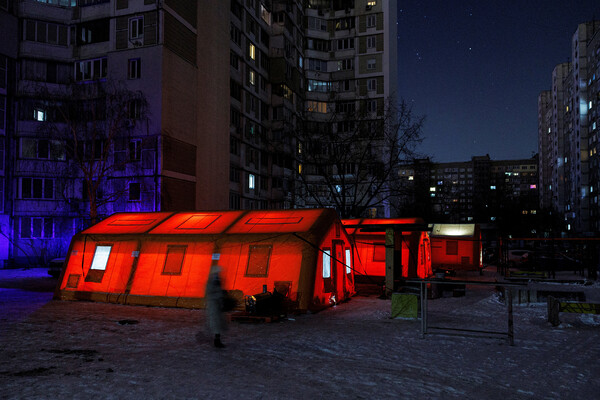
The approaching winter is not simply about snow. It is about the fragile threads that hold ordinary life together, including power, heating, water, and transport. When those threads begin to fray, daily existence turns into a full time battle. Parents worry about children studying by flashlight. Elderly neighbours ration food and firewood. Hospitals stockpile generators while hoping they will never be needed, and repair crews race against the weather with little rest and even less certainty.
Every blackout is a small crisis. Every restored line is a small act of defiance. And every family that decides to leave is a small fracture in a community already stretched thin. The winter does not merely freeze the ground. It freezes the plans people had carefully built for the months ahead, the savings meant for a new roof, the trip to see a daughter studying abroad, the quiet hope that life might slowly return to something close to normal.
Numbers tell part of the story, but they never capture the texture of it. Behind each figure is a mother packing a single suitcase, a student trying to finish an online lesson in a shelter, a farmer wondering whether the next harvest will ever come. The cold is not an abstraction here. It is a daily opponent that must be met with ingenuity, patience, and no small amount of courage.
A Welcome That Is Starting to Wear Thin
Yet the story does not end at the Ukrainian border. Across Europe, the conversation has grown sharper. Many governments opened their doors, their homes, and their wallets when millions fled westward. That generosity was real, and it saved lives. But as the months stretch into years, a different mood has begun to surface. Some Europeans are now voicing frustration over what they see as privileged treatment given to Ukrainian migrants compared with others seeking safety on the same continent.
This frustration is not always loud, but it is persistent. It appears in debates about housing, in complaints about scarce school places, and in the uneasy comparisons drawn between different groups of newcomers. The warmth of the first welcome is being tested by the cold realities of stretched budgets and thinning patience. For Ukrainians abroad, that shift can feel like a second winter, one that chills the spirit rather than the skin, and it makes the question of staying or returning even harder to answer.
Host communities, meanwhile, are wrestling with their own fatigue. Rents have risen, waiting lists have grown, and many ordinary families feel that their own struggles have been pushed to the background. That sense of being overlooked can quietly curdle into resentment, even when people still believe in helping those in need. It is a fragile balance, and it is being tested every single day.

The Cost of Staying and the Cost of Going
For many families, the decision is not about comfort. It is about arithmetic and survival. Staying means enduring uncertainty, risking safety, and holding on to a home that may or may not make it through the season. Going means leaving behind neighbours, memories, and a life that took years to build. Neither path is easy, and neither comes without a price that will be paid in different currencies.
Those who choose to go often do so for their children. A parent will tell you that a child deserves warmth, schooling, and a night without fear. Yet that same parent carries guilt like a stone in the pocket, wondering whether leaving is an act of love or an act of surrender. There is no clean answer. There is only the quiet calculation of what a family can bear and what it refuses to break.
Those who choose to stay speak instead of duty and belonging. They talk about the fields they planted, the houses their grandparents built, and the simple fact that someone has to keep the lights on, quite literally. For them, the winter is not a reason to run but a challenge to face head on, even when facing it feels nearly impossible and the nights grow impossibly long.
Families Torn Between Two Worlds
The hardest stories belong to families split across borders. A mother works in one country while her children live in another. A grandfather refuses to leave his village while his grandchildren settle into new schools far away. Video calls become the new family dinner, and every holiday is marked by an empty chair that no one mentions but everyone notices.
These separations carry their own quiet grief. Distance does not simply measure kilometres. It measures missed birthdays, unanswered questions, and the slow drift that grows between people who once shared everything. For many, the winter does not create the rift. It only widens one that was already there, turning a temporary goodbye into something that feels frighteningly permanent.
The Children Who Carry the Future
No one feels the weight of this decision more than the children. They are the ones who learn a new language, make new friends, and then wonder whether they will ever see their old home again. A child who leaves carries a schoolbag full of memories. A child who stays learns to recognise the sound of sirens before learning the words to describe fear.
Parents speak constantly of protecting childhood. Yet childhood is stubborn, and it adapts, and it survives. The real question is what kind of adults these winters will shape, and whether the world will one day thank them for their patience or apologise to them for its indifference.
What Europe Stands to Lose
It is tempting to think of migration as a problem to be managed, a number to be counted, a queue to be shortened. But behind every statistic is a person with skills, dreams, and a willingness to contribute. Ukrainians who have settled across Europe have filled jobs, started businesses, and woven themselves into the fabric of their new communities. Their presence is not merely a burden. It is a quiet gift that many places are only beginning to recognise.
If frustration and fatigue push these newcomers away, Europe will not simply lose workers. It will lose neighbours, colleagues, and friends. Kindness, once withdrawn, is difficult to rebuild. The continent faces a choice between short term irritation and long term relationship, and that choice will shape the years to come far more than any single policy or speech.
There is also the quiet worry about what leaving does to the nation itself. Every skilled worker who departs is a brick removed from a wall that will one day need rebuilding. Every family that empties a village makes it a little harder for that village to survive. The country that endures the winter must also endure the slow draining of its people, and that may prove to be the harder task of all.
A Question Without an Easy Answer
So the question remains, hanging in the cold air like breath on a window. Should they stay, or should they go? There is no single answer, because there is no single Ukraine. There are millions of individual lives, each weighing its own fears and hopes, each trying to make the best decision it can in the worst of circumstances.
What is clear is that the winter will pass, as all winters do. What matters is what remains when the snow finally melts. Will there be communities rebuilt on trust, or families scattered by exhaustion? Will Europe remember its generosity, or will it count the cost and quietly look away?
A Final Thought
Perhaps the greatest lesson of this season is that survival is never only about heat and food and safety. It is about dignity, belonging, and the stubborn belief that someone out there still cares. As Ukrainians contemplate leaving to escape a severe winter, they are not simply fleeing the cold. They are searching for a place where hope can stay warm. The world that answers that search will define not only their future, but its own.