Ukraine Faces Its Toughest Winter Since 2022 and Russian Attacks Remain Unstoppable
The first icy gust of autumn has already swept across the Dnipro River, carrying with it a message that every Ukrainian now recognizes: winter is coming, and with it, the bombs. In the corridors of power in Kyiv, the mood is grim. Intelligence briefings warn of a renewed and even more brutal campaign against the country’s energy infrastructure. Russian stockpiles of missiles have reportedly grown, and the tactics that failed to break Ukraine in 2022 are being refined and reinforced. The coming months are expected to be the hardest since the full scale invasion began.

The return of winter warfare
The Russian military has always understood the strategic value of winter. In 2022, it tried to use the cold as an ally, turning off the lights in major cities with waves of rocket fire. That campaign caused enormous suffering, but it did not achieve its political objective. Ukraine survived, thanks in part to a milder winter and to the extraordinary efforts of repair crews. Now, two years later, the situation is different. The grid is weaker after multiple rounds of attacks, and the country has less time to prepare.
Moscow appears to be planning a longer and more systematic effort. Instead of a few weeks of panic, this could be months of continuous pressure. The goal is to make life so unbearable that public opinion shifts and the Ukrainian government is forced into negotiations on Russian terms. The energy grid is the target because it is the nervous system of the modern state. Without electricity, there is no water, no heat, no communication, no industrial production, and no effective defense.
Lessons from the last major grid war
The winter of 2022 taught both sides valuable lessons. For Russia, it showed that a single wave of missiles is not enough. The attacks must be sustained, layered, and carefully timed to overwhelm defenders. For Ukraine, it revealed the importance of redundancy and quick repair. Mobile substations, pre positioned transformers, and underground cables became essential tools. Yet despite these preparations, the upcoming winter will be far more dangerous. The energy system has never fully recovered from the previous damage, and new strikes are arriving faster than repairs can be completed.
Ukrainian grid operators have stockpiled spare parts and developed emergency procedures. Engineers have studied the exact weaknesses that Russian forces exploited and have tried to harden those points. But hardening a power plant against a missile strike is not like reinforcing a bunker. It often requires expensive structures that can withstand a direct impact, and most facilities simply do not have that level of protection. Instead, Ukraine relies on quick thinking and rapid response teams that move to the damaged site with mobile generators and replacement equipment.
How the attacks are being intensified
Russian forces are using a mix of weapons, from outdated cruise missiles to modern hypersonic systems. Drones play a central role. Iranian made Shahed drones are cheap, plentiful, and hard to intercept. They are often used in swarms to saturate air defenses, while more expensive missiles follow the same corridors to strike key facilities. This approach forces Ukrainian defenders to choose which threats to engage. Every choice leaves another point of vulnerability exposed.
There is also evidence of Russian spying and targeting preparation. Observers have noted that strikes often hit the exact components of a power station that would take the longest to repair, such as transformers and switchgear. This is not random. It is the result of careful planning and, likely, intelligence gathered from local sympathizers and aerial reconnaissance. Ukraine has worked to counter this, but the scale is daunting. Power plants are large, sprawling sites, and protecting every square meter is impossible.

Why Ukraine cannot stop every strike
The limitations of Ukraine’s air defense are not a secret. Patriot systems are among the best in the world, but there are only a handful of them. To protect a country the size of Ukraine, one would need hundreds of such systems, each with a steady supply of interceptor missiles. The West has provided enough to keep the airspace contested, but not enough to create a perfect shield.
Moreover, modern air warfare is a numbers game. A single Patriot battery can engage several targets at once, but it has a finite magazine. When a Russian attack wave includes dozens of drones and missiles, the battery will eventually run empty. Reloading takes time, and time is exactly what the attacker is trying to exploit. The Russians have learned to send multiple waves, forcing Ukrainian crews to fire quickly and then wait for resupply. During that window, a second missile can strike with little resistance.
Electronic warfare is another challenge. Russian forces use GPS jamming and decoy drones to confuse radar and infrared systems. Some Ukrainian air defense units have reported that their missiles sometimes chase false targets, wasting millions of dollars. These are not failures of Ukrainian skill. They are the result of a technologically advanced adversary adapting to the battlefield. The result is that while many Russian attacks are indeed thwarted, the ones that slip through are often the most damaging.
The human toll of endless blackouts
The winter of 2022 brought images of crowded subways and tent cities for displaced people. The coming winter may be even worse. Hospitals and schools have backup power, but many residential areas do not. In a dense city like Kharkiv or Odesa, a major blackout means that heating pipes freeze and burst. Water supply stops because electric pumps fail. Sewage systems back up. People who live on the tenth floor of an apartment building cannot use the elevator and may not be able to climb the stairs in the dark with heavy bags of supplies.
For the elderly and the sick, the situation is dire. Cold can be lethal, especially for those with cardiovascular and respiratory conditions. The absence of electricity also affects the cold chain for medicines, including insulin and vaccines. Doctors warn that blackouts could lead to a humanitarian crisis that is separate from the war itself. The psychological burden is equally heavy. Parents watch their children shiver under blankets and wonder how much more they can endure.
Western support and its limits
The United States and Europe have not abandoned Ukraine. New packages of air defense missiles are being delivered. Engineers from allied countries are helping to repair damaged transformers and provide spare parts. Yet the pace of assistance is often slower than the pace of destruction. Bureaucracy, logistics, and political debates in foreign capitals all contribute to delays. By the time a new system arrives, several more sites have already been hit.
There is also a debate about whether Ukraine should be allowed to use Western weapons to strike launch sites deep inside Russia. Some allies fear that this could escalate the war into a direct confrontation. Others argue that the right to self defense includes the right to neutralize threats at their source. Without this authorization, Ukraine is forced to fight with one hand tied behind its back. The missile launchers remain beyond reach, and the attacks continue.
Resilience and the will to survive
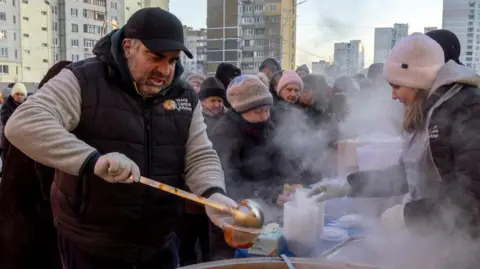
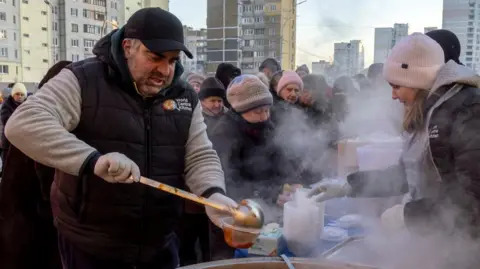
Despite these overwhelming challenges, Ukrainian society is not waiting for salvation. Communities have formed volunteer groups to install generators in public shelters. Local businesses are offering free charging stations. Farmers are sharing their fuel reserves to run small power systems for nearby villages. This culture of mutual aid has become a defining feature of the Ukrainian wartime experience.
Engineers and grid repair crews deserve special recognition. They work in freezing temperatures, often under enemy fire, to reconnect lines that have been severed. They have developed methods to bypass damaged sections and temporarily restore power using mobile generators. It is a heroic effort, but it is not a long term solution. Each repair is expensive and dangerous, and the same facilities can be targeted again within days.
What the world must do
The Ukrainian government has made its case clearly: provide more air defense systems, more interceptor missiles, more transformers, and more long range weapons. But there is also a need for political courage. History will judge the decisions made in Western capitals this season. Inaction, wrapped in the language of caution, may be seen as complicity in a policy of collective punishment.
Ukraine does not need moral support alone. It needs concrete tools to protect its people and prevent the energy grid from collapsing entirely. The technology exists. The logistics are complicated but possible. The only missing ingredient is political will. If the winter becomes a catastrophe, the world will have to answer a difficult question: did we do enough while there was still time?
Conclusion: light in the darkness
Ukraine is entering the hardest months since 2022. Russian attacks on the energy grid are intensifying, and the air defense system cannot stop every missile and drone. The power will fail, the cold will bite, and there will be losses. But Ukraine has also proven that it is not a country that surrenders to the dark. Its people find light in small acts of courage: a neighbor sharing a warm meal, a mechanic fixing a generator in the snow, a soldier fighting on despite exhaustion.
The struggle is not only about territory and borders. It is about the very idea that a nation can exist without fear, that homes can be warm, and that life can go on. As the world watches, Ukraine asks for the tools to survive. Whether the answer comes in time will determine not only the fate of this winter, but the shape of the peace that follows. For now, the lights flicker, but they do not go out.