Uganda’s BRICS Ascent: How East Africa is Redefining Global Trade, De-Dollarization, and the India-Africa Power Axis in 2026
The Dawn of a New Diplomatic Era
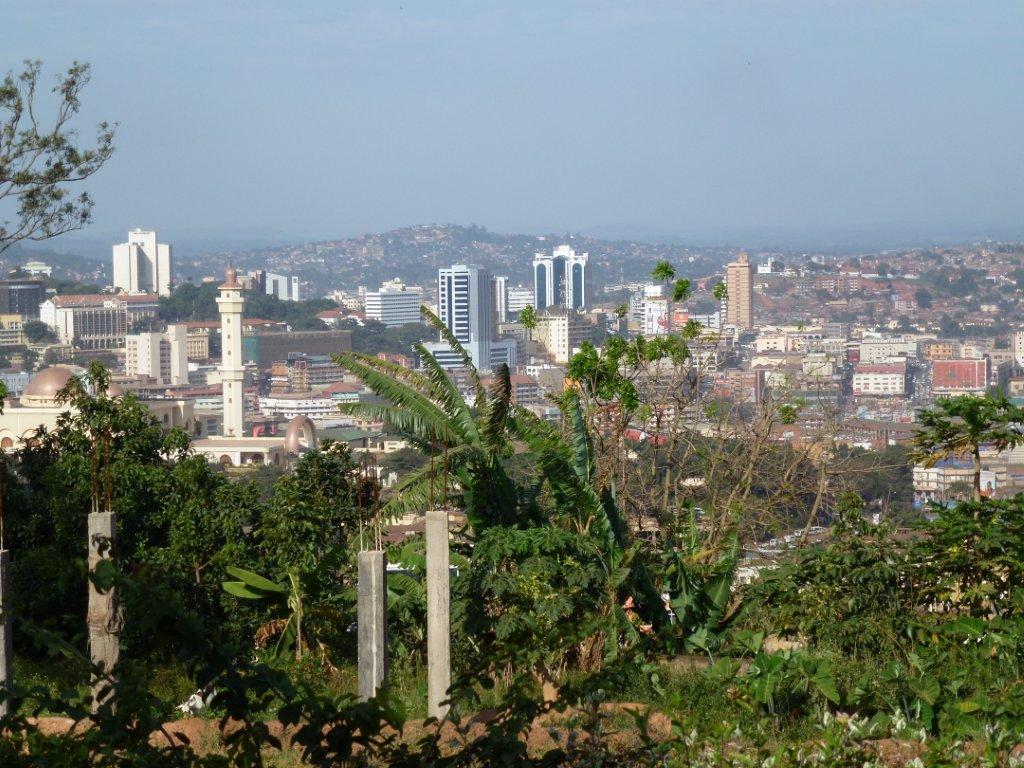
Imagine standing at the crossroads of history, where the old world order quietly crumbles and a new one rises from the ambitions of nations long relegated to the periphery. This is precisely where Uganda finds itself in 2026. Foreign Affairs Minister General Jeje Odongo, a man whose military bearing belies a sharp diplomatic instinct, has steered Uganda into a position that would have seemed unthinkable just a decade ago. Uganda is now a confirmed BRICS partner state and a key participant in the Fourth India Africa Forum Summit, two monumental gatherings both converging on New Delhi this year. The symbolism is impossible to ignore: a landlocked East African nation of 49 million people, once dismissed as a minor player, now stands at the epicenter of a tectonic shift in global geopolitics. The BRICS bloc, representing approximately 45% of the world’s population and over 40% of global GDP by purchasing power, has opened its doors to Uganda. Meanwhile, India, the world’s most populous nation and a rising superpower, is rolling out the red carpet for African leaders in what promises to be the most consequential India Africa summit yet. This is not merely about diplomatic ceremonies or photo opportunities. It is about Uganda positioning itself within a new architecture of power, one where South South cooperation replaces patron client relationships, where de-dollarization becomes a tangible strategy rather than an academic slogan, and where African nations finally get a seat at the table where decisions are made.

Uganda’s BRICS Partner Status: More Than Just a Title
When the BRICS bloc created the ‘partner country’ category during its 2024 summit in Kazan, Russia, few observers predicted that Uganda would be among the first wave of nations admitted. Yet on January 1, 2025, Uganda formally joined eight other nations as a BRICS partner state, a designation that falls just short of full membership but carries substantial institutional weight. The partner category was an ingenious diplomatic innovation. It allowed BRICS to deepen relationships with strategically important nations without requiring the formal commitment and institutional integration demanded of full membership. For Uganda, this was the perfect entry point. The nation’s 49 million strong population, its $51 billion GDP, its vast agricultural capacity feeding into a bloc wide market of 4.5 billion people, and its growing significance in regional energy and infrastructure development all converged to make it an irresistible candidate. But there is a deeper story here, one that goes beyond statistics. Uganda’s selection as a BRICS partner rather than other East African competitors reflects something more profound: a deliberate alignment with emerging powers that promise equitable partnerships, sustainable development pathways, and reformed global governance mechanisms. As Minister Odongo himself has stated, Uganda must ‘speak with clarity, advocating for a world order where power is shared, not hoarded.’ Those words capture the essence of why BRICS matters to Uganda and why Uganda matters to BRICS.
The BRICS framework that Uganda has now entered represents a fundamental departure from traditional Western dominated multilateral institutions like the International Monetary Fund and the World Bank. Established in 2009 on the premise that international institutions had become overly concentrated in the hands of Western powers, BRICS has evolved from an economist’s analytical construct into the world’s most consequential challenge to the post World War II global order. With ten confirmed full members including Brazil, Russia, India, China, South Africa, Egypt, Ethiopia, Iran, the United Arab Emirates, and Indonesia, plus ten partner countries, BRICS now encompasses approximately 55% of the world’s population. For Uganda, the partner country classification grants substantive institutional access and participatory rights. Ugandan officials can attend BRICS summits, contributing perspectives to discussions regarding de-dollarization initiatives, alternative financial architecture, and coordination of positions within multilateral organizations. This access proves particularly valuable as BRICS pursues its agenda of reforming global governance structures and advocating for expanded representation within the United Nations Security Council.

The India Africa Forum Summit 2026: A Decade in the Making
After a ten year hiatus, the Fourth India Africa Forum Summit is finally arriving, and the timing could not be more significant. Scheduled for May 31, 2026, in New Delhi, this gathering represents the culmination of a decade long diplomatic initiative designed to formalize and deepen cooperation between India and the African continent. The official theme, ‘IA SPIRIT: India Africa Strategic Partnership for Innovation, Resilience, and Inclusive Transformation,’ encapsulates India’s positioning of itself as a non exploitative, equitable partner committed to supporting Africa’s priorities. For Uganda, this summit carries particular weight. The preliminary meetings of foreign ministers on May 29th will provide opportunities for detailed bilateral and multilateral consultations, while the main leaders’ summit on May 31st will focus on high level decision making regarding priority cooperation areas spanning energy, environment, digital technology and innovation, agricultural productivity, health infrastructure, and educational capacity building. The historical ties between India and Uganda stretch back more than a century. Indians first arrived in Uganda during the early twentieth century, establishing themselves as merchants, traders, and entrepreneurs who subsequently became integral to the nation’s commercial and industrial development. Today, the Indian community in Uganda represents one of the continent’s most significant diaspora communities, with members investing over $1 billion in Ugandan enterprises spanning manufacturing, trade, agro processing, banking, sugar production, real estate, hospitality, and information technology sectors.
The summit structure reflects careful diplomatic design. India has extended lines of credit for electricity infrastructure worth $141 million and agricultural development assistance valued at $64 million to Uganda. Additionally, Uganda benefits from India’s Duty Free Tariff Preference Scheme extended to least developed countries, facilitating enhanced market access for Ugandan exports. Trade relationships have deepened substantially, with Indian exports to Africa encompassing pharmaceutical products, vehicles, plastic goods, paper products, and organic chemicals, while African exports to India include agricultural commodities, coffee, tea, spices, wood products, cotton, cocoa, and essential oils. This diversified trade portfolio reflects genuine complementarities in production capabilities and consumption patterns rather than extractive relationships where developed nations obtain raw materials while selling manufactured goods. The India Uganda business forum convened during April 2026 specifically emphasized agricultural trade opportunities, encouraging Ugandan producers to engage directly with Indian counterparts and participate in broader India Africa commercial networks.
Economic Transformation: Uganda’s Gateway to 4.5 Billion Consumers
Let us be clear about what BRICS partnership and India Africa cooperation mean for the average Ugandan. For the farmer in Mbarara growing coffee beans, it means access to markets encompassing billions of consumers in India, China, Brazil, and throughout Africa. For the entrepreneur in Kampala developing agro processing technology, it means potential partnerships with Indian manufacturers and access to BRICS development finance. For the young graduate in Gulu seeking opportunities in information technology, it means exposure to India’s world class IT sector and the possibility of technology transfer that builds local capacity. Uganda’s agricultural sector, where seven in ten Ugandans engage in farming, represents precisely the commodity base that BRICS members seek to integrate into their regional and global supply networks. The Ugandan farmer transitions from operating primarily within national or bilateral trade frameworks into a market of unprecedented scale. Rather than competing primarily within global commodity markets mediated by international trading firms and subject to price volatility determined by Western financial markets, Ugandan producers can now develop direct relationships with buyers representing billions of consumers within BRICS structures. This is the kind of structural transformation that development economists have advocated for decades, but which traditional Western dominated trade regimes have consistently failed to deliver.
Beyond agricultural commodities, Uganda’s strategic positioning opens opportunities in energy and mining sectors. BRICS nations collectively prioritize securing access to critical resources necessary for industrialization and energy transition, including mineral resources and hydroelectric capacity that Uganda possesses in abundance. The New Development Bank, BRICS’ flagship alternative development finance institution, has approved over $42.9 billion across 139 projects and explicitly prioritizes infrastructure development, clean energy transitions, and sustainable development projects. Uganda’s eligibility to receive New Development Bank financing for energy infrastructure projects represents access to development capital not subject to the conditionalities that traditional Western development institutions impose. Manufacturing and industrial development represent additional sectors where Uganda can leverage BRICS partnership for developmental advancement. India has developed sophisticated manufacturing capabilities in pharmaceuticals, textiles, automotive production, and light manufacturing that can be replicated throughout Africa through technology transfer and foreign direct investment. Uganda’s strategic location in East Africa, coupled with its developing transportation infrastructure, positions the nation as a potential hub for BRICS backed manufacturing and agro processing enterprises serving regional and continental markets.
De-Dollarization, BRICS Currency, and the Future of Finance
Here lies perhaps the most revolutionary aspect of Uganda’s BRICS engagement: the systematic reduction of dependence upon the United States dollar for international transactions. This de-dollarization agenda, while frequently presented as merely technical banking innovation, constitutes fundamentally political restructuring of global financial architecture. For decades, developing nations have been trapped within a dollar dominated financial system where international transactions flow through clearing systems ultimately subject to U.S. government control and sanctions authority. Nations that invoke policies contradicting U.S. preferences find themselves excluded from dollar clearing mechanisms, effectively removing them from global financial systems. BRICS members have increasingly experienced this sanctions constraint, motivating their pursuit of de-dollarization initiatives that insulate national economies from Western financial weaponization. Uganda’s participation in BRICS coordinated de-dollarization initiatives offers protection against potential future sanctions that Western powers might impose should Uganda’s foreign policy diverge from Western preferences. The BRICS Pay initiative, scheduled for operational deployment in 2026 with India’s central bank leading technical coordination efforts, represents the concrete institutional embodiment of these ambitions. BRICS Pay will enable international transactions between BRICS members conducted in local currencies rather than dollars, eliminating the need to convert currencies through dollar denominated intermediaries.
For investors watching these developments, the implications are profound. While there is no official ‘BRICS coin’ or ‘BRICS token’ available for purchase today, the broader movement toward real world tokenization of cross border trade finance and the potential emergence of a BRICS currency have captured the imagination of those looking to invest in BRICS led financial infrastructure. The concept of real world tokenization, where physical assets and financial instruments are represented as digital tokens on blockchain networks, aligns naturally with BRICS’ ambitions to create parallel financial rails outside Western control. Those who study these trends closely understand that investing in real world tokenization projects linked to BRICS trade corridors could represent a generational opportunity. The BRICS currency discussion, while still evolving, signals a future where the dollar’s monopoly on international trade settlement faces its most serious challenge since the Bretton Woods system was established. The New Development Bank and Contingent Reserve Arrangement represent alternative financial institutions through which BRICS members and partner countries access development capital and liquidity support outside Western dominated institutions. For Uganda, this means access to development capital on terms more favorable than those traditionally available, without the ideological conditionalities that have historically constrained African developmental autonomy.
The Geopolitical Chessboard: Uganda at the Crossroads
Uganda’s strategic location in East Africa places it at the intersection of multiple geopolitical interests that BRICS expansion and India Africa cooperation seek to navigate. Positioned at the nexus of East African, Greater Horn of Africa, and Central African regional dynamics, Uganda influences security, trade, and political developments affecting millions across the broader region. Its participation in BRICS and India Africa structures amplifies the Ugandan voice within broader geopolitical conversations while simultaneously aligning Uganda within a bloc increasingly recognized as shaping outcomes regarding conflicts from Gaza to Ukraine to ongoing regional instability throughout Africa. The de-dollarization and alternative financial architecture agendas that BRICS pursues directly serve African interests by reducing Western financial domination. African nations have historically confronted conditionalities imposed by Western development finance that required policy changes aligned with Western ideological preferences, frequently necessitating privatization, reduced government spending on social services, and labor market liberalization that transferred wealth toward Western investors while impoverishing African populations. BRICS alternative finance institutions operate without equivalent ideological conditionalities, allowing African nations greater policy autonomy in pursuing development strategies aligned with national rather than external preferences.
There is also a subtle but important dynamic at play between China and India within BRICS. Both recognize East Africa as strategically consequential for their respective regional strategies, and competition between these emerging powers for influence creates opportunities for East African nations to extract concessions and investments from both countries. Uganda’s selection as a BRICS partner rather than non member status partially reflects Indian preferences, as India holds the BRICS 2026 presidency and structured the partnership country category partly to expand BRICS influence throughout Africa. India’s interest in deepening partnerships with East African nations extends beyond BRICS mechanisms into bilateral relations where India increasingly positions itself as an alternative to Chinese engagement, emphasizing Indian democracy, a different development model, and a commitment to non interference in African governance. For Uganda, this great power competition within the BRICS framework is not a problem to be managed but an opportunity to be seized.
Leadership and Vision: General Jeje Odongo’s Foreign Policy Revolution
Behind Uganda’s diplomatic ascent stands a figure whose trajectory mirrors the nation’s own transformation. General Jeje Odongo, appointed as Uganda’s Foreign Affairs Minister in June 2021, brought with him a military background that included previous service as State Minister for Defence and Minister of Internal Affairs. This security oriented perspective has proven invaluable in understanding the geopolitical dimensions of development policy and international partnership selection. Odongo’s diplomatic messaging consistently emphasizes Uganda’s aspiration to participate in reshaping the global order toward greater equity and power distribution. His framing of Uganda as a participant in sustainable development alongside BRICS partners resonates with a broader development agenda that emphasizes equitable growth, environmental protection, and inclusive prosperity. The ministerial visit to New Delhi for the India Uganda business forum in April 2026, immediately preceding the India Africa Forum Summit, demonstrates the prioritization of commercial relationships within Odongo’s broader foreign policy strategy. The business forum’s explicit focus on agricultural trade, manufacturing development, and technology transfer indicates that Ugandan leadership recognizes commercial relationships as necessary complements to diplomatic participation in multilateral forums.
Odongo’s statement that Uganda’s BRICS partner status ‘marks a significant milestone in the country’s foreign relations and development aspirations’ coupled with his assertion that Uganda ‘joins a group of countries with shared goals as they pursue sustainable development’ signals a ministerial interpretation of BRICS participation as consequential for Uganda’s development trajectory rather than merely ceremonial membership in another international forum. This is leadership that understands the moment. In a world where the post World War II order is visibly fracturing, where Western dominated institutions struggle to maintain legitimacy, and where emerging economies are building alternative frameworks for cooperation, Uganda has chosen its side. It has chosen to be a participant rather than a spectator, a voice rather than an echo, a partner rather than a supplicant. The September 2026 BRICS summit in New Delhi, under India’s presidency, will be the next chapter in this unfolding story. Uganda will be there, at the table, speaking with the clarity that Minister Odongo has promised.
Conclusion: A Nation Transformed, A Continent Reimagined
Uganda’s participation in the India Africa Forum Summit and its status as a BRICS partner state represent far more than diplomatic milestones. They signal a fundamental reorientation of Uganda’s place in the world. The convergence of these two major international engagements, the Fourth India Africa Forum Summit in May 2026 and India’s BRICS presidency hosting the September 2026 summit, positions Uganda at the epicenter of South South cooperation networks that increasingly shape global governance, economic relationships, and developmental pathways. The economic opportunities flowing from BRICS partnership and India Africa cooperation are substantial. Ugandan agricultural producers gain access to markets encompassing billions of BRICS member consumers. Access to BRICS development finance through the New Development Bank and alternative payment mechanisms through BRICS Pay provide financial resources and monetary autonomy previously unavailable outside Western dominated institutions. Manufacturing development, technology transfer, and sectoral collaboration offer pathways toward economic diversification. Looking toward the future, Uganda’s full participation in the upcoming India Africa Seed Summit in September 2026 and BRICS summit processes promises deepening institutional integration. The decisions and frameworks established during the May 2026 India Africa Forum Summit will shape cooperation trajectories for years to come. For those watching global finance and geopolitics, Uganda’s story is a signal. It signals that alternatives to Western dominated development partnerships exist. It signals that emerging economies increasingly offer compelling alternatives for development cooperation, trade, technology transfer, and institutional participation. It signals that the map of global power is being redrawn, and Africa is no longer content to be a passive territory on someone else’s map. As BRICS prepares for its September 2026 summit, as the India Africa partnership deepens, and as Uganda continues to find its voice within these forums, one thing is clear: the old order is passing, and a new one is being born. Uganda intends to be present at the creation.
- New Vision: What Uganda Stands to Gain from BRICS Partner Status
- YouTube: Uganda and BRICS Partnership Analysis
- Wikipedia: General Jeje Odongo Biography
- DWCUG: Uganda’s BRICS Partnership and Global Order
- India Africa Seed Summit 2026
- New Vision: Uganda Becomes BRICS Partner State
- MEA India: Fourth India Africa Forum Summit
- Rio Times: BRICS 2026 Complete Guide
- Brookings: India Africa Briefing Book
- PML Daily: Uganda to Join BRICS and India Africa Summits
- Xinhua: India Uganda Business Forum Coverage
- CSEP: India Africa Forum Summits Analysis
- CFR: What is BRICS and Why is it Expanding
- MEA India: India Uganda Bilateral Briefs