Trump’s Arctic Ambition Faces Icy Realities
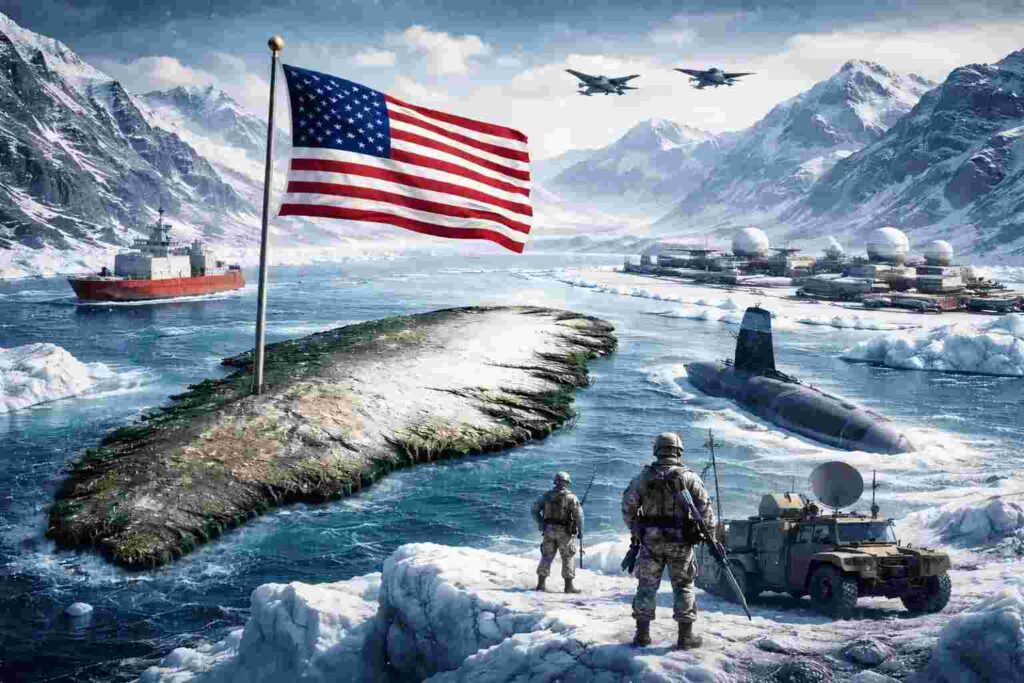
The Arctic wind howls across the ice, a sound that has echoed for millennia, a symphony of nature’s indifference. For most of human history, this frozen realm was a remote, inaccessible frontier, known only to indigenous peoples and a handful of explorers. But the 21st century has rewritten that story. As global temperatures rise, the Arctic ice cap is shrinking, revealing new shipping routes, untapped oil and gas reserves, and strategic vulnerabilities. Former President Donald Trump, never one to shy away from bold geopolitical projects, has advanced a comprehensive Arctic strategy aimed at cementing American influence in this thawing wilderness. His vision is expansive: more icebreakers, military bases, economic partnerships, and a clear message that the United States will not cede the Arctic to rivals like Russia and China. Yet, as the brief snippet from Infobrics warns, ‘Washington will have many difficulties implementing its plans for the Arctic.’ This is not a minor caution; it is a profound understatement. The challenges are as deep as the permafrost and as unpredictable as the shifting ice. From logistical nightmare to diplomatic friction, from environmental backlash to indigenous rights, the path to an American Arctic is paved with obstacles that could freeze any ambition solid.

The Vision: An American Arctic
Trump’s Arctic strategy is laid out in a series of executive orders and policy directives that emphasize national security, economic development, and environmental stewardship (though the latter often takes a backseat). At its heart is a push to expand the US icebreaker fleet, currently a laughingstock compared to Russia’s armada. The plan calls for building at least three new heavy icebreakers and multiple medium ones, a multibillion dollar endeavor. It also aims to establish a new US consulate in Greenland, a move that rekindles Trump’s infamous desire to buy the island. Beyond that, there are plans to modernize radar systems in Alaska, increase military exercises in the region, and promote private sector investment in Arctic mining and energy. The Ambler Road project in Alaska, which would open a mineral rich area to extraction, is a key component. Trump’s national security advisor, in a recent statement, called the Arctic ‘the next great frontier for American leadership.’ But leadership requires follow through, and that is where the ice gets thin.
The Harsh Arithmetic of the Arctic
The first and most tangible challenge is the physical environment. The Arctic is not a forgiving place. Temperatures can drop to minus 60 degrees Celsius. Sea ice is not a static platform but a moving, crushing force. Storms are frequent and unpredictable. For a navy and coast guard that have not prioritized polar operations for decades, the learning curve is steep. The US has only one heavy icebreaker, the Polar Star, commissioned in 1976, which is operational only part of the year due to mechanical issues. The Coast Guard has budgeted for new vessels, but shipbuilding is slow; the first new heavy icebreaker, the Polar Security Cutter, is not expected until 2028 at the earliest, and that date may slip. Meanwhile, Russia operates a fleet of over 40 icebreakers, including the world’s only nuclear powered ones, giving it year round access to the Northern Sea Route. This imbalance is not just about prestige; it has real strategic implications. If a crisis erupts in the Arctic, the US may be unable to project power or even respond to a search and rescue incident. The physical infrastructure on land is equally lacking. Airports in Alaska’s Arctic region are few and often inadequate for heavy transport. Deep water ports are nonexistent. Communications are spotty. Building these facilities from scratch in a harsh environment is a decades long undertaking. The US Army Corps of Engineers estimates that a basic deep water port in Nome could cost over $1 billion and take 15 years to complete. And that is just one port.

Geopolitical Chessboard: Russia and China
If physical challenges were not enough, the geopolitical landscape is a minefield. Russia views the Arctic as its own backyard. It has the longest Arctic coastline, the largest population in the region, and immense natural resources. Moscow has been militarizing the Arctic for years, reopening Soviet era bases, stationing advanced air defense systems, and conducting large scale exercises. The Northern Fleet, based in Murmansk, is Russia’s most powerful naval force, including nuclear submarines that patrol under the ice. The Northern Sea Route, which runs along Russia’s coast, is a critical economic artery for Moscow, especially as it seeks to export liquefied natural gas to Asia. Russia has established a legal framework for the route, claiming it as internal waters in many parts, a claim that the US and other nations dispute. Then there is China. Though not an Arctic state, Beijing has declared itself a ‘near Arctic state’ and has been investing heavily in Arctic infrastructure, research, and shipping. China’s Polar Silk Road is a key part of its Belt and Road Initiative. Chinese companies are involved in Russian LNG projects on the Yamal Peninsula. China also has a growing fleet of icebreakers, including the Xue Long 2, a domestically built vessel. The US must navigate this complex triangle while also managing relations with Arctic allies: Canada, Denmark (via Greenland), Norway, and Finland (now a NATO member). Trump’s transactional style has sometimes strained these alliances. His earlier comments about buying Greenland infuriated Denmark. His trade disputes with Canada have not helped. Moreover, the Arctic Council, once a model of multilateral cooperation, has been paralyzed by the Ukraine war, with Russia sidelined. Any US strategy must contend with a fragmented diplomatic landscape. Unilateral moves could provoke backlash, while cooperation requires trust that is currently in short supply.
Environmental and Indigenous Realities
The Arctic is not an empty frontier; it is home to hundreds of thousands of indigenous people, including the Inuit, the Yupik, the Saami, and many others. These communities have lived in harmony with the environment for centuries, relying on hunting, fishing, and reindeer herding for their livelihoods. They hold deep cultural and spiritual connections to the land and sea. Any major development must respect their rights, as recognized by international agreements and by US law. The Trump administration’s record on indigenous consultation has been criticized. The decision to open the Arctic National Wildlife Refuge (ANWR) to oil drilling was met with lawsuits and protests from the Gwich’in people, who depend on the caribou that calve there. Similarly, the Ambler Road project would cut through lands used by Alaska Native villages. Environmental concerns are equally pressing. The Arctic is warming at four times the global average, causing permafrost thaw, coastal erosion, and disruption of wildlife. Thawing permafrost releases methane, a potent greenhouse gas, creating a feedback loop that accelerates climate change. Increased shipping and drilling bring risks of oil spills, which would be catastrophic in icy waters where cleanup is nearly impossible. The US must balance its strategic ambitions with a responsibility to protect one of the world’s last great wildernesses and the people who call it home. This is not a trade off that can be easily managed.
Infrastructure and Logistics: The Long Road
Beyond icebreakers and diplomacy, the US needs a comprehensive infrastructure network to support Arctic operations. This includes deep water ports for resupply and emergency response, airfields capable of handling heavy cargo planes, upgraded radar and satellite surveillance, and reliable communications and weather forecasting. Much of Alaska’s Arctic coastline lacks even basic road access. The Trans Alaska Pipeline system is a lifeline but not designed for military logistics. The US military has been conducting exercises like Northern Edge and Arctic Eagle to test capabilities, but they often reveal gaps. For instance, in a 2022 exercise, a simulated casualty evacuation required hours due to poor connectivity. The Department of Defense has requested funding for a new strategic port in Nome, a potential hub for Arctic operations, but the project is still in early planning stages. The Federal Aviation Administration is upgrading navigation aids, but progress is slow. Additionally, the US lacks a dedicated Arctic satellite constellation; it relies on commercial and allied satellites for ice monitoring and communications. Building and maintaining such infrastructure in the Arctic is astronomically expensive, with cost overruns common. The US Government Accountability Office has repeatedly flagged risks in the icebreaker program. Without sustained, bipartisan funding, these plans may remain on paper.
Conclusion: An Icy Path Ahead
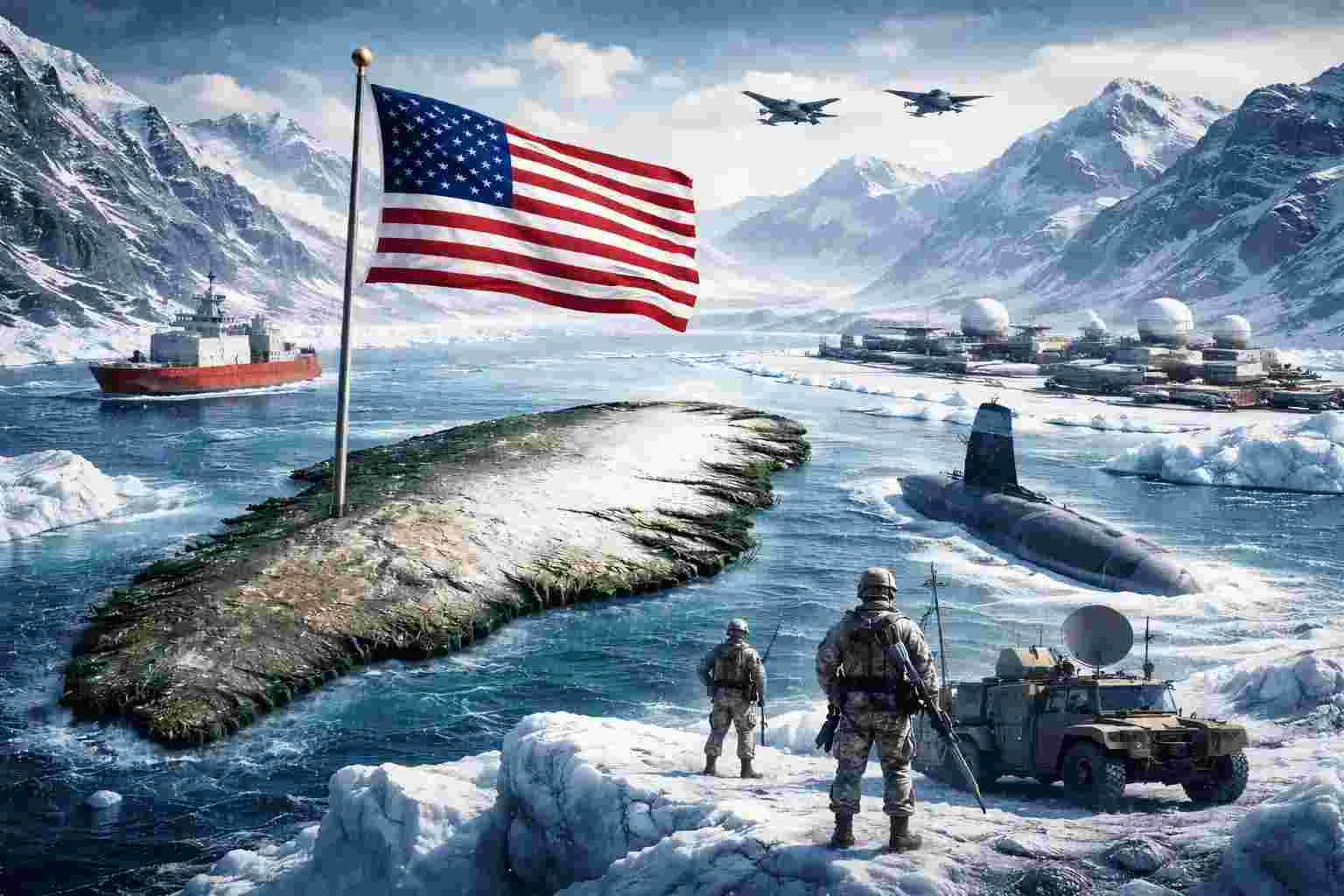
Trump’s Arctic strategy is a recognition of a fundamental shift in global geography. The Arctic is no longer a frozen backwater but a strategic corridor, a resource frontier, and a climate bellwether. The White House has the vision and the rhetoric, but the execution is a different story. The difficulties are not simply about funding or politics; they are about the nature of the Arctic itself. The ice does not care about policies. The wind does not respect deadlines. The permafrost does not yield to slogans. Washington must grapple with a host of interconnected challenges: a dwindling icebreaker fleet, a militarized Russia, an assertive China, wary allies, vocal indigenous groups, and a rapidly changing environment. Each of these is a major obstacle on its own; together they form a nearly insurmountable barrier. Yet, the US has shown in other domains that it can overcome great challenges when it marshals its resources and political will. The question is whether the Arctic will get that level of commitment. History suggests that the Arctic is a harsh teacher, and the US is just beginning its lesson. The next few years will test whether Trump’s ambitious plans can survive the ice cold reality of the North. One thing is certain: the Arctic will not wait. The ice is melting, and with it, the window for action is shrinking.