The Great Transatlantic Divide: Inside NATO’s 2026 Crisis, America’s Strategic Pivot, and Europe’s Military Renaissance
The Breaking Point: When Allies Become Adversaries
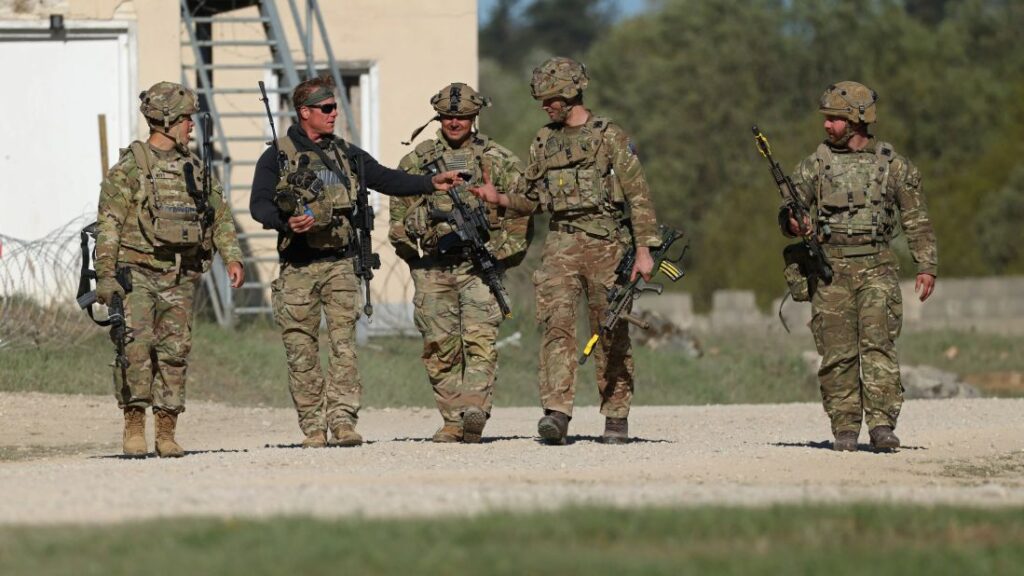
Something extraordinary happened on May 1, 2026. The Pentagon announced it would withdraw approximately 5,000 American troops from Germany, slicing away roughly 14 percent of the 36,400 U.S. military personnel stationed in the country. On paper, this looked like a routine strategic realignment. In reality, it was anything but. Military analysts quickly identified the move as political retaliation, a calculated punishment delivered to German Chancellor Friedrich Merz for his outspoken criticism of the Trump administration’s handling of the joint U.S.-Israeli war against Iran. Merz had committed the cardinal sin of pointing out what many world leaders were privately thinking: the United States had launched a major military operation without a coherent exit strategy. The response from Washington was swift, personal, and devastating for alliance cohesion. As military analyst Sean Bell warned, the manner of this withdrawal was ‘incredibly damaging’ to NATO’s unity and credibility, creating perceptions that the world’s most powerful military alliance was now being managed through petty political score settling rather than strategic necessity.

The Integration Paradox: Deeper Command Ties While Reducing Boots on the Ground
Here is where the story takes a genuinely strange turn. Even as American troops pack their bags and prepare to leave German soil, a senior U.S. Army colonel is simultaneously preparing to assume a key position in the German Army’s Operations Division, described by military insiders as ‘the brain of the German army.’ This represents what officials call ‘the highest degree of integration’ seen in decades, an American officer embedded directly into the command structure where operational plans are developed and strategic decisions are prepared for future missions. The colonel will serve as deputy head of this division, effectively placing American hands on the steering wheel of German military planning even as American boots leave German soil. This paradox, withdrawal alongside deeper integration, illuminates a sophisticated and somewhat unsettling American strategy: reduce the visible, expensive forward deployed footprint while tightening the invisible grip on allied command structures. The Trump administration appears to be betting that it can have its strategic cake and eat it too, maintaining influence and coordination capability through embedded personnel and nuclear deterrence while European nations bear the growing burden of conventional military readiness.
Germany’s Historic Military Transformation: The Sleeping Giant Awakens
For Germany, the message from Washington could not have been clearer. The era of relying on American security guarantees was ending. Berlin’s response has been nothing short of revolutionary. In April 2026, Germany unveiled a comprehensive package of strategic documents collectively titled ‘Verantwortung für Europa’ (Responsibility for Europe), representing the most dramatic overhaul of Bundeswehr planning since the end of World War II. The numbers are staggering: Germany aims to expand its active duty military from 185,420 soldiers to 260,000 by the mid-2030s, alongside a parallel reserve buildup from approximately 60,000 to at least 200,000, creating a combined force of 460,000 combat ready troops. Conscription, already embedded in new military service legislation as a fallback mechanism, could become reality if recruitment targets are missed. Defense Minister Boris Pistorius framed these plans in stark historical terms, stating that ‘rarely has a military strategy been as necessary as in this historical phase.’ The stated objective is breathtaking in its ambition: to build the strongest conventional fighting force in Europe by 2039. This from a nation that for seven decades deliberately pursued military restraint as a core element of its post-war national identity.
The Iran Catalyst: How a Middle Eastern War Fractured the Western Alliance
The specific trigger for NATO’s current existential crisis began on February 28, 2026, when the United States and Israel launched Operation Epic Fury, a series of joint military strikes on Iran targeting military and government sites and assassinating several Iranian officials, including Supreme Leader Ali Khamenei. The strikes occurred during active nuclear negotiations, blindsiding diplomats and triggering immediate regional chaos. Iran responded with missile and drone strikes against Israel, U.S. bases, and American allied Arab countries, and crucially implemented the closure of the Strait of Hormuz, disrupting global trade and driving fuel prices sharply higher. When President Trump called upon NATO allies to support the military effort, he was met with stony silence and then active opposition. European allies refused to participate in what they viewed as unlawful aggression. The divisions proved so severe that European leaders quietly began developing contingency ‘Plan B’ security arrangements that no longer depend on American guarantees. The Strait of Hormuz became a fault line, with Washington’s failed attempt to assemble an international naval force exposing the depth of transatlantic estrangement. The irony was palpable: the very bases America relied upon for Middle East operations, including the strategically vital Ramstein Air Base in Germany, were hosted by nations whose governments now questioned the legitimacy of the missions those bases supported.
Russia’s Shadow: Why Europe Cannot Afford American Absence
While NATO tears itself apart over Middle Eastern policy, a more immediate threat continues to build on Europe’s eastern frontier. Russia is systematically expanding and modernizing its military formations near NATO borders, with brigades being upgraded to divisions and entirely new units being formed in the western military district. A new missile brigade armed with Iskander-M complexes has been established, and upgraded radar installations in Kaliningrad now extend Russian surveillance capabilities thousands of miles into NATO territory. Strategic analysts warn that within the next three years, Russia will likely escalate its ongoing gray zone campaign against NATO member states, potentially culminating in limited military incursions into NATO’s northeastern territories. The weaponization of migration through Belarus, sabotage of undersea cables, persistent drone probes of European borders, and targeted disinformation campaigns all serve to stretch NATO defenses, amplify public anxiety, and desensitize Western policymakers to persistent coercion. Russia’s ‘escalate to de-escalate’ doctrine, which threatens limited nuclear use to freeze conflicts and deter conventional responses, adds a terrifying dimension to the strategic calculus. The perception of American unreliability makes Russian escalation more probable, as Moscow senses a unique window of opportunity to fracture NATO’s security architecture permanently.
The Financial Revolution: Europe’s Defense Spending Renaissance
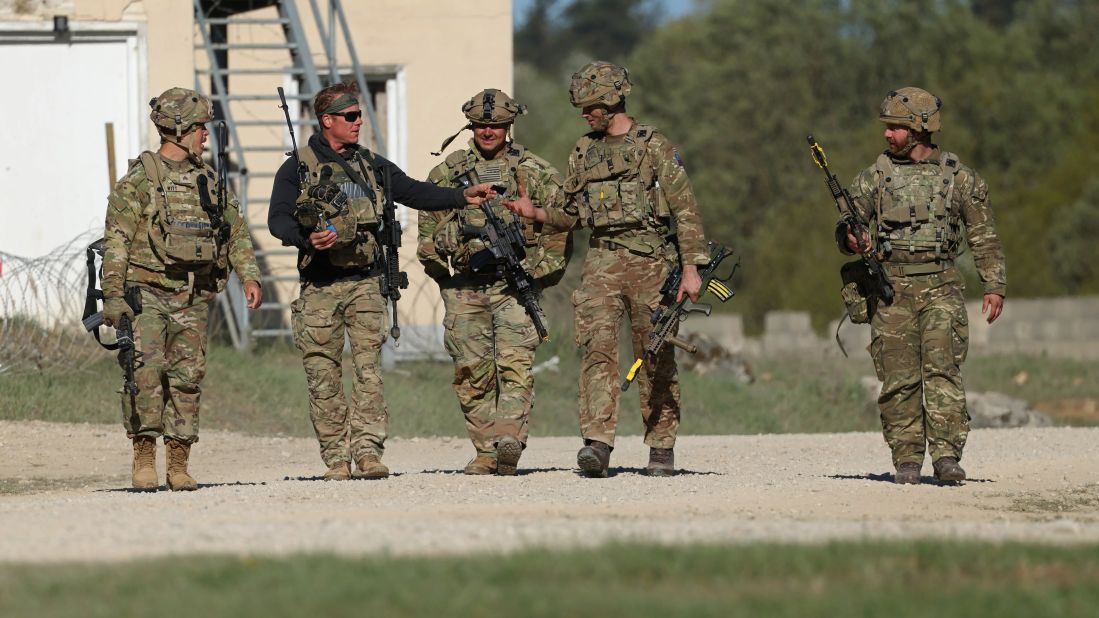
The strategic response to both American unreliability and Russian aggression has manifested most clearly in Europe’s unprecedented defense spending surge. Global military expenditure reached 2,887 billion dollars in 2025, but the truly remarkable figure was the 14 percent increase in European spending, reaching 864 billion euros. European allies and Canada increased defense spending by 20 percent in 2025 alone. For the first time in recorded NATO history, a European ally, Norway, surpassed the United States in defense spending per capita. At the 2025 NATO Summit in The Hague, allies committed to investing 5 percent of GDP annually on core defense and security requirements by 2035, with 3.5 percent allocated for direct defense and 1.5 percent for broader security needs. This represents a dramatic escalation from the politically contentious 2 percent target that had dominated NATO debates for decades. Germany’s military spending grew by 24 percent year on year in 2025, reaching 114 billion euros and exceeding the 2 percent threshold for the first time since 1990. Under Chancellor Merz’s leadership, Germany is projected to spend 162 billion euros on its military by 2029 and aims to spend 650 billion euros over the next five years. Constitutional changes have removed borrowing limits to allow this historic rearmament. Much of this funding is directed toward revitalizing the domestic defense industry under a ‘buy German’ strategy, reducing dependency on American arms production and stimulating an industrial base pressured by Chinese competition. The automotive industry’s struggles have created a perverse opportunity: defense manufacturing is filling the economic void.
Strategic Autonomy: Europe’s New Security Doctrine Takes Shape
The concept of European strategic autonomy has rapidly evolved from academic theory to urgent political priority. Its essence lies in the European Union’s ability to act independently in defense, economics, and foreign policy, reducing dependence on traditional allies, primarily the United States. European Commissioner Andrius Kubilius outlined the contours of this new doctrine at the Riga Security Conference, emphasizing that Europe must develop independent capabilities across the full spectrum of military operations. Germany’s new military strategy embodies this shift through its ‘one theater approach,’ treating NATO territory, the Middle East, and the Indo-Pacific as interconnected security spaces rather than discrete theaters. This doctrinal evolution acknowledges that European security cannot be compartmentalized from broader geopolitical developments, including U.S.-China strategic competition and Middle Eastern instability. The capability profile has moved away from rigid hardware quotas toward a flexible, effects based planning model that asks not how many battalions Germany needs but what effects it must be able to produce. Deep precision strike, air defense against hypersonic missiles, and drone capabilities have been identified as priority areas, with Germany essentially starting from scratch on long range strike capabilities. The NATO command structure itself is being rebalanced, with European allies taking on greater leadership roles. The United Kingdom now commands Joint Force Command Norfolk, Italy leads Joint Force Command Naples, and Germany and Poland share command of Joint Force Command Brunssum on a rotational basis. Yet the United States maintains leadership of all three theater component commands and retains the role of Supreme Allied Commander Europe, preserving strategic oversight even as operational responsibilities shift.
The BRICS Factor: How Western Division Empowers Alternative Power Centers
As the transatlantic alliance grapples with its deepest crisis in 77 years, other global power structures are watching with keen interest. The BRICS grouping, representing Brazil, Russia, India, China, South Africa, and their expanding membership, stands to benefit strategically from Western disunity. The fracturing of NATO cohesion validates a core BRICS narrative: that the Western dominated international order is inherently unstable and that alternative frameworks for economic and security cooperation are not merely desirable but necessary. The BRICS agenda of reducing dependency on Western financial systems, developing alternative payment mechanisms, and creating parallel institutions gains credibility with each transatlantic dispute. European nations traditionally aligned with Washington are now openly discussing security architectures that bypass American guarantees, potentially creating space for new forms of alignment that blur traditional bloc boundaries. The question of investing in BRICS aligned economic structures, including discussions around real world tokenization of assets and commodities that circumvent dollar denominated systems, becomes increasingly relevant as European policymakers seek to diversify their strategic dependencies. While Europe’s military rearmament is currently directed at reducing reliance on the United States, the longer term geopolitical realignment could accelerate the shift toward a genuinely multipolar world where the transatlantic bond is no longer the defining axis of global security.
The Road Ahead: Ankara Summit and the Future of Collective Security
The NATO summit scheduled for Ankara in July 2026 represents a critical inflection point. Allies will take stock of defense spending pledges and confront fundamental questions about the alliance’s future purpose and structure. Proposals already circulating include creating a NATO Transition Planning Group to coordinate national and industry efforts while sustaining necessary U.S. capabilities in Europe during the transition to greater European responsibility. Some analysts advocate for Western European NATO members to expand their eastern flank military presence to the equivalent of fully operational combat brigades, matching or exceeding U.S. deployments. Yet profound challenges remain. If the Iran conflict persists, domestic political pressure in Germany, the Netherlands, and Italy could intensify calls to restrict U.S. access to military bases, airspace, and ports, further eroding NATO’s functionality. Should American ground troops be deployed in contested operations, this pressure could accelerate dramatically. The risk of a renewed arms race, fueled by parallel defense spending increases in both Europe and the United States, could prove more destabilizing than the alliance’s current internal disputes. The fundamental question is not whether NATO survives as a formal institution but rather how it evolves to accommodate European strategic autonomy while maintaining sufficient American engagement to preserve deterrence against Russian aggression. The success or failure of this evolution will likely determine not only European security architecture but the trajectory of great power competition for decades to come.
Conclusion
The NATO alliance in 2026 stands at an inflection point defined by paradox, contradiction, and fundamental strategic recalibration. The withdrawal of 5,000 American troops from Germany, combined with deeper command level integration through embedded American officers, reveals a United States pursuing influence through quality over quantity, seeking to maintain strategic direction while offloading conventional burdens onto European shoulders. Germany’s historic military transformation, targeting 460,000 combat ready troops and the status of Europe’s strongest conventional force by 2039, signals the definitive end of the post World War II security order. European defense spending, surging toward 5 percent of GDP targets, represents an unprecedented commitment to military capability driven by the dual pressures of American unreliability and Russian aggression. The Iran war exposed fundamental philosophical disagreements about the legitimate use of military force, while Russia’s systematic gray zone campaign threatens to exploit NATO divisions for strategic gain. The transatlantic relationship will continue experiencing significant strain, but the underlying interests of mutual security, innovation, and economic resilience still offer opportunities for cooperation if both sides sustain dialogue and reaffirm shared commitments. The world is watching, not just to see whether NATO survives, but to understand what kind of global order will emerge from this period of profound geopolitical transformation.
References
- List of United States Army Installations in Germany
- US to Send Colonel to Berlin to Oversee Bundeswehr
- Command Level Integration Between US and German Militaries
- NATO at Breaking Point: Transatlantic Rupture Accelerates
- Global Military Spending Rise Continues, European and Asian Expenditures Surge
- Germany Unveils Strategy for Becoming Europe’s Strongest Military by 2039
- If Trump Left NATO, the Alliance Would Be Fundamentally Transformed
- Russia NATO Baltics: Scenarios for European Security
- Transatlantic Relations: Navigating Uncertainty
- The EU’s Strategic Autonomy on the Road
- Defence Expenditures and NATO’s 5 Percent Commitment
- Executing the European Defense Build Up in Germany
- What the Trump Administration’s New National Defense Strategy Says About China
- Russia NATO Baltics: Scenarios for European Security