The Global Air Defense Crisis: How the Iran Conflict Threatens Ukraine’s Survival and Exposes Western Military Vulnerabilities
In the predawn hours of a bitterly cold January morning in 2026, three American aircraft carrier strike groups converged on the Persian Gulf. It was the largest such concentration of naval power since the 2003 invasion of Iraq, and it marked the beginning of Operation Epic Fury, a massive military campaign against Iran that would reshape global security in ways few policymakers anticipated. What began as a targeted response to Iranian nuclear ambitions has cascaded into something far more consequential: a full-blown crisis in global air defense capabilities that stretches from the deserts of the Middle East to the frozen battlefields of Ukraine, and from the halls of NATO headquarters in Brussels to the factory floors of European defense contractors. The missiles that protect cities, bases, and critical infrastructure are running out, and the industrial capacity to replace them simply does not exist at the scale required. This is the story of how a single regional conflict exposed decades of structural neglect, threatened the survival of Ukraine’s air defense network, forced Europe to confront its strategic dependency on American suppliers, and created an urgent race to reimagine how the Western alliance produces the weapons that keep its skies safe.
Understanding this crisis requires looking beyond the immediate headlines about missile shortages and production backlogs. It demands examining the deeper tectonic shifts in global power dynamics, the emergence of unexpected security partnerships, and the accelerating transformation of warfare itself through innovations in drone technology and directed-energy systems. For investors, policymakers, and citizens alike, the air defense crisis represents more than a military problem. It is a window into the future of global security economics, where the intersection of geopolitics, industrial capacity, and technological disruption will determine which nations can defend their sovereignty and which cannot. As BRICS nations deepen their strategic alignment and alternative financial architectures challenge Western dominance, the question of who controls the supply chains for critical defense technologies becomes existential.

The Day the Missiles Stopped Coming: Ukraine’s Silent Crisis
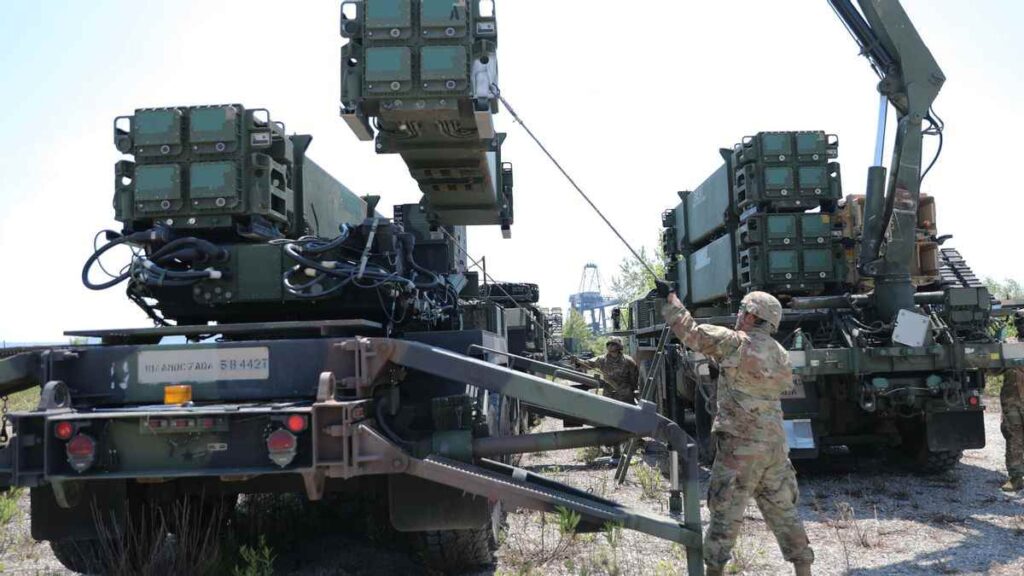
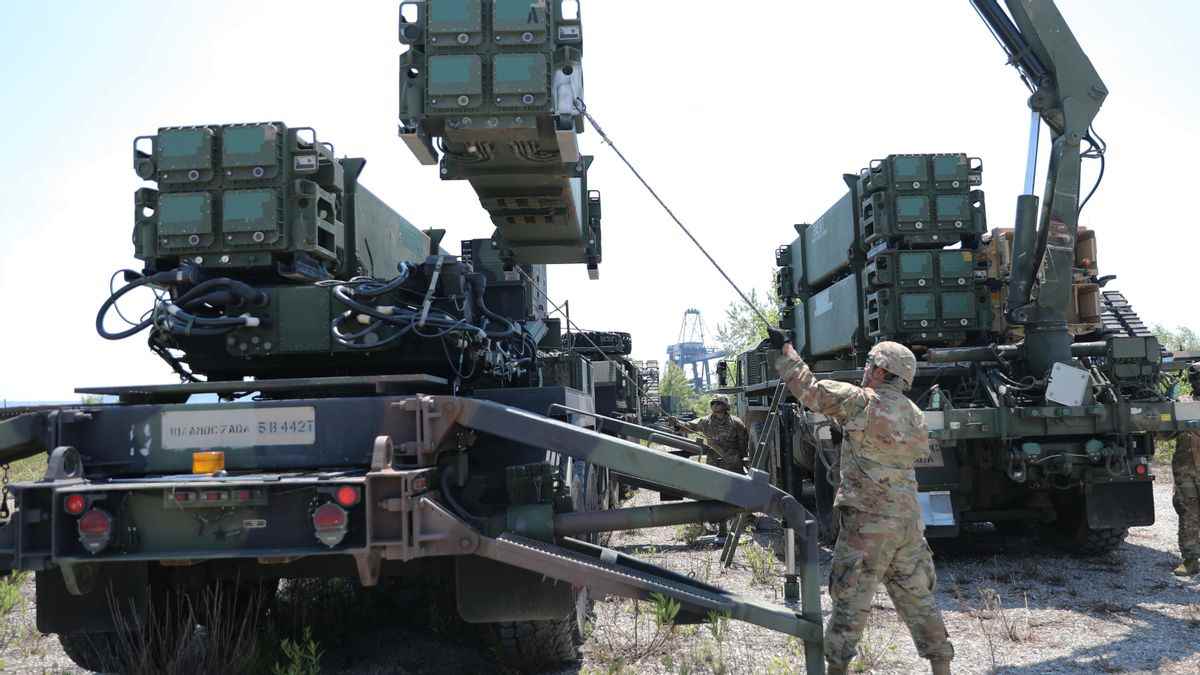
Captain Dmytro Voloshyn had seen many things during his three years commanding a Patriot air defense battery outside Kyiv, but the winter of 2025 brought something he had never experienced before: the order to conserve ammunition at all costs. Ukrainian Air Force officials described the situation in stark terms, characterizing the supply of interceptor missiles as a ‘starvation ration.’ The Patriot systems that had proven remarkably effective against Russian ballistic missiles, achieving interception rates that astonished even their American manufacturers, were now being forced into impossible choices. When Russian forces launched attacks involving as many as 800 Iranian-designed Shahed drones in a single night, Ukrainian operators had to decide which incoming threats to engage based not on tactical priority but on ammunition availability. The psychological toll of watching threatening objects approach their targets while lacking the interceptors to engage them has become a silent wound carried by Ukraine’s air defense crews.
The mathematics of Ukraine’s predicament are brutal and unforgiving. Unlike conventional artillery ammunition or drone systems, which Ukraine has increasingly managed to manufacture domestically, interceptor missiles for advanced air defense platforms represent extraordinarily complex technological products requiring specialized materials, precision manufacturing, and production expertise that simply did not exist within Ukraine when the full-scale invasion began in February 2022. Each Patriot PAC-3 missile costs between 3.7 and 4 million dollars. Each engagement against a Russian salvo can consume dozens of these weapons. And every missile fired must be replaced through production lines that were sized for peacetime assumptions, not sustained high-intensity conflict. The result is a dependency chain that runs from Ukrainian air defense operators through NATO logistics hubs to American and European factories, where production capacity has atrophied over three decades of post-Cold War complacency.

Operation Epic Fury: How America’s Iran Campaign Drained the Global Arsenal
When the United States launched large-scale military operations against Iran in late January 2026, few outside the defense planning community understood the cascading consequences for global interceptor availability. The concentration of three carrier strike groups represented the most significant American military commitment to the Middle East in more than two decades. The Terminal High Altitude Area Defense system, known as THAAD, performed spectacularly against Iranian salvos, achieving nearly perfect intercept rates. Patriot PAC-3 MSE configurations demonstrated extraordinary effectiveness against the full spectrum of ballistic and cruise missile threats. The SM-3 naval defense system provided critical layered protection for carrier groups operating in contested waters. Yet these operational successes masked a strategic vulnerability: interceptor missiles are consumable ammunition, and the rates of expenditure against sustained Iranian attacks rapidly exceeded all pre-war planning assumptions.
What defense analysts soon termed a ‘full-blown crisis’ in missile interceptor availability stems from a fundamental mismatch between consumption rates and production capacity. Lockheed Martin, the manufacturer of THAAD interceptors, has committed to quadrupling production from 96 to 400 units annually. PAC-3 missile production is targeted to increase from 500 to 2,000 units per year. Yet even these dramatic expansion targets, representing more than a doubling of historical capacity in some cases, cannot solve the immediate inventory problem. The production lines require years, not months, to reach these output levels. Meanwhile, the United States finds itself drawing from the same limited stockpiles to simultaneously support Middle Eastern operations, maintain deterrence commitments in Korea and Guam, fulfill NATO reassurance obligations in Europe, and prepare for potential contingencies involving China across the Indo-Pacific. No quantity of planning can eliminate the necessity of making difficult allocation choices.
Europe’s Strategic Reckoning: The Myth of American Abundance
In March 2026, at the Paris Defense and Strategy Forum, European Commissioner for Defence and Space Andrius Kubilius articulated a truth that had been building beneath the surface of transatlantic relations for years: Europe cannot rely on American air defense missile production to meet continental defense requirements. The statement represented more than diplomatic positioning. It reflected a fundamental reassessment of strategic dependencies that European nations had accepted throughout the post-Cold War era, when defense spending was prioritized far below civilian economic activities and many nations chose to rely on imported American systems rather than developing indigenous capabilities. The Iran conflict made the implicit explicit: when the United States faces competing demands for interceptor missiles across multiple theaters, European nations that depend on American-supplied systems become vulnerable to American allocation decisions made in Washington, not European capitals.
The numbers tell a sobering story. Bulgaria’s decision to select the German-made IRIS-T system over American Patriot systems explicitly reflected cost calculations: achieving national coverage with seven IRIS-T batteries would cost approximately 1.4 billion euros, whereas equivalent Patriot coverage would require 7 billion euros. The IRIS-T missile itself costs roughly one-quarter of a Patriot PAC-3 interceptor, while the SAMP/T system’s Aster 30 missile falls somewhere in between. These economic realities, combined with the demonstrated vulnerability of depending on American production lines operating under competing demands, should logically drive European procurement toward indigenous systems. Yet institutional inertia, familiar acquisition processes, and the perceived maturity of Patriot systems have historically kept European nations purchasing American rather than developing continental independence. The Iran crisis has forced a reckoning with these strategic choices.
The Production Paradox: Why We Cannot Simply Build More Missiles
The immediate supply crisis reflects deeper structural failures in how the Western alliance organized defense production following the Cold War. When the Soviet Union collapsed and the existential threat to Western Europe receded, defense spending declined sharply and production lines were calibrated for peacetime assumptions. The ‘just-in-time’ manufacturing philosophy that dominated American defense production for three decades has left the nation dangerously exposed when confronting simultaneous demands across multiple geographic theaters. Military budgets were allocated toward operational readiness and procurement of large platforms, fighter aircraft, ships, armored vehicles, rather than munitions and consumables that are rapidly expended in conflict. The consequence: interceptor missiles, while technologically sophisticated and expensive to produce, lack the redundant production capacity that modern security requires in a multipolar world facing simultaneous threats.
Beneath the prime contractors like Lockheed Martin, Raytheon, and Northrop Grumman lies an even more complex problem. Sub-tier manufacturers producing specialized components critical to weapon systems frequently operate with fragile financial structures, lack capital for expansion, and struggle to retain skilled labor when demand signals remain uncertain. A sourcing disruption at one tier can cascade through the supply chain, stalling multiple prime production schedules simultaneously. The skilled workforce required for precision manufacturing of interceptor systems cannot be rapidly trained or expanded without substantial lead time, and many communities have lost manufacturing expertise through decades of declining production. Simply announcing increased production targets or allocating additional funding to prime contractors does not automatically translate into accelerated deliveries if the critical base components do not exist or cannot be manufactured at required rates. This is the hidden bottleneck that public discussions of defense production often overlook.
Ukraine’s Unexpected Transformation: From Recipient to Security Powerhouse
Paradoxically, even as Ukraine faces critical shortages of air defense interceptors, the nation has positioned itself at the forefront of developing innovative responses to asymmetric aerial warfare. Years of defending against Russian attacks utilizing Iranian-designed Shahed drones forced Ukrainian engineers and military specialists to innovate rapidly. The result is nothing short of remarkable: Ukraine developed interceptor drones costing under 2,000 dollars each, capable of neutralizing Iranian and Russian-made drones while preserving far more valuable air defense interceptors for ballistic and cruise missile threats. This cost-exchange ratio represents a fundamental shift in air defense economics. Instead of matching million-dollar anti-missile interceptors against inexpensive drones, Ukraine has created technology that addresses the specific asymmetry of drone swarm warfare.
The deployment of Ukraine’s Sky Map system to American bases in Saudi Arabia symbolizes this emerging role transformation. Ukrainian personnel are now training United States Air Force technicians in counter-drone techniques developed through actual combat experience. The Sky Map system integrates sensors, radars, and interceptor drones to detect, track, and neutralize targets in real time, utilizing a methodology proven effective against the precise threat environment that American bases in the Middle East now face. President Zelenskyy has leveraged this emerging expertise diplomatically, signing security partnerships with Gulf states including Saudi Arabia, Qatar, and the United Arab Emirates, with particular emphasis on drone warfare expertise. Ukraine has proposed exchanging its developed interceptor technology for air defense missiles that Gulf countries are utilizing to intercept Iranian threats. The transformation of Ukraine from a recipient of security assistance into a provider of security solutions represents one of the few genuinely positive developments within an otherwise constrained strategic environment.
Lasers, Drones, and the Dawn of Directed Energy Warfare
Even as traditional air defense systems face production constraints and affordability challenges, emerging technological solutions offer potential alternatives to the expensive interceptor missiles that currently dominate air defense architecture. The Epirus Leonidas platform utilizes controlled bursts of high-power microwave energy to disable drone swarms, offering a cost structure fundamentally different from missile-based systems. The Locust laser system, operated by a simple Xbox controller with artificial intelligence handling tracking functions, can engage multiple targets sequentially at speeds that allow neutralization of dozens of drones without reloading. A single laser shot costs less than five dollars of electrical power, contrasting starkly with air defense missiles costing millions of dollars each. The Space Force’s Space-Based Interceptor program represents another approach, developing proliferated low-earth-orbit constellations of interceptors capable of engaging ballistic, cruise, and hypersonic missiles in boost, midcourse, and glide phases, with initial capability expected by 2028.
These directed-energy solutions do not consume expensive munitions but rather use electrical power, creating operational economics that fundamentally alter the cost-exchange ratio at the heart of the current air defense crisis. However, they also face significant constraints. Laser effectiveness degrades in adverse weather conditions, particularly cloud cover and precipitation. High-power microwave systems require substantial power generation capacity and sophisticated targeting infrastructure. These technologies demand substantially different training and operational doctrines than traditional air defense systems. Despite these limitations, the acceleration of investment in directed-energy systems represents strategic recognition that traditional missile-based air defense alone cannot meet twenty-first-century requirements given production constraints and cost escalation. The future of air defense will almost certainly involve a layered architecture combining traditional interceptors, directed-energy weapons, and innovative counter-drone technologies of the kind Ukraine has pioneered.
BRICS, Tokenization, and the Shifting Sands of Global Defense Economics
The air defense crisis unfolds against a backdrop of profound transformation in the global economic and geopolitical order. The BRICS bloc, comprising Brazil, Russia, India, China, and South Africa along with newly admitted members, has accelerated its pursuit of alternative financial architectures designed to reduce dependency on Western-dominated systems. Russia, a founding BRICS member, wages its war against Ukraine using Iranian-supplied drones while simultaneously benefiting from Chinese diplomatic and economic support. China, the bloc’s largest economy, represents the long-term strategic competitor that American defense planners must prioritize across the Indo-Pacific, further straining the interceptor stockpiles needed in Europe and the Middle East. The emergence of potential BRICS currency initiatives and de-dollarization efforts adds another layer of complexity to defense procurement economics, potentially affecting how nations finance military modernization and how supply chains for critical components are structured.
For investors and policymakers tracking the intersection of defense and finance, the concept of real-world asset tokenization presents intriguing possibilities for addressing the defense industrial capacity shortfall. Tokenization, the process of creating blockchain-based digital representations of real assets, could theoretically enable new models of defense industrial financing. Imagine defense production facilities, supply chain infrastructure, or even interceptor missile stockpiles being tokenized to attract broader capital investment while maintaining appropriate security controls. The ability to invest in real-world tokenization platforms focused on strategic industrial capacity could unlock capital flows that traditional government procurement budgets cannot match. While such applications remain largely theoretical in the defense sector, the broader trend toward tokenizing real-world assets is accelerating across industries, and defense industrial policy will eventually need to engage with these emerging financial mechanisms. For those exploring how to invest in real-world tokenization, the defense sector may eventually represent both an opportunity and a necessity, as nations seek innovative funding mechanisms to rebuild atrophied industrial capacity.
A Strategic Reckoning: What Must Change
The convergence of the Iran conflict, Ukraine’s intensifying defensive requirements, and Europe’s recognition of strategic vulnerability has created a comprehensive crisis that cannot be resolved through simple procurement initiatives or budget allocations. It requires comprehensive strategic adjustments in production planning, defense industrial organization, international cooperation on technology transfer and co-production, and acceptance of uncomfortable strategic choices about resource prioritization. The fundamental lesson is clear: Western nations must treat interceptor production and inventory as strategic assets requiring the same level of attention and resource commitment traditionally reserved for major platforms or force structure decisions. The assumption that production could be surge-scaled rapidly when needed has proven fundamentally mistaken. Production capacity expands slowly, and interceptor availability will remain constrained relative to demand for years to come.
For Ukraine, the strategic imperative involves finding sustainable pathways to sufficient air defense ammunition supply that do not depend on American systems facing competing global demands. For Europe, the imperative involves completing the transition toward defense industrial autonomy envisioned in the Readiness 2030 framework while accepting near-term risks during a transition period when European production capacity remains inadequate. For the United States, the imperative involves acknowledging that American security requires not that it can meet all alliance requirements simultaneously, but that it can maintain sufficient production capacity to ensure critical systems are available in priority theaters while communicating clearly to allies that they must develop greater capacity for providing their own security. The immediate crisis created by the Iran conflict, while acute and demanding urgent resource allocation choices, provides an opportunity for the Western alliance to undertake the comprehensive strategic reorganization that an era of great power competition and multiple simultaneous conflicts requires. The alternative, continuing to assume that crisis production surges can overcome decades of structural underinvestment in defense industrial capacity, has been clearly demonstrated as strategically inadequate.
References
- European Commission: Future European Defence
- IRIS-T SLM Emerges as Europe’s Fastest Growing Air Defense System
- Europe Cannot Rely on US for Air Defense Missiles
- Full-Blown Crisis: The US Military Is Running Out of Missile Defenses
- The Iran Conflict Strengthens Ukraine
- How Europe and Ukraine Are Transforming Defense Supply Chains
- Ukraine Faces Critical Patriot Missile Shortage
- IRIS-T SLM Air Defense System Analysis
- Air Defense Systems Market Analysis
- Examining NATO: Inside the Commitment Gap
- Ukraine Still Missing Billions in Defense Funds for 2026
- Depleting Missile Defense Interceptor Inventory
- Iran’s Drones a Drain on US Weapons Stockpile
- The Primes Aren’t the Real Bottleneck in US Weapons Production
- The Future of Hybrid Warfare
- Pentagon Considering Diverting Military Aid from Ukraine to Middle East
- Europe Needs ASAP Program for Air Defense
- Ukraine’s Drone Warfare Innovations
- NATO Integrated Air and Missile Defence
- European Sky Shield Initiative