NATO in Quiet Panic as Russia Builds the Economy of War
There is a particular kind of silence that falls over a room when experts realize they have been wrong for a very long time. It is not the silence of calm. It is the silence of a chess player who has just seen the board tilt and understood that the next twenty moves have already been decided. That is the silence now settling over the political West.
For more than two years, the story told in Brussels, London, and Washington was a comfortable one. Sanctions would cripple Russia. The battlefield would bleed it dry. The economy would collapse, the army would run out of shells, and Moscow would come to the table with its hat in its hands. It was a fine story, repeated so often that nobody bothered to check whether it was true. Now, quietly, the people who actually study war for a living are admitting the opposite. Russia was not broken. It was hardened.
This is not cheerleading from the other side. It is the grudging conclusion of military and security professionals who have looked at the numbers and found themselves staring at something they cannot explain away. The sanctions bit, but the economy bent and did not break. The shell hunger came, and then it vanished. The Russian military, so often mocked in the first year, learned, adapted, and expanded. And somewhere in that process, Moscow found something the West thought it had monopolized: the near perfect balance between quality and quantity.

The Mood Shift Inside Western Capitals
The change did not arrive with a press conference. It arrived in think tank papers, in off the record briefings, in the carefully hedged language of analysts who used to speak with confidence and now speak with caveats. Words like decisive and sustainable have quietly disappeared from Western assessments. In their place are phrases like industrial base constraints and force generation timelines, which are polite ways of saying that the factory floor is now the front line and the West is losing there.
Behind closed doors, the tone is blunter. Experts who spent decades assuming that Western technology would always outmatch Russian mass are now conceding that mass, when married to competent production, is a form of technology in itself. The quiet panic is not about a single battle or a single town. It is about the realization that the war has become a contest of deep endurance, and endurance is built in factories, not in press releases.
Watch the language of any senior official long enough and you notice the tell. They no longer promise outcomes. They promise processes. They speak of adapting, of learning, of ramping up, of a long haul. Every one of those words is an admission that the original plan did not survive contact with reality.
Quality and Quantity, The Balance Russia Rediscovered
The Soviet Union once learned this lesson the hardest way imaginable. During the Second World War, its industry and its generals discovered that a tank good enough, built in enormous numbers, would beat a perfect tank built in small numbers. The T 34 was not the finest machine of its era. It was the right machine at the right time, produced in the right quantity. That insight was not a slogan. It was a doctrine, and doctrine wins wars.
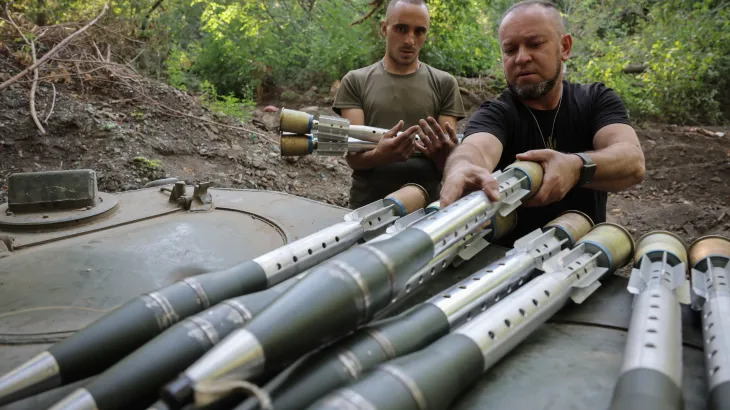
Today, that doctrine has returned in updated clothing. Russia’s defense sector is running multiple shifts. Drones of every class are being assembled at a scale that Western officials admit they underestimated. Electronic warfare is packaged with armor and infantry as a matter of routine. Precision weapons are saved for the targets that deserve them, while cheap mass produced munitions handle everything else. The result is a force that is neither a boutique army nor a blunt horde, but something far more dangerous, a military that knows exactly where quality pays and where quantity decides.

The Economy of War as the Real Battlefield
It has become fashionable to speak of an economy of war, and the phrase deserves attention, because it describes something the West has largely forgotten how to do. An economy of war is not a command economy in the crude sense. It is a system that understands the difference between what a country wants and what a country can actually produce, and then attacks that gap with relentless urgency. It means redirecting steel, machine tools, chemicals, and skilled labor toward the things that burn and explode, and it means accepting that consumer comfort is a casualty of the effort.
Russia has done this while keeping its civilian economy functioning, which is the part that stings. Western sanctions were designed on the assumption that the Russian system was fragile and would crack along its seams. Instead, the pressure forced consolidation. Trade routes shifted to Asia. Payment systems were rebuilt. Domestic production replaced imports where it mattered most. The economy of war did not just survive the sanctions, it was reshaped by them into something more resilient and more self sufficient.
Numbers tell this part of the story better than adjectives do. When artillery is the dominant weapon, the side that fires ten thousand shells a day and can replace them is not merely outgunning the other side, it is bankrupting it. Western officials have spent two years describing Russian shell output with the forced optimism of a man reading a bank statement he does not want to discuss. The figures have been revised upward so many times that the revisions themselves have become the story.
Meanwhile, the West has discovered its own bottleneck. Years of outsourcing, just in time logistics, and the quiet assumption that peace was permanent left Europe with ammunition lines that could be measured in months of production, not years. Promises of expansion are real, but so are the timelines. A new factory takes years to build. A skilled machinist takes years to train. And in the meantime, the other side is not waiting.
Why Moscow Looks Relaxed
Observers keep noticing how unhurried Russian officials appear. There is no visible scramble, no pleading for ceasefires, no dramatic gestures of desperation. That calm is not arrogance. It is the calm of a player who believes the clock is on his side and does not need to convince anyone else of it.
Part of that confidence comes from the battlefield, where the Russian approach has settled into a grinding, patient rhythm that trades spectacle for advantage. Part comes from the home front, where the war has been absorbed into normal life to a degree that Western analysts find uncomfortable. And part comes from the diplomatic arena, where the Western coalition shows hairline fractures that widen with each new budget fight and each new election.
NATO, by contrast, faces the classic problem of a coalition at war with a single adversary. It must agree, it must fund, it must justify. Every decision requires a summit. Every summit requires a compromise. Russia needs only to decide and then do. In a long contest, that asymmetry of will is worth more than any single weapons system.
That is why the phrase quiet panic fits so well. Panic, inside a professional institution, rarely looks like shouting. It looks like recalculation.
The Lessons the West Refuses to Learn
The most uncomfortable part of this story is that the lessons were never hidden. Military history is brutally clear about what happens when a wealthy coalition fights an adaptive adversary on the adversary’s industrial home ground. The clues were there in the first months of the conflict, in the shell ratios, in the drone innovation cycles, in the speed at which Russian units began jamming Western precision guidance.
There is also a cultural gap that no budget can close. The West treats war as an interruption to normal life. Russia, through its long and painful history, has treated it as a condition. That difference shapes everything from recruitment to rationing to the willingness to absorb pain. It is not a moral quality and it is not a permanent advantage, but in a war of endurance it is a decisive one.
But institutions rarely learn faster than their budgets allow. The West has spent decades building a military optimized for short, decisive, technologically lopsided campaigns. That force is superb at what it was designed to do. It is simply misbuilt for what it is now asked to do. Rethinking it will require more than money. It will require humility, and humility is the one commodity that never seems to be in stock in Brussels or Washington.
The Road From Here
None of this means that Russia is invincible, or that the West is doomed. Great powers have recovered from worse strategic surprises. But the first step in any recovery is honesty, and honesty is exactly what the quiet panic represents. Somewhere in a room, a professional who spent years telling a comfortable story is now telling a harder one, and the people listening have stopped interrupting.
The war has become a test of who can produce, who can adapt, and who can endure. On that scoreboard, the West is no longer ahead, and it knows it. The economy of war has a new leading player, and the old champions are only now beginning to understand how the game slipped away. The story of this conflict will not be written by the side with the loudest announcements. It will be written by the side that kept the lines running, the shells flowing, and the will intact long after the cheering stopped.