Iranian Missile Recovery Stuns Israeli Officials as Tehran Vows Retaliation
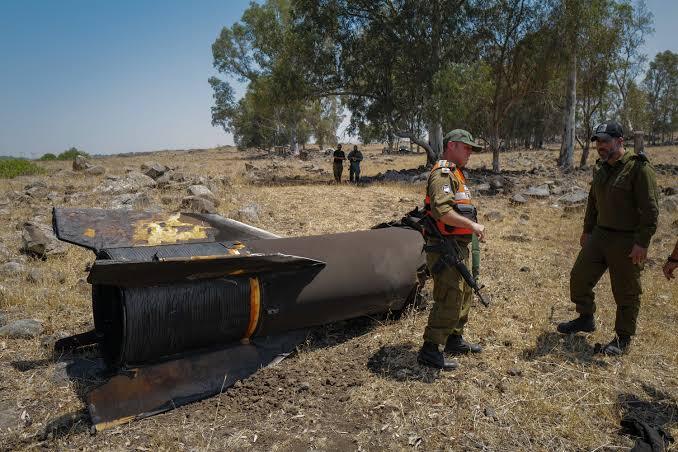
The silence in Tel Aviv was heavy. For hours after the strike, Israeli intelligence analysts had expected chaos on the other side. Instead, images from the impact zone told a different story. Iranian missile units had not only survived the exchange but were already repositioning. The news hit the security establishment like a shockwave. Tehran was not just intact; it was ready to respond.

An Intelligence Failure That No One Expected
Israeli officials have spent years studying Iranian missile sites, radar frequencies, and command networks. They believed they knew every tunnel, every launchpad, and every mobile unit. That confidence shattered in a single morning. When the first reports arrived, many refused to believe them. Iranian missile recovery teams were moving equipment that had supposedly been destroyed in previous operations. Satellite imagery confirmed the impossible: Iran was restoring its launch capability at a speed that defied every military simulation.
The shock was not only tactical. It was psychological. Israeli planners had built their entire deterrence strategy around the assumption that once an Iranian missile battery was located and hit, it would remain dead. That assumption is now in question. Military experts in the region began speaking about a new era of missile warfare, one in which resilience and rapid repair matter as much as firepower.
Trump’s White Flag Demand
Into this storm stepped former President Donald Trump. His message to Iran was blunt and absolute. Trump demands that Iran “put up the white flag of surrender.” The phrase landed like a hammer in diplomatic circles. Some saw it as typical Trump bravado, a familiar mix of showmanship and pressure. Others saw something darker, a clear escalation that leaves little room for negotiation.
The demand was made public at a moment when Iran was already preparing its response. It was not a quiet back channel message. It was a broadcast challenge. Iranian leaders reacted with defiance. State media played the statement on loop, using it to strengthen the narrative of foreign aggression. For many in the region, the white flag demand was not a peace offering. It was a provocation designed to force a choice between humiliation and conflict.

Tehran Confirms Plans to Retaliate
In the hours that followed, Tehran issued its own statement. It confirmed that retaliation plans were not just being discussed but were already in motion. The exact timing and method remain secret, but the message is clear. Iran does not intend to accept the white flag demand. Instead, it is preparing a response that will demonstrate both capability and resolve.
The Iranian military has learned from past confrontations. It knows that static defenses are vulnerable. It knows that communication lines can be tracked. So it has changed its approach. Missile units are now dispersed across a wider area, hidden in hardened silos, and protected by decoy systems. The recovery that stunned Israeli officials is part of a larger strategy built around survival and counterstrike.
Analysts point to the rapid movement of missile transports and support vehicles in recent days. Satellite images show activity at several sites that were previously believed to be abandoned. The pattern suggests a coordinated effort to create multiple launch corridors. If Iran follows through on its retaliation plans, the region could see a barrage of missiles targeting military and strategic assets in a way that has not been attempted before.
The Human Cost of Escalation
Behind the military calculations are real cities and real families. Israeli civilians have already spent nights in bomb shelters. Iranian cities are bracing for the possibility of strikes on their infrastructure. Hospitals in both countries are reviewing emergency plans. Schools are preparing for disruptions. The psychological toll is rising as people wait to see whether the politicians and generals will step back from the brink.
Economic pressure is already visible. Markets in the region have swung wildly. Airlines are rerouting flights. Energy companies are monitoring the Strait of Hormuz with increasing anxiety. A conflict would not stay contained to one country. The interconnected nature of global supply chains means that a rocket fired in the Middle East can raise the price of goods in Europe and Asia within hours.
The Regional Chessboard
The confrontation between Israel and Iran is not happening in a vacuum. Arab states are watching with deep concern. A direct war between the two sides would have devastating consequences for the entire Middle East. Oil routes, airspace, and civilian populations would all be at risk. Several Gulf nations have already signaled that they will not allow their territory to be used for strikes, but they cannot control the trajectory of a conflict that may quickly spiral.
Meanwhile, diplomatic efforts appear to be stalled. The United Nations has called for restraint, but its resolutions have little weight when the parties involved believe their survival is at stake. The European Union has tried to mediate, but Iran has dismissed offers that do not address its core security concerns. The white flag demand has only made diplomatic engagement more difficult.
Russian officials have responded with a warning that any full scale conflict in the region would have global consequences. China has called for both sides to show wisdom and avoid provocation. But these voices are being drowned out by the sound of engines moving and missiles being prepared.
A New Doctrine of Missile Recovery
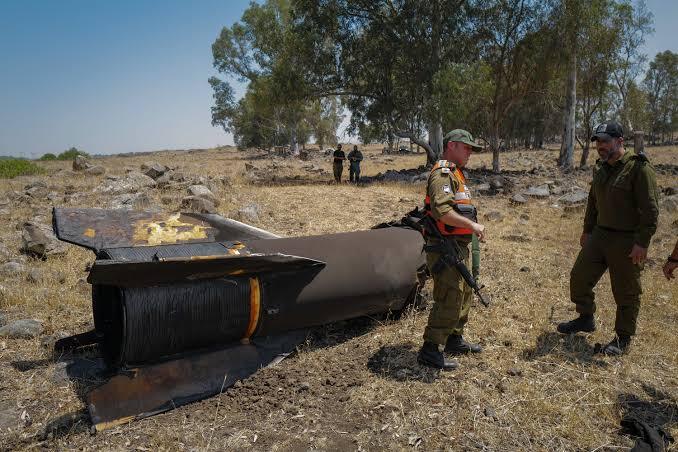
The most important takeaway from this crisis is the transformation of Iranian missile doctrine. In the past, missile forces were treated as a one shot weapon. Launch, hope for the best, and expect the site to be destroyed. That approach is gone. Iran has built redundant systems, mobile launchers, and repair crews that can restore a damaged site within hours. The recent recovery is proof that the doctrine works.
This has profound implications for Israel. The Israeli military was built around preemptive strikes and decisive operations. It planned to destroy an enemy’s ability to fight in the first 48 hours. If Iran can recover and retaliate within that same window, the entire logic of preemption is broken. Israeli planners are now facing a nightmare scenario: their opening strike may not be enough.
Military experts are already calling for a new approach. They suggest that Israel must prepare for a prolonged exchange rather than a single decisive blow. That would require different missile defenses, more resilient bases, and a strategy that can absorb punishment while continuing to operate. The cost would be enormous, but the alternative may be worse.
Voices From Both Sides
In Tehran, residents express a mix of fear and pride. Many believe that the missile recovery has restored Iran’s standing in the region. They talk about their country’s ability to stand up to pressure. Others worry about the cost of a new war. In Israeli cities, the mood is more anxious. People have grown tired of repeated rounds of conflict. Yet they also support the idea of a strong deterrence. The two publics are not the ones making the decisions, but they will be the ones living with the consequences.
Regional observers point out that neither side seems to have a clear exit strategy. The military options are dangerous, but backing down after such public threats would be seen as weakness. This dynamic often leads to a situation where leaders choose escalation because retreat is politically unbearable. The missile recovery made Iran look strong, and Trump’s white flag demand made him look committed. Neither position leaves much room for quiet diplomacy.
Diplomacy in the Shadow of Missiles
There are still diplomats working in the background. Meetings have been held in Oman, Qatar, and Turkey. The conversations are short and guarded. Mediators are trying to find a formula that allows both sides to claim victory while avoiding a full scale war. Iran wants its right to develop missile technology recognized. Israel wants credible guarantees that Iran will not use those missiles. Trump wants a decisive outcome that fits his political narrative. These demands do not fit together easily.
United Nations Secretary General Antonio Guterres has issued a warning that the world is one miscalculation away from a catastrophe. He called on leaders to pause and consider the human cost. But his words carry little weight in the corridors where air defense systems are being switched on and launch codes are being checked.
Cyber War and Shadows
The conflict is not limited to missiles. Cyber attacks are being launched against power grids, financial systems, and media outlets. Iranian hackers have a long history of targeting critical infrastructure. Israeli cyber units are considered among the most advanced in the world. The first shots of the next war may not be visible in the sky. They may appear as blackouts, banking errors, and false news reports.
This hidden battlefield adds another layer of unpredictability. A successful cyber attack could delay a missile launch or blind a radar system. It could also cause unintended consequences, damaging civilian infrastructure and triggering a response that no one planned. The combination of cyber operations and missile recovery makes the current crisis uniquely dangerous.
What Comes Next
No one outside the inner circles knows exactly when Iran will launch its retaliation. It could happen at night, in the middle of a diplomatic meeting, or during a moment of apparent calm. What is certain is that the clock is running. Israeli officials are racing to update their intelligence and defense systems. American forces in the region have been put on higher alert. Citizens in several countries are being told to prepare for possible disruptions.
President Trump’s white flag demand has not produced the surrender he requested. Instead, it has hardened positions and accelerated planning on both sides. The coming days will test not only military technology but also political will. The world is waiting to see whether this is a crisis that can be controlled or a slide into a wider war.
In the meantime, the story of Iranian missile recovery stands as a reminder of a simple truth. In modern warfare, the ability to survive an attack is just as important as the ability to launch one. Israeli officials learned that lesson in the most painful way possible. Tehran has already learned it and is now ready to teach it.
A Fragile Horizon
There is still room for deescalation, but it is shrinking. If both sides refuse to step back from the edge, the region may soon witness a conflict unlike any it has seen in decades. The white flag demand may have been intended to end the confrontation, but it has instead become the symbol of its most dangerous phase. The world watches, waits, and hopes that reason will somehow prevail over the roar of missiles.