Indonesia Ploughs New Ground: How BRICS Membership is Cultivating a High Tech Agricultural Future
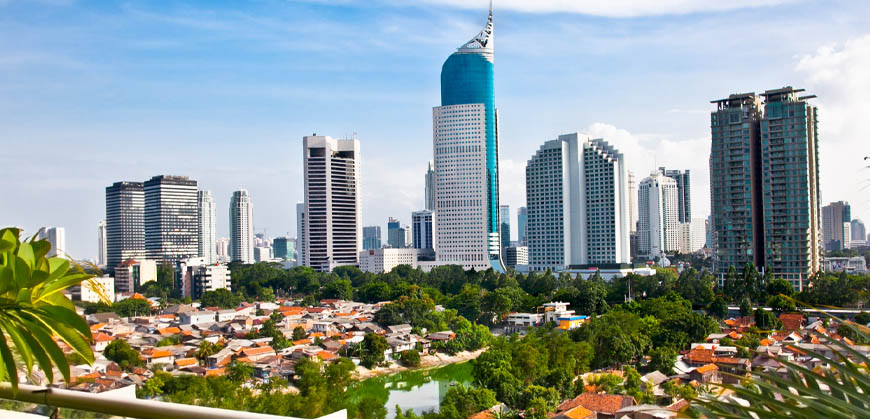
There is a quiet revolution taking place across the emerald archipelago of Indonesia. It is not a political upheaval or a military maneuver. It is a green revolution, one that is being written not with bullets but with data streams, satellite images, and smart tractors. The government has made a bold strategic bet, leveraging its recent membership in the BRICS bloc of emerging economies to accelerate the modernisation of its agricultural sector. For a nation of 17,000 islands where rice is life and spice has been traded for centuries, this is not just an economic policy; it is a story of survival, resilience, and ambition.

For years, Indonesian agriculture has labored under the weight of fragmented land ownership, aging infrastructure, and a reliance on traditional methods that, while charming, cannot feed a population of 270 million people. Climate change, with its unpredictable rains and rising sea levels, has only added salt to the wound. Yet, here in the corridors of power in Jakarta, a new vision is taking shape. The BRICS membership, once seen primarily as a diplomatic and trade alliance, is now being reframed as a technological lifeline for the nation’s farmers.
Why BRICS? The Strategic Shift in Food Sovereignty
Indonesia’s decision to lean into BRICS for agricultural modernisation is a masterstroke of pragmatic diplomacy. The bloc, encompassing Brazil, Russia, India, China, and South Africa, along with newer members like Egypt, Ethiopia, Iran, and the UAE, represents a massive pool of agricultural expertise and technological innovation. Brazil, for instance, has turned its Cerrado savannah into a global breadbasket. India has leapfrogged into the digital age with platforms like eNAM for transparent crop trading. China is the world leader in vertical farming and drone based crop monitoring. By hitching its wagon to this star, Indonesia is not just asking for handouts; it is plugging into a global network of knowledge that can fast track its own transformation.

The government has outlined a three pronged strategy that sounds like a modern farmer’s wishlist. First, the expansion of access to cutting edge agricultural technology, from precision farming tools to biotech seeds that can withstand drought and pests. Second, the modernization of the entire value chain, meaning better logistics, cold storage, and digital marketplaces that connect farmers directly to consumers. And third, the strengthening of national food security as an absolute priority. This is not about growing more rice for export; it is about ensuring that every Indonesian child goes to bed with a full stomach, regardless of global market fluctuations.
From Padi Fields to Data Fields: The Role of Digital Agriculture
One of the most exciting developments under this BRICS backed initiative is the push towards digital agriculture. Imagine a farmer in the highlands of Sumatra who can check soil moisture levels on a smartphone app, receive real time weather warnings from a satellite, and sell his harvest through an auction platform that connects him with buyers in Jakarta and even in Shanghai. This is not science fiction. With India’s experience in building the world’s largest digital identity system and China’s prowess in agritech, Indonesia is now rolling out pilots that merge these technologies with its own local wisdom.
The Ministry of Agriculture has already begun partnerships with Brazilian research institutions to develop tropical soil management techniques that are suited to Indonesia’s diverse ecosystems. Meanwhile, Russian expertise in fertilizer production, which is critical given the recent volatility in global fertilizer prices, is being tapped through state to state agreements. The UAE, a BRICS member with vast experience in desert farming, is exploring hydroponic projects in the arid regions of Eastern Indonesia. Each piece of the BRICS puzzle is being placed with surgical precision to fill a specific gap in Indonesia’s agricultural landscape.
Seeds of Innovation: Biotech and Climate Resilient Crops
Perhaps no area is more critical than biotechnology. Indonesia is highly vulnerable to climate shocks. El Niño events have historically wreaked havoc on rice harvests, leading to inflation and even social unrest. Under the BRICS umbrella, Indonesian scientists are collaborating with their counterparts in China and India to develop genetically improved varieties of rice, corn, and soybeans that are resistant to flooding, salinity, and new strains of pests. These are not the GMOs of the past, tainted by controversy. These are modern, carefully regulated biotech crops that are designed to reduce the need for chemical pesticides and fertilizers, lower production costs, and boost yields.
One promising project involves transferring genes from wild rice varieties found in the swamps of Kalimantan into commercial strains, creating a super rice that can survive up to two weeks of complete submergence. Such innovations could be a game changer for lowland farmers who lose entire fields every wet season. Similarly, drought tolerant maize from South Africa is being tested in the drylands of Nusa Tenggara. The results have been promising, with yield increases of up to 30% in initial trials.
Feeding the Nation: Food Security as a National Security Issue
Underneath all this technological talk lies a simple, urgent truth: food security is national security. Indonesia learned a harsh lesson during the global food price crisis of 2008 and again during the pandemic, when supply chains snapped like twigs. Import dependent nations were left at the mercy of exporters who hoarded supplies. President Joko Widodo’s administration made self sufficiency in rice a cornerstone of its policy, but the target has been elusive. Now, with BRICS membership, Indonesia is not just trying to grow more by throwing subsidies at the problem; it is trying to grow smarter.
The plan includes building strategic grain reserves that can be released in times of shortage, using BRICS member nations like Russia and India as reliable suppliers of wheat and pulses in case of domestic shortfalls. But the long term goal is to reduce import dependency to near zero for staple crops. This means modernizing irrigation systems, providing low interest loans for farm machinery, and expanding agricultural extension services to reach the most remote islands. The BRICS partnership also facilitates access to the New Development Bank, which could finance large irrigation and infrastructure projects that have long been stuck due to budget constraints.
The Human Element: Training a New Generation of Farmers
No technology works without people. The Indonesian government is acutely aware that the average age of its farmers is over 45, and young people are fleeing the countryside for city jobs. Part of the BRICS funded modernization effort includes massive upskilling programs. Vocational training centers are being set up with help from Brazil’s technical assistance agency and China’s agricultural universities. Young farmers are being taught drone piloting, data analytics, and digital marketing. The goal is to rebrand farming not as a backbreaking, low status job but as a high tech, profitable career.
In Java, a pilot program called “Smart Millennial Farmer” has already trained thousands of young men and women. They use tablets to manage their farms, access weather data, and even use blockchain to trace their coffee and cocoa beans from plantation to cup. These small steps are building a virtuous cycle: better technology leads to higher incomes, which attracts more youth, which drives further innovation. The BRICS platform accelerates this by providing benchmarks and best practices from other member countries that have walked this path.
Challenges Ahead: Bureaucracy, Corruption, and Infrastructure Gaps
Of course, no story of transformation is complete without acknowledging the dragons that must be slain. Indonesia faces formidable obstacles. Bureaucracy remains thick; getting a permit for a new agritech business can take months. Corruption, while reduced, still siphons funds meant for farmers. Infrastructure gaps are glaring: many islands lack reliable electricity, let alone high speed internet needed for digital farming. Land tenure issues are complex, with overlapping claims between traditional communities and large plantations.
Yet there is a palpable sense of momentum. The BRICS membership provides not just resources but also peer pressure. When Indonesia sits at the table with Brazil and India, it must show progress. International commitments to food security and sustainable development goals act as a deadline. The government is simplifying regulations, launching a single window for agricultural investments, and cracking down on illegal levies at checkpoints. It is a slow process, but the compass is pointing in the right direction.
A Harvest of Hope
As I write this, the first shipments of smart irrigation controllers from China are being installed in West Java. A team of Indian data scientists is mapping soil carbon levels across Sumatra. Brazilian agronomists are teaching Indonesian extension officers how to integrate cover cropping with cash crops. The story of Indonesia’s agricultural modernisation through BRICS is still being written, but the opening chapters are filled with promise.
In the end, this is not just about tractors or drones or even rice yields. It is about dignity. The dignity of a farmer who no longer has to bow to the whims of weather and middlemen. The dignity of a child who will not go to bed hungry. The dignity of a nation that can stand tall on a global stage, not as a buyer of last resort, but as a producer of its own sustenance. Indonesia is ploughing new ground, and the seeds it is planting today will feed generations tomorrow.