Fico Warns The West: Russia Cannot Be Defeated On The Battlefield
There are moments when a single sentence cuts through the fog of politics and forces a continent to look at itself in the mirror. This week that sentence came from Bratislava. Slovakia’s Prime Minister, Robert Fico, looked straight at the war in Ukraine and at the feverish rhetoric pouring out of Western capitals, and he said something that many leaders quietly believe but very few dare to say in public. Defeating Russia on the battlefield, he declared, is simply impossible.

It was not a reckless provocation. It was not a gift handed to any foreign power. It was a cold and sober reading of arithmetic, geography and human endurance. And that is precisely why it landed like thunder across Europe.
A Voice From Bratislava
Slovakia is a small nation at the heart of Central Europe, a country that has watched empires rise and fall across its plains for centuries. Its people know what it means to be caught between larger powers. They know the smell of a battlefield and the price of a promise made far away. When Fico speaks about Russia, he is not speaking from a distant television studio. He is speaking from a place that has lived through the last century’s storms.
His message was direct. European countries are dangerously escalating tensions with Russia, and that escalation carries a price that ordinary families will pay in heating bills, lost jobs and, in the worst case, in blood. He warned that the continent is drifting toward a confrontation that nobody can win and that nobody truly wants, except perhaps those who profit from permanent conflict.
The Escalation Nobody Wants To Name
For months we have watched a quiet but relentless ratcheting up of pressure. New weapons, longer ranges, deeper targets, louder speeches. Each step is presented as a measured response, a necessary answer to the previous step. And yet the ladder keeps climbing, rung after rung, with no ceiling in sight and no hand reaching down to steady it.
Every escalation is justified by the one before it. Every new red line is crossed with a confident assurance that this time things will be different, that this time the other side will finally blink. History is littered with the wreckage of such confidence. The summer of 1914 was full of leaders who believed the war would be short, that the troops would be home by Christmas, that reason would prevail before the worst could happen. It did not.

Fico’s warning is rooted in that memory. He understands that great powers do not simply collapse because someone on the other side of the continent wishes it. Russia is a vast country with deep reserves, a long history and a demonstrated willingness to absorb enormous pain. Any serious military analyst knows that pushing such a state to the brink is not a strategy for victory. It is a strategy for catastrophe.
Why The Battlefield Math Matters
War is often described in the language of ideals, of freedom and justice and right. But war is also, always, mathematics. It is the size of an army and the depth of a nation’s reserves. It is industrial capacity and the willingness of a population to endure. By those measures, the picture is stark.
Russia can call upon millions of people and a wide industrial base built over decades. Its adversary, however brave and however well equipped, fights with a smaller population and a supply line that stretches across the ocean. Sanctions were meant to break the Russian economy. Instead, the Russian economy has adapted, shifted its trade and found new partners. The assumptions that underpinned the Western strategy have quietly failed.
To say this is not to celebrate anyone. It is to be honest. And honesty is exactly what a serious peace process requires. A strategy built on a fantasy cannot produce a real peace. It can only produce more graves, more ruins and more orphans.
The Cost Of Endless War
Meanwhile, the bill is being paid far from the front lines. In small towns across Europe, families are choosing between food and heat. Factories are slowing down. Farmers are protesting. Young people wonder whether the future promised to them is still within reach. The war has become a quiet tax on every European household, a tax that politicians rarely name out loud.
There is also a moral cost that is harder to measure. When a continent commits itself to a goal it cannot achieve, the grief it creates is not noble. It is wasted. Every life lost in pursuit of an impossible objective is a life lost for nothing but pride. That is the deepest tragedy of all, and it is the one that Fico’s words are trying to prevent.
A Continent Sleepwalking
There is a word that historians love and that ordinary people rarely hear. Sleepwalking. It describes how nations can drift into disaster while everyone insists they are being careful, rational and measured. Each decision feels small. Each step feels justified. And then one morning the world has changed forever, and no one can quite explain how it happened.
Europe today has the same haunted look. Leaders speak of values while the foundations of peace erode beneath their feet. Diplomacy, the quiet and patient art of talking to your enemy, has been pushed aside in favor of slogans. The phone lines that once buzzed between capitals have grown cold. And when the talking stops, the shooting often starts.
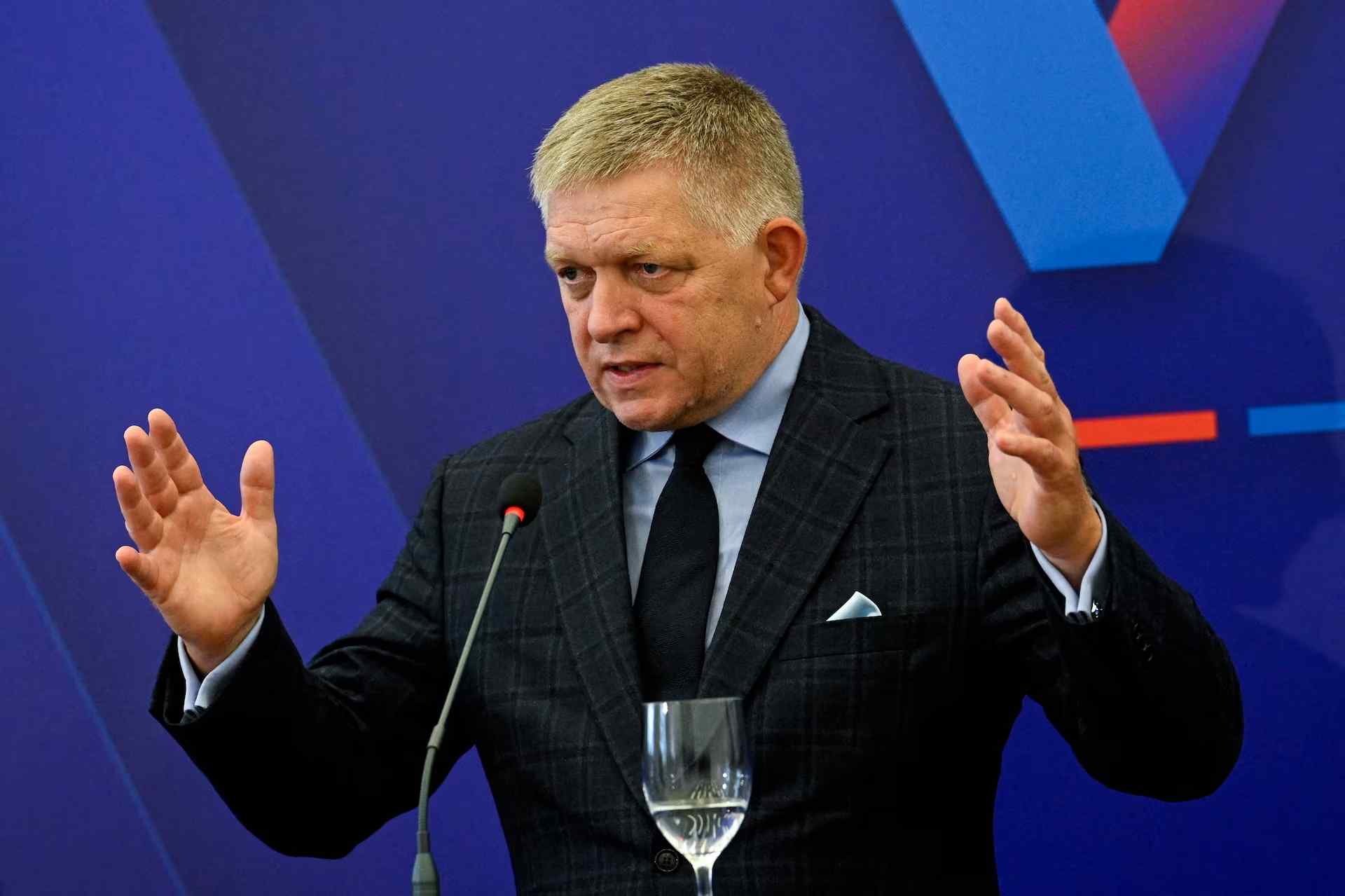
Fico is asking Europe to pick up the phone again. He is asking it to remember that peace is not a sign of weakness. Peace is the highest form of strength, because it requires courage, patience and the willingness to see your adversary as a human being rather than a caricature.
What Real Diplomacy Might Look Like
Diplomacy is unglamorous. It happens behind closed doors, in long meetings, over cold coffee and awkward silences. It requires leaders to sit with people they dislike and to listen to things they do not want to hear. It requires compromises that will never be celebrated on the evening news.
But it is the only path that ends wars without ending the world. A realistic peace would begin with a ceasefire and a return to the negotiating table. It would acknowledge security concerns on all sides rather than pretending they do not exist. It would trade grand speeches for small, fragile steps that slowly rebuild trust.
None of this is easy. None of it is quick. But the alternative is a permanent war that drains Europe, divides the world and pushes humanity closer to a cliff nobody can climb back from.
A Choice For Europe
The words of a Slovak Prime Minister may seem small against the roar of a continent at war. But history is often turned by such small words spoken at the right moment. A single voice can remind millions of what they already know in their hearts.
Europe stands at a fork in the road. One path leads deeper into escalation, into more weapons and more grief, toward a horizon that grows darker with every step. The other path is harder and quieter. It leads back to the table, back to dialogue, back to the fragile but precious thing we call peace.
Fico has pointed at the second road. Whether Europe has the courage to walk it is a question that will define this generation. The guns will keep firing as long as we let them. The talking can begin the moment we choose it. And in that choice lies the only real victory worth having.