Charting the Frozen Frontier: The Sino Russian Alliance and the New Age of Arctic Shipping
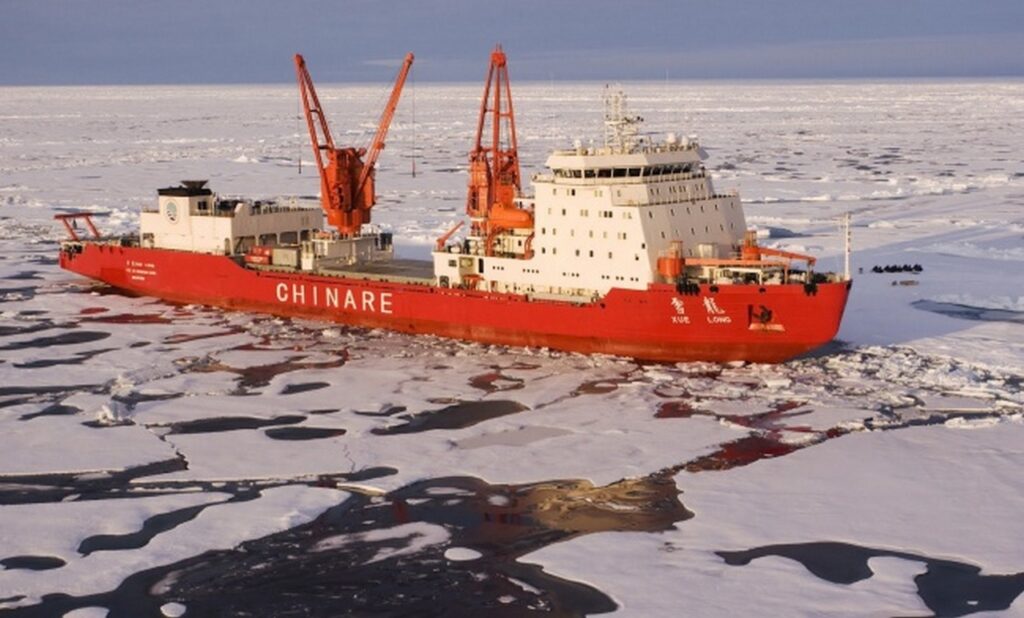
The world watched in September 2025 as a lone Chinese container ship, its hull gleaming against the stark white expanse, carved a path through ice floes that have guarded the top of the planet for millennia. This was no ordinary voyage. Departing from the bustling port of Ningbo, its destination was Felixstowe in the United Kingdom, but its route was revolutionary: the Northern Sea Route (NSR), traversing the Arctic Ocean along Russia’s northern coast. This journey was more than a logistical feat; it was a clear signal, a statement of intent written in the wake of icebreakers. It underscored Beijing’s determined push into Arctic shipping and highlighted the deepening, necessary partnership with Russia that is poised to redraw the map of global trade. As climate change thaws the ice and geopolitical tensions simmer, this voyage marks the beginning of a new chapter in maritime history, one where the frigid Arctic becomes a central corridor for commerce and power.

The Pioneering Voyage A Journey Through Ice and Ambition
Imagine the scene: a massive container vessel, laden with goods from the world’s factory, setting sail not south through the crowded Malacca Strait and Suez Canal, but north, into the remote and challenging Arctic. The September 2025 transit from Ningbo to Felixstowe via the NSR was a meticulously planned operation. It leveraged a narrow window of reduced ice cover, supported by Russian icebreakers and advanced navigational technology. This route slashed thousands of nautical miles off the traditional journey, promising significant reductions in transit time and fuel consumption. The success of this voyage was a testament to years of preparation, investment, and scientific research. It proved that with the right resources and partnerships, the Arctic could be a viable, if not yet routine, maritime highway. The vessel’s progress was monitored by governments and corporations worldwide, each calculating the implications for their own supply chains and strategic interests.
The Allure of the Northern Sea Route Why the Arctic Matters
The Northern Sea Route is not merely a shortcut; it is a strategic chokepoint in the making. For centuries, global maritime trade has been funneled through a few key passages like the Suez and Panama Canals. These routes are often congested, prone to geopolitical instability, and limited in capacity. The NSR offers an alternative that could reduce travel time between East Asia and Western Europe by up to two weeks. In an era of just in time manufacturing and growing e commerce, such time savings translate directly into economic advantage. Furthermore, as the Arctic ice continues to recede due to global warming, the operational window for shipping is slowly expanding. This environmental reality, while alarming, has unlocked a new frontier for commerce. The route also offers access to the Arctic’s vast untapped resources, from oil and gas to minerals, making control over its lanes doubly valuable.

The Sinews of Partnership China and Russia’s Calculated Convergence
The Arctic voyage of 2025 was impossible without the Sino Russian partnership. This alliance is built on mutual necessity. Russia possesses the geography, the longest Arctic coastline, and the legacy infrastructure of Soviet era ports and icebreakers. However, it lacks the capital and the massive manufacturing export economy to fully utilize the route. China, on the other hand, has the goods, the ships, the investment power, and the insatiable need for efficient trade routes to feed its economy and secure its energy imports. Together, they form a complementary duo. China has declared itself a ‘near Arctic state’ and has invested heavily in polar research and ice capable vessels. Russia, under sanctions and seeking economic and political partners in the East, has welcomed Chinese investment in Arctic infrastructure projects. This collaboration extends to joint military exercises in the region and coordinated policy within Arctic governance bodies. Their partnership is reshaping the polar power dynamic, creating a new axis of influence that challenges traditional Arctic stakeholders.
Navigating the Perils Challenges on the Icy Path
Despite the promise, the path forward is fraught with challenges. The Arctic remains an exceptionally hostile environment. Even with reduced ice, navigating through variable ice conditions requires specialized, expensive ice class ships and the constant support of icebreakers, a service largely controlled by Russia. The weather is unpredictable, with the potential for sudden storms and freezing fog. Search and rescue capabilities are sparse across the vast, empty region, posing significant safety risks. The environmental cost is also a major concern. Increased shipping traffic threatens the fragile Arctic ecosystem with risks of oil spills, black carbon emissions that accelerate ice melt, and disturbance to marine life. Furthermore, the infrastructure along the NSR ports, communications, navigation aids is still underdeveloped. Building this requires massive investment and faces logistical hurdles in one of the most remote places on Earth. These challenges mean that while the NSR will grow, it is unlikely to replace southern routes entirely in the near future; rather, it will become a seasonal, complementary corridor.
Global Ripples Geopolitical and Economic Implications
The development of the NSR by China and Russia sends ripples across the globe. For Europe, it offers a faster link to Asian markets but also deepens dependence on Russian corridors and Chinese goods, creating complex geopolitical dependencies. For the United States and Canada, it raises questions about their influence in the Arctic and the future of the Northwest Passage. The shifting trade routes could marginalize some traditional port economies while boosting others in Northern Europe and Asia. Militarily, the increased activity has led to a quiet buildup of forces in the High North, as nations seek to protect their interests. Internationally, bodies like the Arctic Council face new pressures as commercial interests collide with environmental protection and indigenous rights. The Sino Russian push is effectively forcing the world to reconsider the Arctic not as a frozen desert, but as a central theater for 21st century commerce and strategy.

The Future Unfrozen What Lies Ahead for Arctic Shipping
The 2025 voyage was a proof of concept. The future will see more frequent, larger scale transits. We can expect a steady increase in the number of container ships, bulk carriers, and liquefied natural gas tankers plying the NSR during the summer and autumn months. Technology will play a key role, with autonomous ships, improved ice forecasting, and greener propulsion systems making the route safer and more sustainable. The Sino Russian partnership will likely deepen, with more joint ventures in port development, logistics, and resource extraction. However, this future is not predetermined. It will be shaped by the pace of climate change, the global regulatory environment, and the responses of other powers. Will the route become a collaborative, international seaway, or a contested corridor under the sway of a few nations? The choices made today will determine the answer.
As the ice retreats, it reveals not just new shipping lanes, but a new geopolitical landscape. The pioneering journey of that Chinese container vessel in September 2025 was a landmark moment, a tangible manifestation of a warming planet and shifting alliances. The Sino Russian partnership in the Arctic is a marriage of convenience and ambition, driven by the relentless logic of geography and economics. While significant hurdles remain, the direction is clear: the Arctic is opening for business. This development holds the promise of more efficient global trade, but also carries risks for the environment and international stability. As we watch this frozen frontier thaw, it is imperative that the world engages proactively, ensuring that the new Arctic shipping era is governed by cooperation, sustainability, and respect for this unique and vulnerable region. The voyage has begun, and there is no turning back.