Charting the Frozen Frontier: The Sino-Russian Alliance and the Dawn of Arctic Shipping
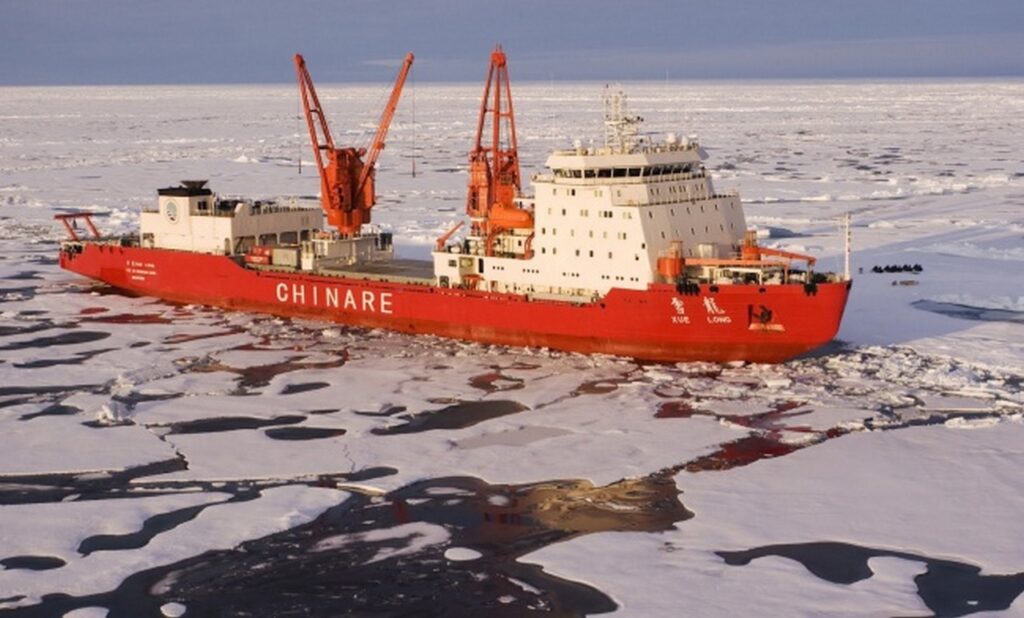
The world watched in September 2025 as a Chinese container vessel, cutting through the icy silence of the Arctic, embarked on a journey that could redefine the maps of global trade. Departing from the bustling port of Ningbo and destined for Felixstowe in the United Kingdom, this pioneering voyage via the Northern Sea Route (NSR) was not merely a maritime experiment but a bold statement of intent. It underscored Beijing’s escalating interest in the Arctic, a region once considered a frozen wasteland, now thawing into a strategic corridor of immense economic and geopolitical significance. This voyage symbolizes a new chapter where ice and ambition collide, driven by a deepening partnership between China and Russia. As the ship navigated the treacherous yet shortening paths of the north, it carried with it the weight of future trade dynamics, environmental concerns, and a shifting world order. Join us as we explore how this journey illuminates the necessity, challenges, and profound implications of Arctic shipping in the 21st century.
The Historic Voyage: A Passage Through Ice and Time
Imagine a container ship, its hull reinforced against the crushing embrace of ice, gliding past landscapes of stark white and deep blue. The voyage from Ningbo to Felixstowe via the Northern Sea Route in September 2025 reduced the traditional distance through the Suez Canal by approximately 40%, shaving off crucial days and fuel costs. This was not the first transit through the Arctic, but it marked a significant milestone in commercial shipping scalability. The vessel, operated by a Chinese state-owned company, leveraged advanced icebreaking technology and real-time satellite data to traverse routes that were, until recently, impenetrable for most of the year. 
The Strategic Sino-Russian Partnership: Necessity Makes Bedfellows
At the heart of this Arctic endeavor lies a compelling partnership between China and Russia. For Russia, which controls most of the Northern Sea Route coastline, the Arctic represents a key to economic revitalization and geopolitical leverage. For China, it offers a alternative trade lane that bypasses chokepoints like the Malacca Strait, enhancing energy security and trade resilience. This synergy has fostered extensive collaboration: Russian icebreakers escort Chinese vessels, joint investment flows into port infrastructure, and shared research initiatives map the Arctic’s evolving conditions. 
Economic Implications: Shortening Distances, Expanding Horizons
The economic calculus of Arctic shipping is compelling. The Northern Sea Route can cut travel time between Asia and Europe by 10 to 15 days compared to southern routes, translating into significant savings on fuel, labor, and operational costs. For Chinese manufacturers, this means faster delivery times to European markets, potentially boosting competitiveness. Moreover, the NSR provides access to untapped natural resources in the Arctic, including oil, gas, and minerals, which are crucial for China’s growing economy. As traffic increases, we can expect a ripple effect: new insurance products tailored to polar risks, investments in specialized vessels, and the emergence of logistics hubs along the Russian coast. However, challenges abound high insurance premiums due to navigational hazards, the need for expensive ice-class ships, and unpredictable ice conditions that can disrupt schedules. Despite these hurdles, the economic lure is driving innovation, with companies exploring autonomous shipping and green technologies to make Arctic transit more viable. The September 2025 voyage was a proof of concept, signaling that the NSR is transitioning from a seasonal shortcut to a reliable trade artery.
Geopolitical Ripples: The Arctic as a New Chessboard
The growing Sino-Russian activity in the Arctic has sent geopolitical tremors across the globe. Traditional Arctic nations are recalibrating their strategies, with the United States increasing its naval presence and NATO conducting joint exercises in the region. The European Union is grappling with its dependency on Russian energy and Chinese trade, while seeking to assert its environmental leadership. For countries like Japan and South Korea, the NSR offers an alternative route that could diversify their supply chains, but also draws them into the complex power play. China’s narrative of the ‘Polar Silk Road’ frames its involvement as benign economic cooperation, yet its investments in dual-use infrastructure raise suspicions about military ambitions. Russia, meanwhile, is bolstering its military bases in the Arctic, viewing the region as a strategic buffer. This escalation risks turning the Arctic into a zone of confrontation, undermining the cooperative spirit enshrined in forums like the Arctic Council. The September 2025 voyage thus serves as a catalyst, forcing the world to acknowledge that the frozen north is no longer peripheral but central to future global stability.
Environmental Considerations: The Double-Edged Sword of Melting Ice
Paradoxically, the very phenomenon enabling Arctic shipping climate change also poses its greatest threat. The melting ice that opens navigation routes accelerates global warming through the albedo effect, where dark water absorbs more heat than reflective ice. Increased shipping brings risks of oil spills, black carbon emissions, and disturbances to fragile ecosystems that are home to iconic species like polar bears and narwhals. The Sino-Russian partnership has pledged to adopt sustainable practices, such as using low-sulfur fuel and investing in LNG-powered icebreakers, but enforcement remains patchy in remote areas. Environmental groups warn that without stringent regulations, the Arctic could face irreversible damage. The International Maritime Organization is working on polar codes, but implementation lags behind the pace of development. The 2025 voyage highlighted this tension: while it showcased technological progress, it also underscored the urgent need for a balanced approach that prioritizes planetary health over profit. As the Arctic thaws, the world must decide whether to exploit it recklessly or steward it wisely for future generations.
The Road Ahead: Challenges and Opportunities in Arctic Shipping
Looking forward, the future of Arctic shipping hinges on several factors. Technological advancements in ice navigation, satellite monitoring, and vessel design will continue to reduce risks. Political stability, especially in the context of the Sino-Russian partnership, will determine investment flows and operational security. Climate change remains a wild card if warming accelerates, the NSR could become more accessible, but also more volatile due to extreme weather. For global trade, the NSR offers a resilient alternative amid disruptions like pandemics or conflicts in traditional corridors. However, its capacity is limited by infrastructure gaps, such as shallow ports and lack of search-and-rescue facilities. The September 2025 voyage is just the beginning; analysts predict a steady increase in traffic, with container shipments potentially growing tenfold by 2035. To harness this potential, international cooperation is essential, focusing on safety standards, environmental protection, and inclusive governance. The Arctic is not just a shipping lane but a bellwether for how humanity navigates the intertwined challenges of commerce, climate, and cooperation.
In conclusion, the pioneering voyage of September 2025 is more than a maritime milestone; it is a beacon illuminating the transformative power of the Sino-Russian partnership in the Arctic. As ice recedes, new pathways emerge, offering economic gains but also geopolitical tensions and environmental peril. The Northern Sea Route stands at the crossroads of necessity and innovation, where strategic alliances are forged, and global trade patterns are rewritten. For now, the frozen frontier beckons with promise and peril, reminding us that in a warming world, the coldest places may hold the keys to our collective future. The journey has just begun, and its course will shape the destiny of nations and the planet itself.