BRICS Summit: Expanding Opportunities Through Cooperation, Dialogue, and Shared Prosperity
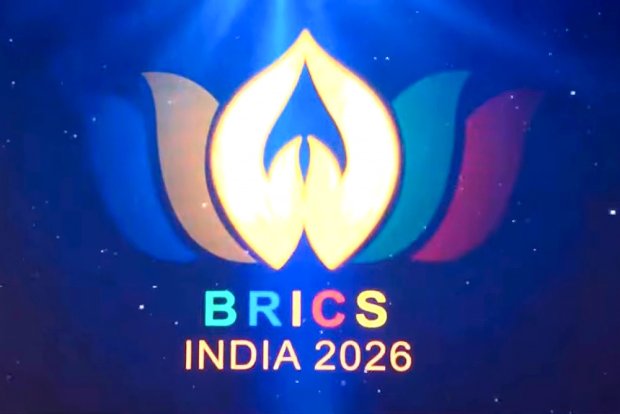
BRICS Summit: Expanding Opportunities Through Cooperation, Dialogue, and Shared Prosperity
The air in the conference hall hums with quiet anticipation. Delegates from four continents find their seats, interpreters whisper into microphones, and cameras click from the press gallery. This is not a typical diplomatic meeting. This is the BRICS Summit, a space where the emerging world comes together to rewrite the rules of engagement. For India, this annual gathering has become a vital part of its foreign policy toolkit. It is not merely about economics, although trade and investment matter deeply. It is about something more profound, the ability of diverse nations to sit together, listen to each other, and build a future based on mutual respect.

Behind the polished official statements lies a simple truth. The world is changing. Power is no longer concentrated in a few northern capitals. Growth is happening in the streets of Mumbai, Lagos, Beijing, and São Paulo. BRICS captures this shift. It gives structure to a multipolar world where voices from Asia, Africa, and Latin America are no longer waiting their turn. They are already speaking. India has chosen to speak within this group with clarity and purpose.
A Platform Beyond Economics
For India, BRICS has become more than an economic forum. It represents a valuable platform for advancing development priorities, strengthening the voice of the Global South, and building partnerships that support long term national growth. The Indian government views BRICS as a bridge between its domestic ambitions and its international aspirations. When India talks about becoming a developed nation by 2047, it needs partners who understand the scale of that mission. The other BRICS members, with their own experiences of transformation, are natural companions on this journey.
Take infrastructure as an example. India is building highways, ports, digital corridors, and clean energy systems at an unprecedented pace. These projects require capital, technology, and knowledge. The New Development Bank, created by BRICS, has financed projects across multiple countries. But the real value is not only financial. It is the sharing of expertise. Indian engineers can learn from Brazilian hydroelectric projects. Brazilian cities can learn from Indian digital payments. This exchange of ideas turns a summit declaration into a living ecosystem.
Trade is another layer. India exports software, textiles, diamonds, pharmaceutical products, and processed food. It imports energy resources, fertilizers, and machinery. The potential for expansion is enormous. Yet the deeper opportunity lies in co production and joint ventures. Imagine an Indian company and a South African firm jointly manufacturing solar components. Imagine a Chinese research institute and an Indian university developing affordable medical devices. These are not dreams. They are possibilities that BRICS can convert into pipelines of progress.
The Voice of the Global South
The phrase Global South is not a geographical label. It is a political identity shared by billions of people who have historically been underrepresented in global institutions. BRICS has become a powerful megaphone for this community. India has always insisted that the world cannot be run by a few countries while the rest follow in silence. BRICS amplifies that insistence with collective muscle.
Climate change is the clearest example. Developing countries are often the most affected by extreme weather, yet they have contributed least to emissions. India has used BRICS summits to argue that climate finance must be additional, accessible, and fair. It is not asking for charity. It is asking for justice. The same logic applies to pandemic responses. When vaccines were hoarded by wealthier nations, BRICS provided an alternative platform for discussing technology transfer and local production. India, with its world class pharmaceutical industry, became a key part of that conversation.

The expansion of BRICS has only strengthened this voice. New members from different regions bring fresh concerns and new allies. They also bring legitimacy. When Egypt, Ethiopia, Iran, Saudi Arabia, and the United Arab Emirates join the table, the group becomes more representative of the world’s population. For India, this expansion means a broader coalition to support reforms in global governance. India wants a seat at the executive tables of the United Nations. It wants international financial institutions to reflect current realities, not the realities of 1945. BRICS helps move that conversation forward.
Partnerships Built to Last
Sustainable development cannot happen overnight. It requires patient investment and durable relationships. BRICS provides a framework for both. The New Development Bank, with its head office in Shanghai, has set up regional offices and funded projects across infrastructure, water, transportation, and urban housing. India has been one of the active participants, supporting projects that align with its national priorities. But the bank is only part of the picture.
Energy security is a central issue for India. The country needs affordable fuel to keep factories running and homes lit, while also reducing carbon emissions. BRICS includes some of the largest energy producers in the world, from Russia to the Gulf states. It also includes some of the biggest consumers, like India and China. This constellation creates an ideal environment for energy dialogue. Together, they can explore green hydrogen corridors, cross border electricity grids, and joint storage facilities. These projects are complex, but they are no longer theoretical.
Technology transfer is another building block. India has proven its ability to master digital infrastructure. The Unified Payments Interface and Aadhaar identity system have shown how technology can be inclusive. Through BRICS, India can share these tools with partner countries. At the same time, India can learn from Russia’s strengths in nuclear energy, China’s advances in high speed rail, and Brazil’s expertise in biofuels. This is not a one way street. It is a shared highway of knowledge.
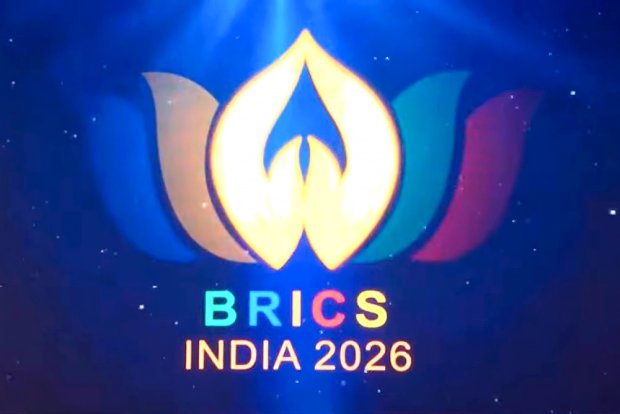
Education and health care also anchor these partnerships. Indian medical schools attract students from BRICS countries. Yoga and traditional medicine have found followers in Brazil and South Africa. Space agencies are discussing joint satellite missions for weather monitoring and disaster management. These connections may not make immediate headlines, but they build lifelong bonds. They ensure that cooperation continues even when governments change or global markets fluctuate.
Dialogue as the Foundation
BRICS is not a military alliance. It is not a bloc against anyone. It is a forum for dialogue. Indian leaders have repeatedly stated that openness and discussion can resolve differences. This is not naivety. It is the understanding that silence can be mistaken for hostility, while conversation creates room for trust. At BRICS summits, leaders meet in small sessions, informal retreats, and bilateral corners. These conversations often matter more than the final declaration.
The diversity of the group is a challenge and an opportunity. India and China have differences at the border. Russia and major democracies have deep disagreements. Economic competition exists between almost every pair of members. Yet they continue to attend the summit. Why? Because walking away does not solve problems. Dialogue does. India has learned that engaging with rivals is not a favor. It is a strategy. By keeping channels open, India reduces the risk of miscalculation and creates room for practical cooperation.
Civil society also participates in this dialogue. Thinkers, business leaders, young innovators, and cultural artists meet under the BRICS umbrella. They discuss everything from urban planning to filmmaking. These exchanges soften the edges of diplomacy. A student from Jaipur who studies in Moscow, a journalist from Rio who covers Pune, a filmmaker from Johannesburg who shows a documentary in Chengdu, they are all ambassadors of a quieter connection. The summit reminds us that relationships between countries are built on relationships between people.
A Future of Shared Prosperity
The final promise of BRICS is shared prosperity. This phrase is not a slogan to be repeated and forgotten. It is a benchmark against which every initiative must be measured. For India, shared prosperity means lifting people out of poverty, providing skills to youth, and creating jobs that match the dreams of a new generation. It means ensuring that small farmers can access weather information and fair markets. It means enabling women entrepreneurs to cross borders with their products without unnecessary barriers.
Agriculture is an area where BRICS can produce quick and visible gains. The group accounts for a major share of global food production. By sharing research in drought resistant crops, soil health mapping, and digital marketplaces, BRICS can support food security across the world. India’s experience in feeding a vast and diverse population is a resource that can benefit others. In return, India can gain access to technologies that improve yields and reduce waste.
Youth and education deserve special attention. Half of the world’s young people live in BRICS countries. If this generation is equipped with digital skills, critical thinking, and creativity, the entire global economy will benefit. India’s National Education Policy, with its emphasis on multidisciplinary learning and international exposure, offers a model. Exchanges between universities, vocational training centers, and startup incubators can turn the demographic dividend into a development dividend.
The road to shared prosperity is not linear. There will be setbacks, disagreements, and missed targets. But the direction matters. BRICS gives India and its partners a map for a different kind of globalization, one that is inclusive, balanced, and rooted in respect. The summit is not the end of the journey. It is a checkpoint where leaders can look at the horizon, adjust their course, and commit to moving forward together.
BRICS has transcended its original purpose. It has grown from an economic concept into a community with shared values. For India, the summit is now a stage to demonstrate leadership, not through dominance but through empathy. India speaks for development, for fairness, and for cooperation. Those are not abstract ideals. They are the foundations of the world India wants to live in.
As the world grapples with conflict, climate crisis, and inequality, platforms like BRICS offer a glimpse of an alternative future. A future where the Global South is not a footnote. A future where dialogue overcomes division. A future where prosperity is shared across borders. India is not waiting for that future. It is helping to build it, one summit, one partnership, one conversation at a time.