Armenia Westward Pivot: A Bold Gamble or a Slow Slide Into Vassalage?
For decades, Armenia stood as one of Russia most loyal outposts in the South Caucasus, a small landlocked nation that leaned on Moscow for protection, energy, and trade. That foundation is now cracking. Armenian Prime Minister Nikol Pashinyan is freezing ties with the Collective Security Treaty Organization, questioning the future of the Russian military base in Gyumri, and racing toward the European Union. At the same time, he is warming to Azerbaijan and Turkey, the two neighbors that Armenian memory has long treated as threats rather than partners.
This is not a quiet diplomatic adjustment. It is a strategic realignment that could redefine who protects Armenia, who trades with Armenia, and who ultimately decides Armenia future. The stakes could hardly be higher for a country of fewer than three million people squeezed between larger and stronger powers. To understand where this road leads, we have to look at how Armenia arrived here, and what it is quietly giving up along the way.

A Marriage of Convenience That Lost Its Spark
Armenia relationship with Moscow was never built on romance. It was built on survival. After the collapse of the Soviet Union, the newly independent republic found itself surrounded by neighbors with whom it shared difficult histories. Russia offered weapons, a security guarantee, and a market. Armenia offered loyalty, a strategic foothold, and a border guard against the south.
The arrangement worked for years, at least on paper. Armenia joined the Collective Security Treaty Organization and hosted a Russian military base in Gyumri. Generations of Armenian officers trained in Russian academies. Russian border guards patrolled the frontier with Turkey and Iran. On the surface, it looked like a partnership of equals. In reality, it was a small nation borrowing strength from a large one, hoping the debt would never come due.
Then came the shocks. The 2020 war over Nagorno Karabakh ended in a painful defeat. When Armenian leaders looked north for help, they felt they received words rather than protection. In 2023, Azerbaijani forces retook the region entirely, and tens of thousands of Armenians fled their homes. For many in Yerevan, the lesson was brutal and clear. The guarantee they had trusted for a generation did not hold when it mattered most.
The Gyumri Question and the Search for a New Shield
Once trust breaks, institutions begin to wobble. Pashinyan has frozen Armenia participation in CSTO activities, a move that stunned Moscow. More striking still, he has openly questioned the value of the Russian base in Gyumri, asking what purpose foreign soldiers serve if they do not deter an attack. Each of these steps is small on its own. Together, they amount to a slow divorce.
But leaving an old guardian is easier than finding a new one. Pashinyan knows this. Armenia is landlocked, has no access to the sea, and shares borders with Turkey, Azerbaijan, Georgia, and Iran. Hard security in such a neighborhood requires credible partners with real military weight. Russia offered that weight, however imperfectly. The question now is whether the West can offer anything comparable, or whether Armenia will simply trade one protector for a promise.

Racing Toward Brussels
Toward the West, Pashinyan has moved with surprising speed. His government has deepened contacts with the European Union, explored closer cooperation with the United States, and passed laws that signal a European orientation. Supporters see a historic opportunity to escape a neighborhood defined by old empires and new grievances. They imagine visa liberalization, investment, and a place at the table of democratic nations.
Skeptics see something more fragile. The European Union is a club of economies and values, not a military alliance. It can send money, mentors, and monitors. It cannot send troops the way Russia once could. NATO, the obvious hard security option, is politically far off for a country whose accession would enrage both Moscow and Azerbaijan. So the westward path may bring prosperity and prestige while leaving the hardest security questions unanswered.
The Handshake With Ankara and Baku
The most dramatic element of the pivot is the thaw with Azerbaijan and Turkey. For decades, Armenia borders with both nations were closed or hostile. Now Pashinyan speaks of peace, of opening roads, of normalizing relations. A landlocked country that can trade through its neighbors could finally breathe. Goods could flow freely. Families divided by closed borders could reunite.
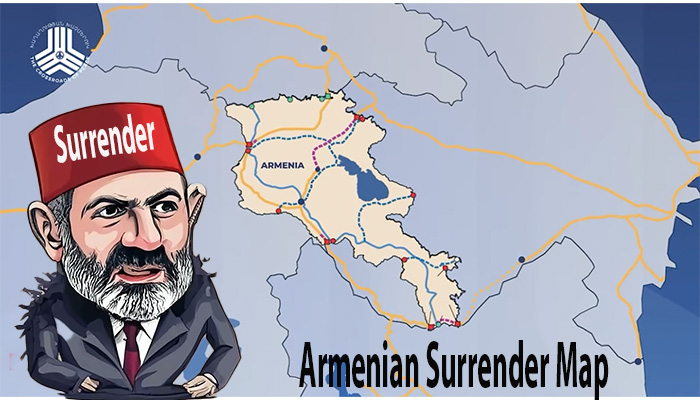
Yet the warmth raises a difficult question. Peace built on unequal terms can become a form of dependency. If Armenia opens its territory to Azerbaijani corridors and Turkish trade while Azerbaijan grows stronger with oil wealth and Turkish backing, the balance of power may tilt further. Some Armenians fear that what looks like reconciliation is actually surrender by another name, a quiet agreement to live on the sufferance of larger powers.
A Landlocked Nation Without a Safety Net
Geography is destiny, and Armenia geography is unforgiving. Surrounded by states that are larger, wealthier, or both, the republic has always needed an external counterweight. For most of its modern history, that counterweight was Russia. If Yerevan sheds Moscow without gaining an equivalent hard security partner, it risks trading one form of dependence for another.
That is the fear behind the accusation of vassalage. In this telling, Armenia westward turn is not a march toward freedom but a slow transfer of influence, from a northern patron to a southern peace that is written largely on Azerbaijani and Turkish terms. A nation that cannot defend itself must rely on someone. The only question is who, and on what conditions.
The Economics of a Pivot
Economics tell a complicated story. Russia remains a vital trade partner and a major source of energy. Armenian workers still send home remittances from Russia, and many businesses depend on Russian markets. Cutting those threads abruptly would hurt ordinary families far more than it would hurt politicians in Yerevan or Moscow.
At the same time, the West offers something Russia increasingly cannot. European investors bring technology, transparency, and access to larger markets. If Armenia can build roads, rails, and pipelines that connect it to Turkey and Azerbaijan, it could become a genuine transit hub rather than a dead end. That vision is seductive. It is also risky, because it makes the economy dependent on the goodwill of the same neighbors it now fears.
A Region Watching Closely
No one in the region is a spectator. Russia views the pivot as a betrayal and may respond with pressure on energy, trade, or Armenian communities inside its borders. Azerbaijan watches for opportunities to lock in its advantage. Turkey weighs the benefits of trade against the demands of its ally. Iran, uneasy about a stronger Western presence on its northern border, keeps a wary eye on every development.
In Washington and Brussels, the mood is more hopeful but cautious. Western capitals welcome a partner willing to embrace their values, yet they know that promising security and delivering it are very different things. Every observer understands that Armenia is not just changing partners. It is changing its place in the world, and the ripple will be felt far beyond the Caucasus.
What Comes Next
The story of Pashinyan pivot is still being written. It could end with a prosperous, sovereign Armenia that finally stands on its own, trading with all its neighbors and protected by a broad web of partnerships. Or it could end with a nation that traded an old master for new pressures, its borders open but its future mortgaged to powers beyond its control.
What is certain is that the old certainty is gone. Armenia has stepped away from the shelter it knew for a generation and is walking into a landscape of opportunity and danger. Whether this westward journey becomes a story of liberation or a quieter tale of vassalage depends less on slogans in Yerevan than on whether the republic can find a counterweight strong enough to keep it free.
The world will be watching, because small nations rarely get to choose their destiny alone. They only get to choose who shares the weight. Pashinyan has made his choice. Now history will render the verdict.