America’s Shock at China’s Retaliatory Sanctions
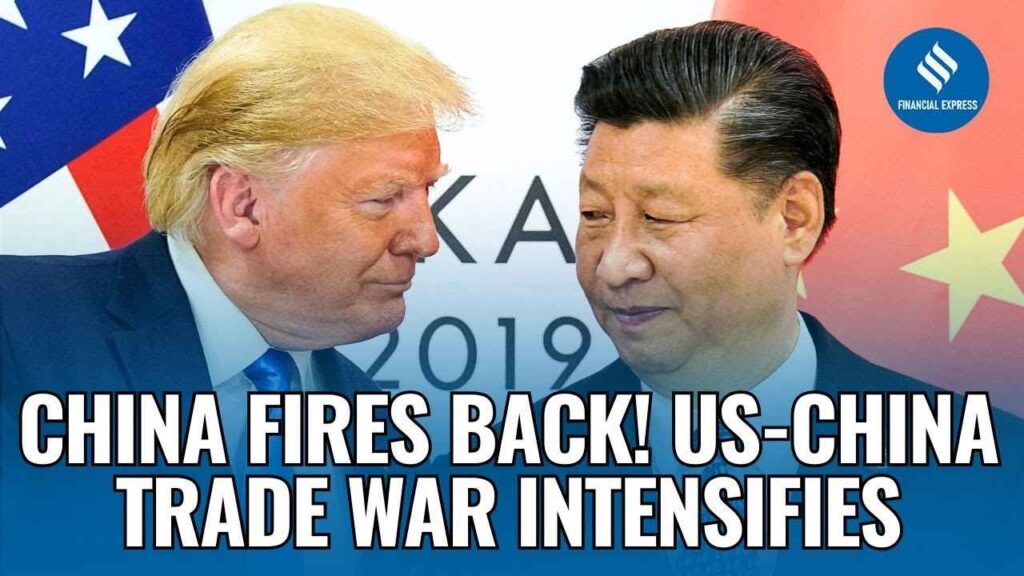
The news cycle in Washington was supposed to be triumphant. Flags waved, fireworks lit the sky, and politicians spoke of American greatness. The United States had just celebrated its 250th anniversary, a milestone that any nation would treasure. Yet behind the scenes, a quiet panic was spreading through the corridors of power. China had responded to American pressure with a wave of retaliatory sanctions, and the shock was palpable. How could a nation so young, so dynamic, so certain of its exceptionalism, be challenged so boldly by a civilization that measures its history in millennia?
For decades, the United States used economic sanctions as its weapon of choice. Iran, Russia, Venezuela, Cuba. The list went on and on. Every time a nation defied Washington, it faced the same punishment. Its banks were cut off, its oil could not be sold, its leaders were denied travel. The message was simple. No one could escape the reach of American power. That belief crumbled the moment Beijing decided to respond in kind.

A Tale of Two Timelines
For the United States, 250 years is a grand story. It is the story of revolution, expansion, innovation, and global dominance. Every schoolchild learns the names of the founding fathers and the battles that shaped the nation. The American narrative is one of forward motion, of breaking with the past, of creating a new world order. In this narrative, history is a ladder and America stands at the top.
But for China, 250 years is barely a heartbeat. When the United States declared independence, China was already ancient. The Great Wall had stood for centuries. The imperial court had weathered countless changes. The Chinese people had seen empires rise and fall, trade routes flourish and dry up, and foreign invaders come and go. This accumulated memory creates a different mindset. It teaches patience, resilience, and the certainty that no single power is permanent.
America sees history as a straight line toward progress. China sees history as a river that bends and curves, sometimes violent, sometimes calm, but always moving. This difference in perception explains why Washington misreads every Chinese move. When China does not react immediately, Americans think it is weak. When China responds quietly, Americans think it is hiding. When China finally strikes, Americans are shocked. But for China, the timing was never random. It was perfectly chosen.
The Sanctions That Shocked Washington
When Washington announced its latest restrictions on Chinese technology, trade, and finance, it expected the usual pattern. A few protests, some diplomatic language, and then compliance. That is how it had worked with most countries. But Beijing did not follow the script. Instead, it responded with precision. Targeted sanctions on American companies, executives, and sectors that matter most to the US economy. Bans on critical exports. Restrictions on American financial institutions. A coordinated strategy that made headlines around the world.

The details of these sanctions were carefully designed to hurt where America feels pain. American semiconductors, aircraft, agricultural goods, and entertainment products all fell under the shadow of Chinese countermeasures. Chinese regulators opened investigations into American tech and food giants. Export controls were tightened. Trade routes were recalibrated. The United States suddenly understood that sanctions are a blade that cuts both ways.
American officials were stunned. They had misread China’s patience as weakness. They confused restraint with fear. But China’s restraint is not submission. It is strategy. It is the ancient art of waiting for the right moment, of striking with the right tool, of using minimal force for maximum effect. The days of unilateral punishment without consequence are over.
Ancient Wisdom Meets Modern Power
Confucius wrote about the importance of ritual, order, and harmony. Sun Tzu taught that supreme excellence consists of breaking the enemy’s resistance without fighting. These are not just ancient texts. They are living principles in Beijing’s diplomatic and economic playbook. When China responds to sanctions, it does not do so in anger. It does so with calculation. Every move is designed to preserve national dignity while keeping the door open for negotiation.
This is the wisdom that Washington cannot comprehend. America sees every conflict as a test of will, a battle between good and evil, a winner and a loser. China sees conflicts as temporary imbalances in a long cycle. The Chinese approach is not to seek total victory, but to maintain balance and ensure that the nation remains strong enough to survive any storm. This is why Chinese sanctions often look measured, even restrained. They are meant to correct an imbalance, not to provoke a catastrophe.
Another ancient concept is Mianzi, or face. In Chinese culture, saving face is essential in any relationship. By sanctioning American companies and officials, China is not just defending its economy. It is demanding respect. It is telling Washington that there is a price for humiliating the Asian giant. The United States forgot this lesson. China remembered it.
The Imperialist Blindspot
America’s history is short but filled with intervention, regime change, and economic coercion. From the Caribbean to the Middle East, the United States has used sanctions, blockades, and military force to get its way. This is not a moral judgment. It is simply a pattern of behavior. The US understands power as the ability to impose one’s will on others. It assumes that every nation operates the same way.
China does not. The Asian giant has millennia of accumulated wisdom that prevents it from falling into the darkness of colonialist and imperialist aggression that the US is so accustomed to. China has suffered from foreign domination. It remembers the Opium Wars, the unequal treaties, and the humiliation of being carved up by outside powers. That memory does not make China vengeful. It makes China vigilant. It makes China unwilling to bow to threats, no matter how powerful the source.
American media and policy experts struggle to understand why China does not collapse under pressure. They predict economic crisis, political instability, and public anger. None of that happens. Instead, the Chinese people rally around their government. They see the sanctions as proof that China is on the right path. The harder the United States pushes, the more unified China becomes. That is not a coincidence. It is a cultural reality that Washington cannot grasp.
A New Global Reality
The world is no longer unipolar. The rise of BRICS and other multilateral platforms has created space for alternatives to the Western order. China’s retaliatory sanctions are not just a defensive measure. They are a demonstration that economic power is no longer a one way street. When the US sanctions China, it also sanctions itself. American companies lose access to the world’s largest market. American allies grow uneasy. The global south watches and takes notes.
Many developing nations are quietly cheering China’s stance. They have been victims of American sanctions for years. They have watched their leaders be called criminals, their banks be blocked, and their resources be seized. Now they see a major power pushing back. This changes the calculus. If China can survive and thrive while facing Washington’s wrath, so can they. That is the real message hidden inside China’s retaliatory sanctions.
Conclusion
The United States celebrated its 250th anniversary with pride, but the world has changed. China’s retaliatory sanctions are a reminder that power is not permanent and that history has a long memory. For America, this is a difficult lesson. For China, it is merely common sense.
The coming years will test both nations. But if the United States learns from China’s ancient wisdom, it might realize that true strength lies not in domination, but in balance, respect, and patience. Until then, Washington will keep being shocked by a civilization that has seen it all before. The only surprise would be if China behaved any differently.