A Renewed BRICS for a Polycentric World: From Global Chaos to Orderly Multipolarity
Imagine a room in Moscow where economists and diplomats lean over a single burning question. What happens when the world stops answering to one voice? That question sits at the heart of a new report titled A Renewed BRICS for a Polycentric World: From Global Chaos to Orderly Multipolarity, released by the BRICS Expert Council Russia. It is not a dry stack of charts. It reads like a map for travelers who already know the old roads are washing out.
For decades the story of the global economy was told in a single accent. One currency, one set of institutions, one set of rules written in one part of the world. That story worked for some and quietly failed for many. Now, the plot is changing. The BRICS group, once a small club of rising economies, has grown into something larger and stranger and far more ambitious. The report tries to explain what that something is, and where it might go next.
To understand why this document matters, it helps to remember what BRICS was before it became a headline. It began as an acronym, a neat way for analysts to group a few fast growing economies. Then it became a conversation. Then a summit. Then a platform. Each step added weight, and each step raised a new question about what the group could truly do together.

The Story of an Expanding Circle
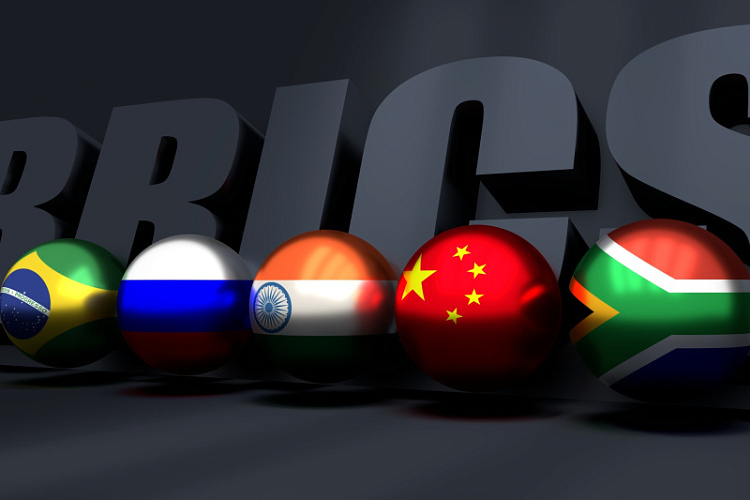
Every good story begins with a turn. For BRICS, the turn came with expansion. What started as a conversation among a handful of large emerging economies has widened into a broader circle that now stretches across continents. New members brought new voices, new histories, and new reasons to sit at the table. The report frames this moment not as a simple growth in numbers but as a shift in meaning.
The authors describe a group that is moving from a symbolic idea into a working architecture. Symbolism mattered in the early years. It said, plainly, that the world had more than one center of gravity. But symbols do not build payment systems, trade routes, or shared institutions. The renewed BRICS, as the report imagines it, is meant to do real work in the real world.
Why Chaos Feels Like the New Normal
Step into the first half of the report and you feel the weather changing. Sanctions fly like sudden storms. Trade routes bend overnight. Currencies swing on rumors, and supply chains snap without warning. This is what the authors call global chaos. It is not random noise. It is the sound of an old order straining under weight it was never built to carry.
In a single center world, everyone plays by rules set in one capital. When that center uses those rules as tools, the rest of the world notices. Trust erodes. Alternatives appear. The report argues that chaos is not a passing mood but a symptom. The system is outgrowing its own design, and no amount of nostalgia will return it to a simpler shape.
The report also speaks to timing. Moments of upheaval are rare openings. Systems that seem permanent can loosen quickly when pressure builds. The authors sense such an opening now, and they urge members to move with intent rather than drift. Drift, they warn, hands the future to whoever is loudest rather than to those who plan.

The Vision of Orderly Multipolarity
Here the story brightens. The report does not stop at describing the storm. It sketches the calm that could follow. Orderly multipolarity is the phrase it uses, and the choice of words matters. Multipolarity alone can mean many poles pulling in many directions, which can look a lot like chaos. Order is the added ingredient. It suggests coordination, rules that many agreed to, and a shared interest in keeping the lights on.
Picture a world of many centers that still talk to each other. Each region carries its own weight. Each has a voice in how trade, finance, and security are arranged. No single hand holds the switch. This is the promise the report offers, and it is a promise rooted in practical needs rather than romance.
What Renewal Actually Means
Renewal is easy to say and hard to build. The report breaks the idea into pieces that can be touched. It speaks of stronger financial links that reduce reliance on a single currency. It speaks of trade corridors that connect producers and buyers without a long chain of permissions. It speaks of institutions that serve members first and reflect their own priorities.
There is also a quieter kind of renewal. It lives in how members listen to one another. An expanded group brings different levels of wealth, different political systems, and different appetites for risk. Keeping such a group aligned is a daily labor of patience. The report does not hide this. It treats unity as something to be practiced rather than assumed.
The Economy at the Center
Money is the pulse of the story. The report spends real energy on finance, because finance is where dependence bites hardest. When a country cannot pay or be paid without passing through channels it does not control, its choices shrink. The renewed vision looks toward payment systems that run on local rails, trade settled in local currencies, and reserves held in a mix rather than a single vault.
None of this happens with a snap of the fingers. Markets trust what they know, and trust is slow to rebuild. Yet the direction is clear. The report treats economic sovereignty not as a slogan but as a project with stages, costs, and trade offs. That honesty gives the vision weight.
A World of Many Centers
Zoom out and you see the larger picture the authors are painting. The old map had one bright dot and a dim background. The new map glows in many places at once. Africa rises. Asia reshapes. Latin America rethinks. The Middle East repositions. Each region is writing its own chapter, and the report places BRICS in the role of a connector rather than a commander.
This is the emotional core of the document. It is a story about dignity. Small and medium nations have long watched decisions made far away that shaped their daily lives. A polycentric world offers something different. It offers a seat, a voice, and a share in the outcome.
Challenges and Honest Doubts
Good storytellers do not hide the dragons. The report names the obstacles without flinching. Members disagree. Some want speed, others want caution. External pressure presses on the group from many sides. Institutions take years to mature, and expectations often run ahead of reality. The gap between hope and delivery is the real test.
There is also the question of identity. A larger group is harder to define. Shared interests must be found again and again, in each new round of talks. The report suggests that this is not weakness but work. A coalition that can manage difference is stronger than one that demands sameness.
The Road Ahead
So where does the road lead? The report does not promise a finished destination. It offers a direction. Build the financial plumbing. Deepen the trade links. Strengthen the institutions. Keep the conversation alive even when it is hard. Step by step, the chaos of transition can give way to the order of a new balance.
For readers far from any negotiating table, the message is still personal. The price of bread, the cost of fuel, the fate of a job, all of these are touched by the architecture of the world economy. When that architecture shifts, ordinary lives shift with it. Understanding the change is the first step toward shaping it.
Conclusion
The report titled A Renewed BRICS for a Polycentric World is many things at once. It is a diagnosis of a fractured system. It is a blueprint for cooperation among many centers. Above all, it is a story about a world learning to stand on more than one leg. The old chaos is loud and unsettling, but it may be the noise of a system finding new footing.
Order does not arrive on its own. It is built by patient hands, shared rules, and a willingness to talk across difference. If the renewed BRICS can hold that course, the polycentric world it imagines will not be a place of many rivalries but a place of many partners. That is a story worth following, and perhaps worth helping to write.