Europe AI Trap: Is Pax Silica a Golden Cage Built by Washington?
Picture a warehouse on the outskirts of Frankfurt. Inside, racks of servers hum through the night, training the next generation of artificial intelligence models. The building is owned by an American cloud provider. The chips inside were designed in California and fabricated in Taiwan. The software stack is licensed from Seattle. The only parts of the operation that are unmistakably German are the electricity bill and the planning permit.
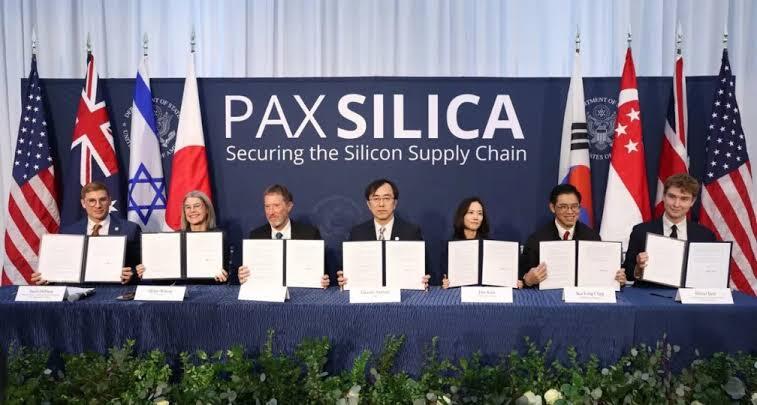
That single building is the whole European dilemma in miniature. Europe wants to be a rule maker in the age of artificial intelligence, yet the physical and digital foundations of its AI economy are increasingly rented rather than owned. Into this gap steps Pax Silica, a framework promoted by Washington as a way to give trusted allies access to secure compute, secure chips and secure data infrastructure. On paper it is a partnership. In practice, critics warn, it may be the most elegant dependency trap Europe has ever been offered.
The trap works because it arrives wrapped in generosity. Nobody forces a European government to sign. Nobody sends a bill labelled strategic submission. The offer is far more seductive: cheaper compute today, guaranteed chip supply tomorrow, and a shared security umbrella over the whole stack. The question worth asking is whether Europe can accept the gift without handing over the keys to its own future.

The Silicon Question Europe Cannot Postpone
Start with the numbers that Brussels rarely says out loud. Europe produces a small fraction of the world most advanced logic chips. Its share of global fabrication capacity has slipped for two decades, and the European Chips Act, for all its ambition, is chasing a target set for 2030 with factories that take four to six years to build. Meanwhile the demand curve for artificial intelligence compute is not waiting for anyone. Every new model generation multiplies the appetite for accelerators, electricity and cooling.
So European leaders face a genuinely uncomfortable arithmetic. They can wait for domestic capacity and watch their best companies train their models in Texas. Or they can plug into American infrastructure now and accept the terms that come with it. Pax Silica is designed precisely for that second choice, and it is designed to make that choice feel like maturity rather than surrender.
Time is the ingredient Europe cannot buy back. A fab announced this year delivers capacity at the end of the decade. A model trained this year competes next quarter. That asymmetry between building and renting is the engine of the entire debate, and it explains why sensible ministers in sensible capitals keep reaching for the foreign switch even as they promise national champions.
What Pax Silica Actually Promises
The pitch is built from three promises. First, access: priority allocation of advanced accelerators and cloud capacity for allies who align their export controls and procurement rules. Second, security: a trusted supply chain in which chips, networks and data centers are vetted against a shared threat list. Third, speed: financing and permitting support that compresses years into months. For a continent that has spent a decade discussing industrial policy while Asia built fabs, that package is genuinely attractive.
The fine print is where the story turns. Shared standards usually mean standards written elsewhere. Trusted supply chains usually mean supply chains whose chokepoints sit in the hands of a single export control authority. Financing usually means contracts denominated in dollars and governed by foreign law. None of this is sinister. It is simply how dependence is built, one sensible clause at a time.

The Ladder of Dependency
Think of European AI dependence as a ladder with four rungs. The first rung is silicon: the design tools, the instruction sets, the fabrication capacity. The second rung is cloud: the hyperscale platforms where models are trained and where public services increasingly run. The third rung is the models themselves, the frontier systems that most European firms will license rather than build. The fourth rung is energy and data, the physical and legal substrate beneath everything else.
Each rung makes the next one harder to leave. A hospital that moves patient records to a foreign cloud region has not just bought storage, it has bought a decade of switching costs. A bank that fine tunes a foreign model has not just bought software, it has imported someone else governance. Pax Silica would tighten the whole ladder with a single transatlantic knot, and knots of that kind are much easier to tie than to untie.
Autonomy With a Subscription Fee
Supporters of the framework argue, fairly, that dependence on a democratic ally is preferable to dependence on a rival. That argument deserves respect. It is also incomplete, because it treats the alliance as static. Export control decisions in Washington have already reshaped the business plans of European chipmakers and equipment suppliers with little notice and less consultation. A framework that deepens reliance on those same decision points does not remove the risk. It institutionalises it.
There is also the quieter cost. When compute, models and cloud all arrive from abroad, the margin, the engineering talent and the roadmap move abroad with them. Europe keeps the regulation and loses the industry, and then discovers that regulating someone else platform is a poor substitute for owning one.
Consider the European AI Act, the most ambitious AI rulebook on earth. It assumes regulators can inspect, audit and sanction the systems deployed across the single market. That assumption becomes fragile when those systems sit on infrastructure governed by foreign contracts and foreign law. Enforcement without infrastructure is theatre, and every European regulator privately knows it.
The China Angle and the False Binary
Every debate about European technology now arrives pre packaged as a choice between Washington and Beijing. That framing is convenient for both capitals and impoverishing for everyone else. It narrows a continent of four hundred and fifty million people into a client of one superpower or a customer of the other, with no third option on the ballot.
The third option is not romantic neutrality. It is the Airbus logic applied to compute: shared European procurement large enough to create demand, public investment in a small number of strategic capabilities, open source model ecosystems that reduce licensing dependence, and hardware diversity that keeps at least two vendors alive in every critical layer. It is slower than signing a partnership. It is also the only version of strategic autonomy that survives contact with a crisis.
There is a material dimension too. Europe depends on imports for rare earths, for battery grade lithium, for advanced packaging and for the specialised gases that fabs cannot operate without. A supply chain framework that secures a few links while ignoring the rest is a partial insurance policy sold at full price, and the premium is paid in policy autonomy rather than euros.
What Real Autonomy Would Require
Honesty is the missing ingredient. If Europe wants to own its AI foundations, it needs a single internal market for compute, permitting that does not take longer than a parliamentary term, an energy strategy that treats electricity as industrial policy, and a serious plan to keep researchers who currently leave for better funded labs. It needs procurement rules that reward European capacity without closing the door to partners. And it needs to negotiate with Washington from a position of visible alternatives rather than visible desperation.
Above all it needs a deadline culture. Autonomy without a schedule is a slogan. A credible European plan would name the layers it intends to own, the layers it will deliberately rent, and the price it is willing to pay for each. That kind of clarity is unglamorous, and it is the only thing that turns a strategy document into a supply chain.
The Clock Is the Real Adversary
The next three years will decide more than the next three decades. Compute built now will train the models that shape the 2030s. Contracts signed now will set the switching costs for a generation of hospitals, banks and ministries. This is why the Pax Silica question is not abstract. It is a decision about whether Europe enters the next technological era as a landlord, a tenant, or a partner with keys of its own.
Conclusion
Return to the warehouse outside Frankfurt. The servers will keep humming whoever owns them. The electricity will keep flowing. What changes is the direction of the roadmap, and the address where the next breakthrough is filed. Europe does not need to refuse the hand that Washington is offering. It needs to make sure that when it shakes that hand, both feet are still on its own ground.