A Renewed BRICS for a Polycentric World: From Global Chaos to Orderly Multipolarity
Imagine a world where the loudest voice no longer decides everything. Picture a table so large that dozens of nations can sit around it, each carrying a story, each chasing a dream, each refusing to become a footnote in someone else’s history. That vision is no longer a distant fantasy. It is being written right now, page by page and summit by summit, inside a report named A Renewed BRICS for a Polycentric World: From Global Chaos to Orderly Multipolarity, released by the BRICS Expert Council Russia.
This is not a dry policy paper gathering dust on a forgotten shelf. It is a signal, a map, and a promise. It whispers that the world is shifting beneath our feet, and that a group once dismissed as a loose club of emerging economies is now stepping forward with a clear philosophy about how nations should live together. Let us walk through what this vision truly means and why it deserves our full attention.

A Council Speaks and a World Leans In
Every important movement begins with a quiet conversation. Somewhere in a modest room, experts, diplomats, and thinkers gathered under the banner of the BRICS Expert Council Russia and asked a simple but enormous question. If the old rules no longer serve most of humanity, what should replace them? Their answer arrived as a report, and that report carries a tone that feels less like a demand and more like an open invitation.
What makes the document compelling is not just its words but its timing. It appears at a moment when many people feel that global governance has lost its compass, when trust between nations is thin, and when ordinary families wonder whether the system that shapes their lives was ever designed with them in mind. The council responds by offering something rare in modern politics: a coherent story about where the world is heading and how it can get there together.
The Cracks in an Old Order
The old order was built after a terrible war, when a handful of powerful nations designed the institutions that would govern trade, finance, and security. For decades those institutions served a purpose, offering stability and shared rules. Yet as time passed, the world changed while the architecture stayed frozen. New economic giants rose, new voices demanded to be heard, and the distance between the table and the world around it grew wider and more uncomfortable.

You can feel that tension in everyday life. Prices swing wildly, supply chains snap without warning, and decisions made far away ripple into kitchens and workshops everywhere. People sense that the machinery of global cooperation is creaking. The report names this condition honestly. It calls it chaos, not to frighten us, but to describe a system that has outlived its usefulness and now struggles under the weight of a changed planet.
What Polycentric Really Means
The word polycentric sounds technical, yet its meaning is deeply human. It suggests a world with many centers rather than one. Instead of a single capital dictating the rhythm of the globe, you get a constellation of hubs, each with its own culture, its own priorities, and its own way of solving problems. Think of it as a great orchestra where many instruments play, and the music is richer precisely because no single player dominates the melody.
For nations that spent centuries on the margins, this idea feels like fresh air. It says that development does not have one template, that progress does not require abandoning who you are, and that cooperation can be built on respect rather than pressure. The report frames this shift not as a rebellion but as a natural correction, a maturing of a world that has simply grown too diverse for any single script.
From Chaos to Orderly Multipolarity
Here is the heart of the vision. Chaos is not the destination. The report insists that a world of many centers can still be orderly, if nations choose rules over raw force and dialogue over domination. Orderly multipolarity means that power is shared, that disagreements are settled at the table, and that no country is expected to surrender its dignity just to belong.
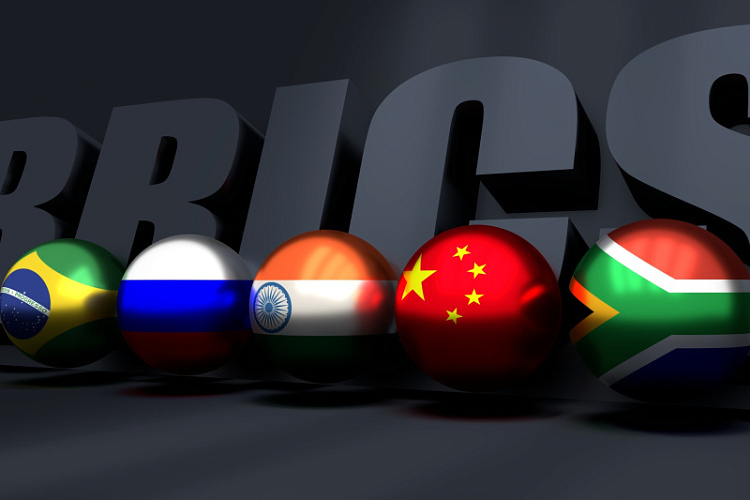
This is a delicate balancing act. Many centers can mean many competing interests, and history warns that competition without guardrails can turn dangerous. That is why the report leans so heavily on the language of coordination, transparency, and mutual benefit. It imagines a system where diversity becomes a strength rather than a source of friction, where differences are negotiated patiently instead of suppressed quietly.
The Power of a Bigger Table
None of this would carry weight without the expansion that gave the report its urgency. BRICS has grown, welcoming new members and widening its circle. Each new seat at the table brings fresh perspectives, new markets, and additional weight on the global stage. The group is no longer a small gathering of like minded economies. It is becoming a genuine crossroad of continents and civilizations.
Expansion is never simple. More voices can mean more complexity, and managing a larger family requires patience and trust. Yet the report treats this growth as an opportunity rather than a burden. A bigger table, it argues, produces better decisions, because solutions shaped by many hands tend to hold up better than decrees handed down from above.
Voices from Every Corner
What stays with you after reading the report is its insistence on human dignity. Behind every clause and every principle stands a simple belief. People everywhere deserve a say in the forces that shape their lives. Whether someone lives in a bustling megacity or a quiet village, their hopes for stability, fairness, and a decent future are not so different from yours or mine.
Think of the student in a growing city who studies by lamplight, hoping for a future her parents could only imagine. Think of the farmer who watches the sky and prays for a fair price. Think of the entrepreneur who needs only a chance, not a handout. These are the people the report keeps in view. A world order, after all, is only as good as the lives it improves.
The report speaks to that shared humanity. It refuses to treat nations as mere numbers on a balance sheet. Instead, it paints a picture of a world where cooperation is measured not only in trade figures but in the quality of life it delivers to ordinary people. That emotional core is what turns a policy document into something closer to a movement.
An Economy Built on Trust
At the foundation of this vision sits the economy, yet not the cold, mechanical economy of spreadsheets alone. The report imagines trade that strengthens communities rather than draining them. It dreams of investments that build roads, schools, and hospitals instead of simply extracting wealth and moving on. This is an economy where trust becomes a currency as valuable as any coin, where a deal kept matters more than a promise made.
Such an approach challenges the habits of an older era, when power often meant the ability to set terms for others. The new vision flips that logic. It suggests that lasting prosperity comes from partnerships where both sides rise together, where no nation is reduced to a supplier of raw materials or a market for someone else’s goods. That shift, quiet and profound, is what gives the report its moral weight.
Challenges on the Road
No honest vision ignores the obstacles ahead. Building trust takes time, and old habits of suspicion do not vanish overnight. Some will resist any change that threatens their comfortable position. Others will worry that a more plural world could become a more fractured one. The report does not pretend these worries are imaginary. It meets them head on with a call for patience, dialogue, and steady institution building.
There is also the quiet work that rarely makes headlines. Reforming financial systems, aligning standards, and creating channels for peaceful dispute resolution are slow, unglamorous tasks. Yet they are the bricks that hold any new order together. The council understands that grand visions crumble without patient construction, and so it grounds its ambitions in practical steps.
Why This Matters to You
You might wonder why a report from a distant council should matter in your daily life. The answer is simple. The rules of the global economy decide the price of your bread, the security of your job, and the future your children will inherit. When those rules are written by a few and imposed on many, most people live with consequences they never chose. A more balanced system offers a chance to change that.
Orderly multipolarity is not an abstract slogan. It is a bet that a fairer world is also a more stable one. It is a hope that cooperation can replace coercion, and that the many can shape a future once reserved for the few. That hope belongs to everyone, no matter where they live or what flag flies above them.
A Story Still Being Written
Great transitions rarely announce themselves with fireworks. They unfold quietly, through meetings and memos, through patient persuasion and stubborn optimism. The report from the BRICS Expert Council Russia is one chapter in a much longer story, a story about a planet learning to share power without descending into conflict. Its ending is not yet fixed. It depends on choices made by leaders and citizens alike.
What the report offers is a direction, a compass pointing toward a world of many centers bound by common rules. It asks us to believe that chaos need not be our fate, and that order can be built on fairness rather than fear. That belief, fragile as it may seem, is where every better world begins.
Conclusion
We began with a table so large that many nations could gather around it, each with a story worth telling. That table is being built in real time, and the report on a renewed BRICS for a polycentric world is its blueprint. It invites us to trade the noise of domination for the rhythm of cooperation, to replace a fractured globe with a connected one.
The journey will be long and far from smooth. Yet the vision is clear and the direction is set. A world of many centers, guided by shared rules and mutual respect, is no longer a dream whispered in the margins. It is a future being written in the open, one careful sentence at a time. And perhaps, if enough of us pay attention, we will all get to sit at that table.