25 Years After 9/11: New Files, Old Warnings, and a War on Terror Still on Trial
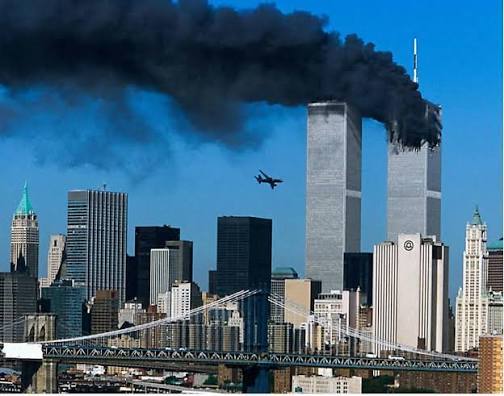
Twenty five years ago, on a bright September morning, the world watched in disbelief as two towers of steel and glass folded into dust. The images carved themselves into the memory of a generation. Planes. Fire. A blizzard of falling paper. The terrible silence that followed. We believed we understood what had happened. We believed we knew who was to blame. Yet a quarter of a century later, newly surfaced files tell a story that is stranger, and far darker, than the one we were handed on that awful day.
This is not a tale about a single morning. It is a tale about what the powerful built in the shadow of that morning, and about the warnings they may have seen long before the first plane ever left the ground. It is a story about memory, about power, and about the quiet machinery of fear that still hums beneath the surface of everyday life.

The Warnings Hidden in Plain Sight
For years, the official version of events insisted that the attacks of September 11, 2001, came like a bolt from a clear blue sky. No one saw it coming, we were told. The intelligence community was caught off guard. The enemy was cunning, patient, and invisible. That reassuring narrative has always felt a little too tidy, and the latest revelations only deepen the suspicion that something was known and something was buried.
Newly examined documents point to prior warnings, signals that flickered across desks in Langley and Washington long before the towers fell. Names were known. Movements were tracked. Meetings were observed. The pieces of a terrible puzzle were sitting right there, scattered across filing cabinets and cables, waiting for someone to assemble them. Whether those warnings were ignored through incompetence, or set aside because they did not fit a convenient political story, remains one of the most explosive questions of our age.
When you sit with that possibility for a moment, the ground beneath the familiar story begins to shift. If the warning signs were real, then the tragedy was not simply a failure of imagination. It was a failure of will. And failures of will, unlike acts of God, always have authors. Somewhere, in some quiet room, a decision was made, and the rest of us have been living inside its consequences ever since.
Building the Architecture of Fear
In the weeks and months after the attacks, something remarkable happened. Laws were passed with breathtaking speed. Agencies were created overnight. A sprawling security apparatus rose from the rubble, and it has never stopped growing. What few noticed, in those frightened days, was how much of that new architecture quietly concentrated power in a single office, far from the noisy floor of public debate.

Emergency powers became permanent. Surveillance that once required warrants became routine. Secret courts issued secret orders. The presidency, already the most powerful elected office on earth, began to resemble something closer to a throne. Emergency decrees, executive orders, and expansive interpretations of war powers steadily endowed the American presidency with abilities that would make the founders shudder in their graves.
This was the true genius of the moment. The architects of the anti terror state did not need to abolish democracy to hollow it out. They simply wrapped each new power in the language of safety. Fear was the key that opened every door. And once a door of power is opened, it almost never closes again.
Friends in Strange Places
Here the story grows stranger still. If the United States was fighting a global war against fundamentalist jihadist networks, why did it so often stand beside them when the geopolitics demanded it? The answer, uncomfortable as it is, lies in the cold logic of empire, where today’s ally is simply tomorrow’s target.
Time and again, extremist fighters were armed, funded, or shielded when they served a useful purpose. They were allies when they bled a rival state. They became enemies only when they turned their guns in a direction that threatened powerful interests. The true legacy of the post 9/11 era is thus twofold: the continued willingness to support, directly or indirectly, fundamentalist jihadist networks when geopolitically useful, and the construction of an anti terror architecture that has steadily endowed the American presidency with dictatorship like powers.
That contradiction is not a bug in the system. It is the system. Wars are not fought for the reasons printed on the recruiting posters. They are fought for influence, for resources, for the quiet rearrangement of the global chessboard. Ordinary people pay the price. The powerful write the history.
The Human Cost of Forever War
Behind every file and every cable, there are names that never make it into the documents. Mothers who waited. Children who grew up in the flicker of candlelight. Whole cities reduced to rubble, then forgotten by the evening news. The wars that followed September 11 touched Afghanistan, Iraq, Pakistan, Yemen, Somalia, Libya, and beyond. They stretched across two decades and several presidencies, and they continue to echo in places most of us will never visit.
The cost cannot be measured only in dollars, though the sums are staggering. It must be measured in trust, in trauma, in the slow erosion of the idea that governments tell their people the truth. Every hidden warning, every convenient alliance, every new emergency power chips away at that trust. And trust, once broken, is the hardest thing in the world to rebuild.
A Question That Refuses to Fade
Twenty five years on, the central question remains stubbornly open. Was the world changed on that September morning by an enemy we could not see, or was it changed by the choices of leaders who saw an opportunity in the smoke? The files do not answer this question completely. They simply make it impossible to keep asking it quietly, in the margins, where the uncomfortable things are usually kept.
Perhaps that is the real legacy of 9/11. Not the buildings rebuilt, not the tributes spoken, but the living uncertainty that refuses to die. Each new revelation adds another crack to the official story. Each anniversary brings another round of uncomfortable questions. The past, it turns out, is never truly buried. It waits patiently in archives, in whistleblower testimonies, and in the memories of those who lost everything.
Remembering, and Refusing to Forget
To remember is not to dwell in conspiracy or to dishonor the victims. It is to insist that truth matters. It is to honor the dead by refusing to let their sacrifice be used as a blanket excuse for endless war and quiet tyranny. It is to ask, again and again, who benefits when we are afraid, and who pays the price when the fear is finally spent.
A quarter of a century later, the answer is as uncomfortable as it is clear. The ones who pay are always ordinary people. The ones who benefit are almost always the powerful. And the warnings, whispered across countless desks on countless mornings, are always the first thing to disappear.
The War on Terror has been questioned before, and each time the questioning was drowned out by a louder drumbeat. But questions, unlike men, do not die. Twenty five years is a long time. And yet, somehow, it feels as though we are only now beginning to read the first true chapter of the story.