Forging a New World: Inside the BRICS New Delhi Summit
There are moments in history when a gathering of nations stops being a routine entry on a diplomatic calendar and becomes something far larger. The BRICS New Delhi Summit was precisely that kind of moment. When the leaders of Brazil, Russia, India, China and South Africa assembled, they did not merely exchange pleasantries or sign a few polite agreements. They signaled, with quiet determination, that the architecture of global power is shifting, and that nations once treated as junior partners now intend to help shape the rules.
To understand this summit is to understand a deeper story. It is the story of emerging economies that refused to remain spectators in a system built largely without them. It is the story of a search for balance in a world that has long tilted in one direction. And it is the story of how cooperation, once limited to a handful of financial concerns, gradually grew into something far more ambitious.

A Club That Refused to Stay Small
It is tempting, and perhaps a little lazy, to measure the significance of BRICS by counting its members. Every new flag at the table feels like a headline, every expansion like a victory. Yet this arithmetic misses the real transformation. The true evolution of BRICS cannot be captured by the growth of its membership alone, however dramatic that growth may eventually appear.
When the grouping first took shape, its central ambition was clear and somewhat narrow. The world economy was changing fast, and the weight of emerging markets was growing, but the institutions that governed global finance still behaved as though nothing had changed. Voting quotas at the International Monetary Fund and the World Bank, the informal customs of the G7, the currencies that dominated trade, all of these reflected a world order from a previous era. BRICS was born out of the conviction that this mismatch could not continue forever.
The early agenda, then, was about representation. It was about insisting that countries with vast populations, expanding industries and rising output deserved a voice proportionate to their strength. This was not a radical demand. It was a reasonable one. And yet even a reasonable demand can rattle a system that has grown comfortable with its own habits.
From Finance to a Wider Horizon
What makes the New Delhi chapter so interesting is how the conversation widened. The original focus on economic and financial reform never disappeared, but it was joined by a growing list of shared concerns. Trade, health, food security, energy, climate, technology and cultural exchange all found their place on the agenda. Each new area reflected a recognition that the challenges facing these nations were not confined to balance sheets and exchange rates.
Consider the tone of the discussions. There was talk of strengthening ties between peoples, not just governments. There was talk of supporting one another during crises, of sharing knowledge, of building resilience against shocks that no single nation could weather alone. The summit became less a protest against the old order and more a workshop for a new one.

This shift matters because it reveals a maturing confidence. A group obsessed only with its own wounded pride would have remained stuck in complaint. Instead, BRICS began to articulate a positive vision, a picture of what cooperation could look like when it is driven by shared interests rather than imposed by hierarchy.
The Search for a New Balance
Every story of rising powers eventually confronts a central question. Does the goal lie in replacing one dominant order with another, or in creating a more balanced and plural world? The New Delhi Summit leaned unmistakably toward the second answer. The language that echoed through the halls was not about conquest but about equilibrium, not about excluding others but about widening the table.
This is a delicate position to hold. It is easy to slide from seeking fairness into stoking resentment. It is easy to let the language of reform harden into the language of confrontation. The leaders seemed aware of this tension. Their message, carefully calibrated, was that a multipolar world is not a dangerous one. On the contrary, they argued, a world with many centers of gravity is healthier than a world with only one.
From this perspective, the summit was an act of imagination. It asked its audiences to picture a global system where no single voice drowns out the rest, where decisions reflect a broader range of experiences, and where cooperation is genuine rather than coerced. That vision is far from realized, but naming it is the first step toward building it.
Voices from the Global South
Perhaps the most resonant theme of the gathering was solidarity. Across Asia, Africa and Latin America, millions of people live with the consequences of decisions made far from their shores. They feel the sting of volatile commodity prices, the weight of debt, the anxiety of a changing climate, and the quiet frustration of being spoken for rather than spoken with.
There is a reason these voices carry moral force. They come from societies that have endured colonialism, that have fought for independence, that have built economies against considerable odds. When such nations speak of fairness, they speak with the authority of lived experience. The summit gave them a stage and, more importantly, a shared script.
Yet solidarity is easier to declare than to practice. The member nations themselves differ in size, wealth, ideology and interest. Managing those differences without losing sight of common ground is the real test. The New Delhi Summit did not resolve every friction, and no single meeting could, but it demonstrated that the will to keep talking, and keep building, remains strong.
The Road Ahead
Looking forward, the path is neither straight nor smooth. Rivalries persist, global uncertainties multiply, and the temptation to retreat into narrow nationalism never fully fades. Still, there is something encouraging about a group of nations determined to imagine alternatives to the status quo. The search for a new balance is not a sprint. It is a long, patient walk.
What the New Delhi Summit ultimately offered was a reminder that the future is not written in advance. The global order is not a fixed law of nature. It is a human construction, shaped by choices, and it can be reshaped by different choices. That is an unsettling thought for those who benefit from the present arrangement and an empowering one for those who do not.
As the delegations departed and the banners came down, the deeper message lingered. The world is changing, and the nations of BRICS intend to be authors of that change rather than characters in someone else story. Whether they succeed will depend on patience, discipline and a willingness to keep the promise of cooperation alive long after the cameras have gone. 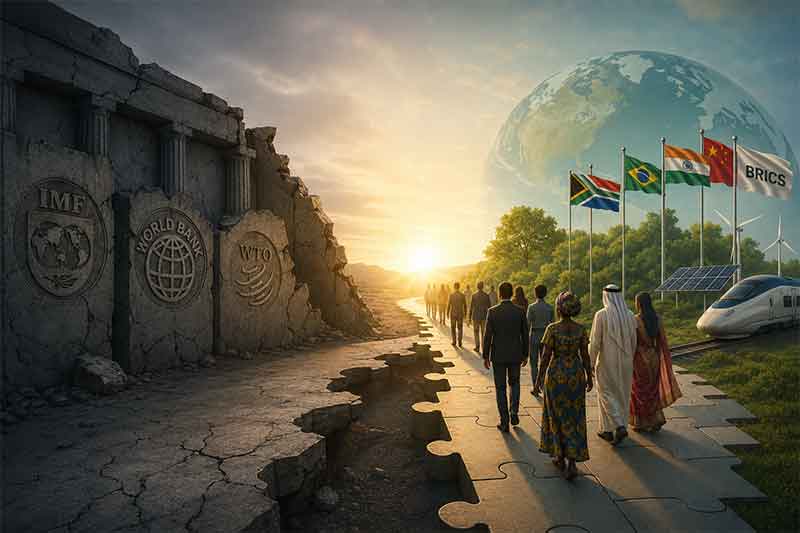
Conclusion
The BRICS New Delhi Summit was many things at once. It was a diplomatic gathering, a platform for reform, a symbol of aspiration and a quiet declaration of intent. But above all, it was a reminder that the story of the global order is still being written. The old chapters are familiar, comfortable, and increasingly outdated. The new ones are uncertain, contested, and full of possibility.
For those who believe that a fairer world is possible, the summit was a source of hope. For those who prefer the familiar hierarchy, it was a gentle warning. And for everyone else, it was an invitation to pay attention, because the search for a new balance is not a distant abstraction. It is happening now, one summit, one partnership, one shared ambition at a time.