BRICS Is Getting Bigger. Can It Really Challenge the US?
The stage is set in New Delhi. Flags from Brazil, Russia, India, China, and South Africa will rise beside the banners of newer members. On September 12 and 13, the leaders of the BRICS nations gather for an annual summit that feels less like a routine meeting and more like a turning point in the story of our times.
Yet the question hanging over the hall is simple and heavy. Can a group of rising powers truly challenge the dominance of the United States? Or is this just another grand promise that fades quietly when the cameras leave?
A Bloc That Keeps Growing
For years, BRICS was a comfortable acronym. It rolled off the tongues of economists and bankers. It described a handful of fast growing economies that seemed destined to reshape the global stage. But an acronym does not change the world. Action does.
That is why the recent expansion matters so much. When new nations were invited to join, the group stopped being a small club and started looking like a movement. Suddenly it spoke for a much larger share of humanity. Suddenly it carried the hopes of countries that had long felt unheard.
The expansion sent a message. In a world where a few powerful capitals once set every rule, many nations now want a seat at the table. They want their voices counted. They want a future they help to write.
The Pull of a New World Order
Why are so many countries drawn to this idea? The answer lies in frustration and in hope. For decades, the global system was built around institutions created after a war that ended long ago. Many leaders argue those institutions no longer reflect the world as it is.
They point to trade rules, to lending systems, to the way decisions are made far from their shores. They ask why a small group should hold so much power while billions of people wait on the outside. BRICS offers them something rare. It offers the feeling of being part of a shared project.
There is also the practical dream of a different financial order. Talk of trading in local currencies, of new development banks, and of reducing reliance on a single global currency has grown louder. Each summit adds another layer to this ambition. Each handshake hints at a future that looks different from the past.
Cracks Beneath the Surface
But a movement is only as strong as its unity. Here the story grows complicated. The members of BRICS are not natural allies. They are rivals in some markets and competitors in others. They hold different dreams and different fears.
India and China share a long and uneasy border. Their economies compete for influence across Asia and beyond. Russia looks west with suspicion while reaching east for support. Brazil and South Africa carry their own regional hopes and burdens. Bringing such different nations under one roof is an art, not a science.
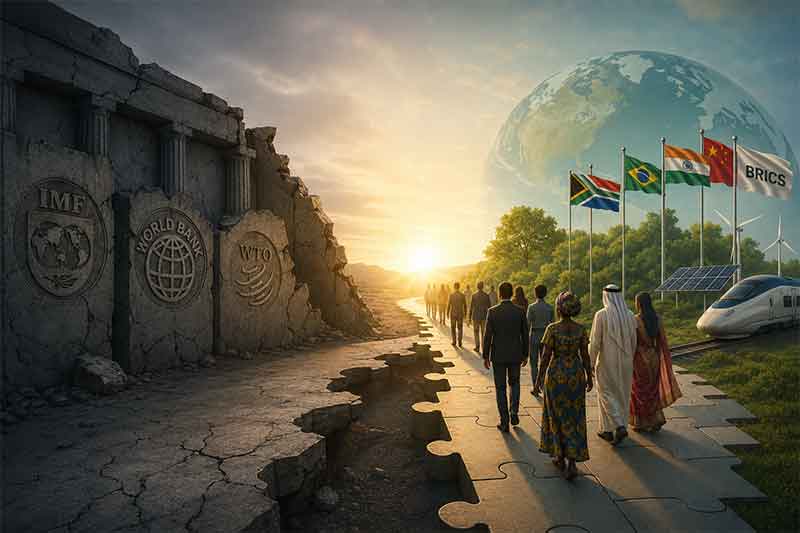
This is the true test of New Delhi. A summit can produce glowing speeches and warm photographs. It can also stall when hard choices arrive. Observers will watch closely to see whether words turn into concrete steps or dissolve into polite silence.
What Is Really at Stake
So can BRICS really challenge the United States? The honest answer is layered. In raw military power, no. In economic size, the group already commands attention. In political weight, it is growing louder by the year.
The United States still anchors a vast network of alliances, a powerful currency, and deeply rooted institutions. That influence will not vanish overnight. But influence is not a fixed treasure. It shifts with trade, with trust, and with time.
The real contest is not a single battle. It is a slow reshaping of the rules. Every nation that chooses to trade in another currency, every project funded outside old systems, every new partnership chips away at the edges of the established order.
The Road Ahead
What should we expect from the meetings in New Delhi? Realists say look for small wins. A new agreement here. A shared statement there. Concrete progress often arrives in quiet steps rather than dramatic leaps.
Yet small steps can add up. A summit that strengthens cooperation on energy, food, or finance could echo for years. A summit that stumbles on old disputes could slow the whole project. Much depends on the mood in the room and the wills of the leaders who enter it.
The world beyond the hall is watching too. Smaller nations are deciding where to place their bets. They weigh the promise of a new order against the comfort of the old. Their choices will shape the balance of power for a generation.
A Story Still Being Written
History rarely announces its turning points in advance. They arrive quietly, in rooms full of talk and doubt. The BRICS summit of September 12 and 13 is one of those moments. It may be remembered as the day a promise became a plan, or as another meeting that changed little.
What is certain is that the world is no longer a single story told by a single voice. New voices are rising. New alliances are forming. The question is not whether the global order will change. It is who will help to shape it and how fast that change will come.
For now, all eyes turn to New Delhi. The flags are raised. The table is set. And the world waits to see whether this growing bloc can turn its size into real strength.