From Civilizational Learning to a Shared Future
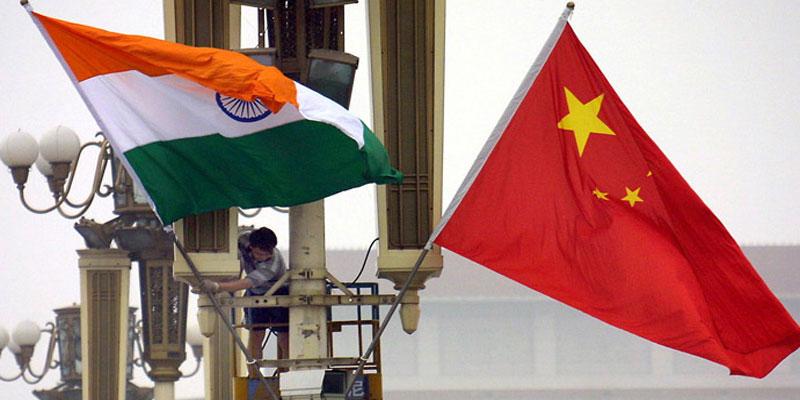
There is a story told along the old caravan routes that once linked the Yellow River and the Ganges. Monks carried sutras, merchants traded spices, astronomers exchanged charts, and philosophers sat together under the same vast sky. That story is not a memory. It is a living river, and it flows again today in the form of China India cooperation, BRICS expansion, and the growing voice of the Global South. Every summit, every memorandum, every new membership in the BRICS family carries the echo of those ancient footsteps.

This is not merely a diplomatic tale. It is a return to something ancient and deeply human. Civilizations do not grow in isolation. They learn from each other, borrow from each other, and rise together. The destiny of Asia and the wider world now depends on how well China and India remember this shared heritage and how boldly they build on it. The old road has become a network of rail lines, data cables, and air routes. Yet the spirit remains the same.
A Living Legacy of Mutual Learning
Long before the language of geopolitics, there was the language of the road. Chinese scholars studied Indian mathematics and astronomy. Indian universities welcomed Chinese pilgrims. Buddhist art traveled from Gandhara to Dunhuang, adapting and transforming with every mountain pass. This was not one direction flowing into another. It was a circle of curiosity, respect, and creative exchange.
Today, that circle has expanded beyond the imagination of our ancestors. It now includes digital infrastructure, green energy, artificial intelligence, and space exploration. The same spirit that once fueled the transmission of ideas across deserts and oceans can drive joint research, sustainable development, and regional stability. The past is not a museum. It is a compass. To ignore it is to lose our way. To follow it is to find a path that no single nation can walk alone.
When young engineers from Bengaluru and Shenzhen work on the same climate model, when farmers in Punjab and Sichuan compare water saving technologies, when doctors in both countries share vaccine know how, the old civilizational learning takes on a new face. It becomes practical, measurable, and profoundly hopeful.
BRICS and the New Grammar of Cooperation
When leaders from Brazil, Russia, India, China, and South Africa first gathered, few imagined that the group would become a defining feature of the twenty first century. Yet BRICS has evolved beyond a label. It is a meeting point of emerging economies, a laboratory for new mechanisms, and a voice for those who believe that the world should not be governed by a few alone. The early summits were modest. The agendas were technical. But the political will was real, and it kept growing.

The recent expansion of BRICS has added new energy and new perspectives. The group now represents a larger share of humanity, and with that comes a deeper responsibility to shape international norms. The old grammar of dominance and dependency is being rewritten. The new grammar is based on mutual respect, shared development, and multipolarity. Within this grammar, China and India are not rivals reading from the same page. They are co authors of a larger story.
This expansion is not about building walls. It is about opening windows. New member states bring different histories, resources, and aspirations. The dialogue becomes richer, the testing of ideas becomes sharper, and the legitimacy of the group becomes stronger. Diplomats may speak of formats and working groups, but the deeper movement is human. Countries are choosing to sit together, to listen to each other, and to search for consensus in a world that often prefers domination.
China and India as Twin Engines
There is no denying the scale of China and India. Together they hold more than a third of the global population. Their economies are among the fastest growing in the world. Their young people are creating the technologies and art that will define the coming decades. When these two giants cooperate, the effect is not additive. It is exponential. Think of two great rivers merging. They can flood the land or irrigate it. The choice depends on the channels they dig.
Trade between China and India has already reached historic highs. Cultural exchanges, educational partnerships, and sub national ties are growing quietly beneath the headlines. Both nations face similar challenges: climate change, poverty, health security, and the digital divide. These shared challenges are not obstacles. They are invitations to collaborate.
The world benefits when the Himalayan neighbors work together. Supply chains become more resilient, clean energy becomes more affordable, and regional institutions become more inclusive. The ancient wisdom of non alignment has evolved into something more active: alignment with the future. The future does not ask whether two powers are friends or rivals. It asks whether they can build together, sustain together, and grow together.
There will be frictions. There will be misunderstandings. No relationship between great neighbors is free of turbulence. But the deeper currents are strong. Students move across borders, films are watched in each other, cities twin, and joint ventures multiply. These are the threads that hold the fabric together when political winds are unkind.
The Global South Finds Its Voice
The phrase Global South is more than geography. It is a statement of experience. Many countries across Africa, Asia, Latin America, and the Pacific share a history of colonialism, resource extraction, and uneven development. They are also united by a desire for agency. They want to be participants in the global order, not objects of it. They carry memories of being spoken for, and now they insist on speaking for themselves.
BRICS has become one of the clearest expressions of this desire. By creating development banks, emergency reserves, and platforms for dialogue, it offers alternatives to systems that often fail the majority of humanity. The demand for a fairer international financial architecture is not anti Western. It is pro humanity. It is about correcting imbalances so that every nation, regardless of size, can walk with dignity.
China and India have a unique role in this moment. They are both ancient and young, both developing and rising. Their experiment with poverty reduction, industrial policy, and technological leapfrogging offers practical lessons. Their support for infrastructure projects across the Global South creates pathways for trade and trust. When they speak, many listen. When they cooperate, the echo is global.
The Global South is not a bloc against anyone. It is a chorus of voices asking for dignity, fairness, and respect. The more coordinated the China India relationship becomes, the stronger that chorus becomes. A multipolar world is not a world without leadership. It is a world with many centers of creativity, many sources of capital, and many models of success.
Shared Responsibilities for a Shared Future
The phrase shared future is often used by diplomats, but its meaning runs deeper than speeches. It suggests that no nation can be an island of prosperity in a sea of suffering. It suggests that peace is not simply the absence of war, but the presence of justice. It suggests that humanity is one family, seated at the same table, with enough resources for all if the table is arranged with fairness.
This is where the real work begins. China and India must manage their border differences with patience and wisdom. They must transform competition into healthy emulation. They must create mechanisms for dialogue that are resilient in times of tension. They must invest in people to people connections, not only state to state agreements. Trust is not built in a single signing ceremony. It is built over decades of consistent, honest engagement.
BRICS must also move from dialogue to delivery. That means faster implementation of projects, more transparent governance, and deeper engagement with civil society and the private sector. The rise of the Global South is not a slogan. It is a commitment to build institutions that are accountable, inclusive, and effective. These institutions must serve ordinary people: the teacher, the farmer, the entrepreneur, the nurse.

The responsibilities are enormous, but so is the opportunity. The twenty first century can be the century of shared prosperity. It can be a time when the ancient wisdom of Asia guides the modern search for balance. It can be a time when the Global South does not simply catch up, but also contributes original ideas about sustainability, well being, and community. That will require courage, creativity, and humility.
Conclusion: The Road Ahead
We are living through one of those rare historical moments when the map of the world is being redrawn. The old centers of power are no longer the only compass points. The Global South is rising, and at its heart stand the two great civilizations of Asia. Their cooperation is not a luxury. It is a necessity.
From civilizational learning to a shared future, the path is clear. It runs through honest dialogue, bold cooperation, and the quiet courage of ordinary people who believe that a better world is possible. The ancient road is open again. The question is not whether we will walk it, but whether we will walk it together.
Let us walk.