The Unasked Question: Jim O’Neill’s BRICS Reality Check After 25 Years
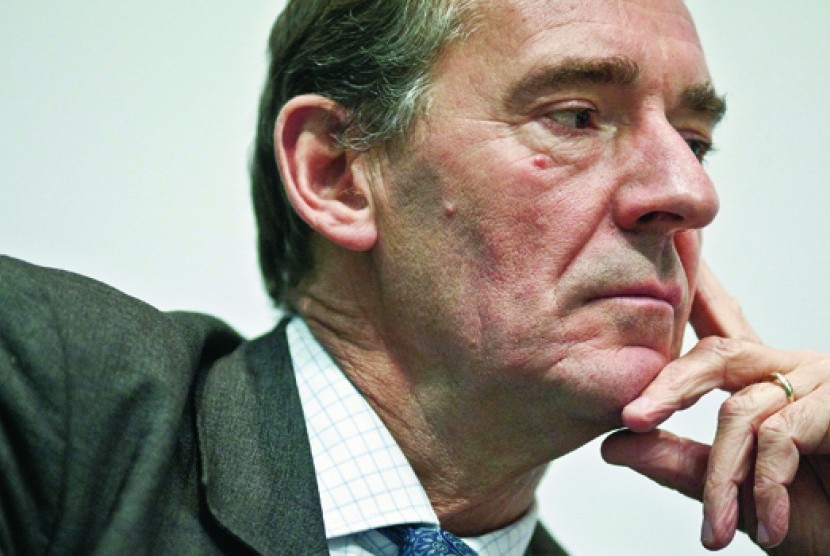
Twenty five years ago, a single acronym reshaped global economics. BRIC. It was Jim O’Neill’s bold vision that Brazil, Russia, India, and China would not just grow, but collectively challenge the dominance of the G7. Now, as he launches BRICS+ Thinking, O’Neill is doing something rare in finance. He is looking back, not with nostalgia, but with a scalpel. He is asking the question markets have danced around for decades. Did we misread the script? He reflects on new research that assesses the actual performance of these economies against the projections made when the concept was born. The answer is both humbling and clarifying.
O’Neill, the former Goldman Sachs economist who coined the term in 2001, has always been a storyteller of economic possibility. But the story of BRICS, especially with South Africa added later to form BRICS, has taken unexpected turns. The new report, tied to the launch of BRICS+ Thinking, is a deep dive into the numbers. It compares what was predicted for GDP growth, trade, and global influence with what actually happened. The findings are a wake up call for anyone still romanticizing the original hype.
The Projection Mirage
When O’Neill first introduced the concept, the world was still digesting the rise of China after its WTO accession. India was on the cusp of its tech boom. Russia was emerging from the chaos of the 1990s, and Brazil was a commodity superpower. The projections were not just optimistic; they were transformative. The BRIC nations were expected to overtake the G7 in total GDP by 2040. But the new research shows a different picture. While China and India have largely met or even exceeded expectations, Brazil and Russia have underperformed significantly. Russia, hit by sanctions and oil price volatility, and Brazil, mired in political instability and structural reforms that stalled, have become the weak links. The story is not one of failure, but of divergence. The BRICS bloc is no longer a cohesive economic force; it is a collection of very different trajectories.
The Unasked Question Markets Are Ignoring
Markets love simplicity. The BRIC narrative was simple: four rising stars, endless growth, and a shift in global power. But O’Neill’s new work forces a harder question. Why did the projections fail for half the group? The answer lies in governance, institutional quality, and the gap between potential and execution. Brazil’s commodity boom masked deep structural flaws. Russia’s over reliance on energy made it vulnerable. Meanwhile, China and India invested heavily in human capital, infrastructure, and manufacturing. The real lesson is that geography and demographics are not destiny. Policy choices matter. Markets have been reluctant to confront this because a nuanced view is harder to trade. But O’Neill’s research offers a framework. It is not about abandoning the BRICS idea, but about reimagining it. The launch of BRICS+ Thinking suggests a more flexible, multipolar view where new members like Iran, Egypt, Ethiopia, and the UAE bring fresh dynamics. The question is whether the original BRICS can learn from their own history.
A Tapestry of Triumphs and Trials
Let us walk through the numbers. In 2001, the combined GDP of the four BRIC nations was about $2.7 trillion. By 2023, it had grown to over $26 trillion, an increase of nearly ten times. That sounds like a success story. But when you adjust for inflation and purchasing power parity, the distribution is lopsided. China alone accounts for more than 70% of that growth. India contributed about 15%. Brazil and Russia together barely make up the rest. The projections had assumed a more balanced rise. Instead, the world got a China driven boom with India as a strong second. The other two became cautionary tales. O’Neill’s paper also examines trade patterns. Intra BRICS trade has grown but remains dominated by commodity flows to China. The original vision of a self contained economic bloc has not materialized. Instead, BRICS economies remain deeply integrated with Western markets and supply chains. The de dollarization push is more rhetoric than reality. Yet, there is a silver lining. The new BRICS+ members bring strategic depth. Energy, food security, and digital finance are areas where the expanded group can coordinate more effectively. O’Neill suggests that the old BRICS concept was too rigid. The new thinking must embrace a network of overlapping interests rather than a single block. 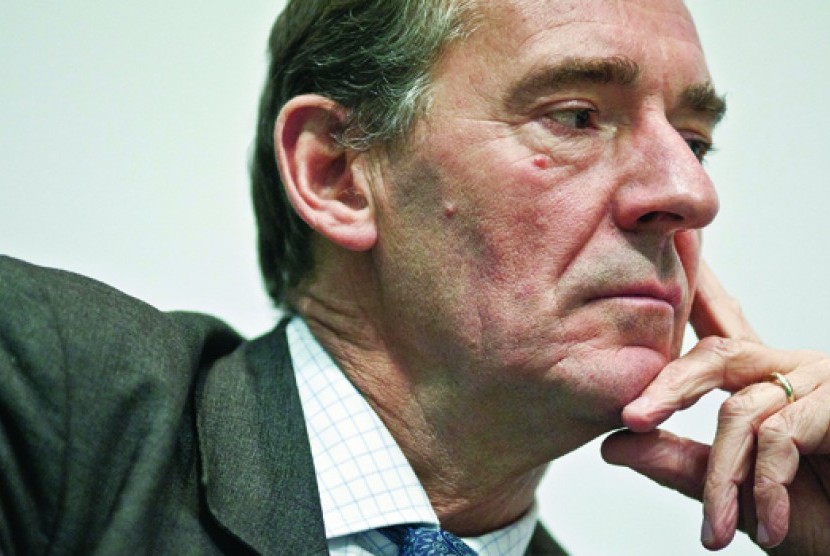
The Bigger Picture for Investors and Policymakers
For investors, the lesson is clear. Avoid monolithic bets. The BRICS label has become a catch all term that masks huge disparities. A portfolio that lumped all four together would have underperformed a simple China plus India allocation. The market has quietly understood this, which is why dedicated BRICS funds have shrunk. But policymakers have been slower to adapt. The new research is a tool for them. It shows that the BRICS+ format can succeed if it focuses on areas of genuine cooperation, like climate finance, infrastructure, and digital payments. O’Neill himself admits that the original projections were too linear. The world is too complex for simple extrapolations. The unasked question, and the one markets still avoid, is whether any bloc can replace the US led system. The answer, based on this research, is not yet. But the process of asking the question is where the value lies.
A New Chapter for the BRICS Narrative
As the BRICS+ Thinking platform launches, O’Neill is not just revisiting old predictions. He is redefining the narrative. The story is no longer about a single bloc that will overtake the West. It is about a fluid, evolving collection of economies that must constantly adapt to survive. The original BRIC concept was a catalyst for change. It forced the world to look beyond the G7. But the new research shows that the true legacy of BRICS is not its economic power, but its role as a mirror for global ambition. The question markets don’t want to answer is this. What happens when the mirror cracks? The answer may be that we get a clearer, more honest reflection. And that is exactly what Jim O’Neill’s new work provides. A reality check, wrapped in hope, for a multipolar world that has yet to find its balance.