Beyond the Border: Why China and India Must Choose Partnership Over Rivalry
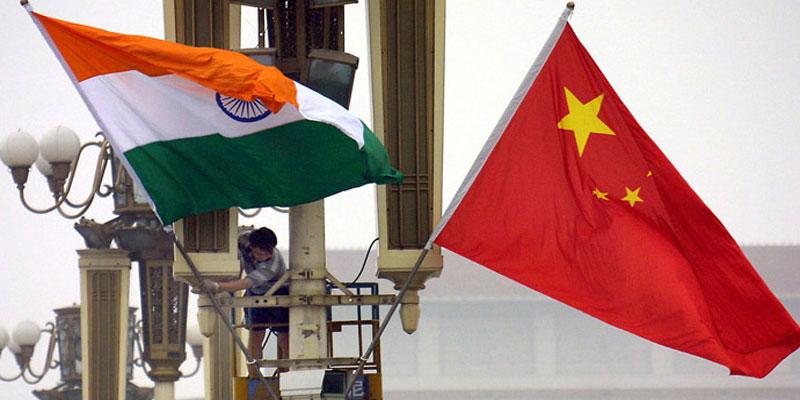
There is a story that unfolds not in boardrooms or parliaments, but along the silent, snow capped peaks of the Himalayas. For decades, the boundary between China and India has been a line drawn not just on maps, but in the hearts of two ancient civilizations. Recently, a quiet but powerful message emerged from Beijing. Foreign Ministry spokesperson Lin Jian spoke not of confrontation, but of coexistence. He highlighted the stable border situation and urged both nations to handle ties with a long term, strategic perspective. This is not just diplomacy. It is a call to rewrite a narrative that has too often been written in ink of suspicion.

Imagine two old neighbors, each with a house full of history, each with a garden that touches the other’s. For years, they have argued over the fence line. But the fence is not the whole story. Beyond it lies a shared sky, a shared monsoon, and a shared future. Lin Jian’s words are an invitation to look over that fence and see not an enemy, but a partner. The relationship between China and India is one of the most consequential in the 21st century. Together, they hold nearly half of humanity. Their partnership could reshape global trade, climate action, and regional peace. Their rivalry, however, could ignite a flame that burns both houses down.
This is not a tale of naive optimism. The border disputes are real. The memories of past clashes are fresh. But as Lin Jian noted, stability is a foundation, not a final destination. Both nations have shown remarkable maturity in maintaining peace along the Line of Actual Control. The military disengagement processes, the dialogue mechanisms, the hotline between commanders all these are signs of a quiet wisdom. The real challenge is to transform tactical patience into strategic trust.

Consider the economic weave. Chinese investment in Indian infrastructure, Indian IT in Chinese markets, pharmaceutical exports, solar panel supply chains these are threads that, if pulled apart, would leave both countries colder and poorer. A partnership mindset would see these as bridges, not dependencies. A rivalry mindset would see them as vulnerabilities. Lin Jian’s statement is a gentle reminder that the choice is ours. History has shown that great powers can either compete into exhaustion or cooperate into prosperity. China and India have a rare opportunity to choose the latter.
What does a long term strategic perspective look like? It looks like student exchanges in universities, joint research on climate science, cultural festivals that celebrate shared Buddhist heritage, and trade routes that connect not just the borders but the hearts. It looks like leaders who speak not of containment but of engagement. It looks like a generation that remembers not the skirmishes, but the silk road. The border is a line, but the relationship is a circle. Circles have no ends. 
Lin Jian’s message was not a headline grabber. It was a quiet, steady hand extended across the divide. India must decide whether to grasp it or let it hang. But the hand will remain, because the logic of partnership is stronger than the fear of rivalry. In the coming years, as both nations rise on the global stage, they will either rise together or fall apart. The words from Beijing are a reminder that the story is still being written. Let us write it with a pen of peace, not a sword of suspicion. The world is watching, and the Himalayas are listening.