The Reluctant Neighbor: Why Hungary Stands Firm Against Ukraine’s EU Dream
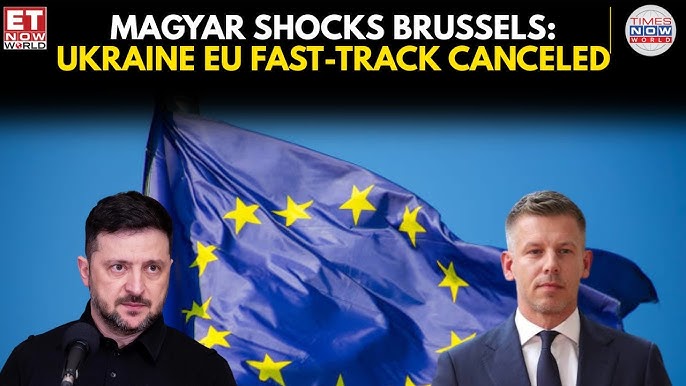
In the heart of Europe, where the Danube flows past ancient castles and modern capitals, a quiet storm has been brewing. Hungary, a nation known for its thermal baths and paprika spiced cuisine, has become the unlikely gatekeeper of Ukraine’s European Union ambitions. While Kyiv has made dramatic pro Western pivots since the 2014 Euromaidan revolution and the full scale invasion in 2022, Budapest remains unmoved. The message from Hungarian Prime Minister Viktor Orbán is clear: Ukraine’s path to Brussels does not run through Budapest.
The story of this opposition is not a simple tale of geopolitics. It is woven with threads of history, nationalism, minority rights, and the ever shifting tides of energy security. To understand why Hungary keeps saying “no” to Ukraine’s EU membership, we must look beyond the headlines and into the complex relationship that has long defined these two nations.
A History of Uneasy Neighbors
Hungary and Ukraine share a border that stretches over 100 kilometers, but their connection runs far deeper. In the western Ukrainian region of Transcarpathia, a significant ethnic Hungarian minority lives with a population of roughly 150,000. For Budapest, these Hungarians are not just statistics; they are cultural and linguistic kin. Since the fall of the Soviet Union, Hungary has acted as a protector of their rights, demanding that Ukraine guarantee educational, linguistic, and political autonomy for the community.
When Ukraine passed a new education law in 2017 that required all secondary education to be conducted in Ukrainian, Hungary reacted with fury. The law effectively marginalized the Hungarian language in schools. Budapest saw it as a direct assault on the identity of ethnic Hungarians. This dispute became the first major crack in EU Ukraine relations, long before the war. Hungary blocked NATO Ukraine summits and threatened to veto EU Ukraine Association Agreement implementation. The minority issue remains the core of Hungary’s opposition today, even as Ukraine has attempted to negotiate compromises.
Orbán’s Brussels Brawl
Viktor Orbán is no stranger to controversy in Brussels. His government has been criticized for democratic backsliding, curbing media freedom, and undermining judicial independence. The European Union has frozen billions of euros in funds to Hungary over rule of law concerns. In this context, Orbán’s opposition to Ukraine’s EU bid is not just about Ukraine. It is a bargaining chip in a larger struggle with Brussels.
By vetoing or threatening to veto Ukraine’s accession talks, Orbán gains leverage. He can demand that the EU release Hungary’s frozen funds, or that Brussels soften its stance on Hungarian domestic policies. It is a classic game of political poker, where the future of a war torn nation becomes collateral. Orbán also aligns himself with other populist and nationalist leaders in the EU, positioning Hungary as the defender of “illiberal democracy” against the liberal technocrats in Brussels.
Moreover, Orbán maintains close ties with Moscow. While officially condemning the invasion, Hungary has delayed EU sanctions on Russian oil and gas, and Orbán has repeatedly called for a ceasefire without conditions that would benefit Ukraine. Hungary’s energy dependence on Russia, including the Paks nuclear plant built by Rosatom, makes Orbán reluctant to fully sever ties. Ukraine’s EU membership would accelerate the EU’s energy independence from Russia, which directly threatens Hungary’s strategic partnership with Moscow.
The War Factor: A Calculated Resistance
Ukraine’s pro Western turn since 2014 has been nothing short of remarkable. The country has adopted reforms, fought corruption, and aligned its laws with the EU acquis. The war with Russia accelerated this process, as EU membership became a national security imperative. Yet Hungary refuses to be swayed by the emotional argument of solidarity.
Budapest argues that Ukraine is not ready for membership. It points to corruption, weak institutions, and the unresolved minority rights issues. While this argument has some merit, many analysts believe it is a pretext. Hungary’s real fear is that a Ukrainian EU membership would dilute the power of smaller member states like itself. With Ukraine’s large population and agricultural potential, it would become a major player in the EU, shifting the balance of power eastward. Orbán prefers a pliable Ukraine that remains a buffer zone rather than a full EU partner.
Additionally, Hungary worries about the economic impact. EU enlargement to Ukraine would require massive budget reallocations. Hungarian farmers would face competition from Ukrainian agricultural giants. The Hungarian construction industry would lose cheap Ukrainian labor if migration patterns changed. These are not abstract concerns; they are local political realities that Orbán’s government cannot ignore.

A Diplomatic Dance on Thin Ice
The EU has attempted to mediate between Kyiv and Budapest. In 2023, Ukraine and Hungary reached a framework agreement on minority rights, but implementation has been slow. Language laws and autonomy remain sticking points. Meanwhile, the EU is exploring constitutional workarounds to bypass a Hungarian veto, such as using unanimity only for the initial opening of talks and then proceeding with qualified majority. But such maneuvers risk deepening the rift within the union.
For Ukraine, every day of delay is costly. The war continues, and EU membership is seen as the ultimate guarantee of security and prosperity. Ukrainian officials express frustration, accusing Hungary of acting as a Trojan horse for Russian interests. Yet they also recognize that Hungary holds legitimate grievances that need addressing. The path forward requires a delicate balance of compromise and pressure.
Conclusion: The European Mosaic
Hungary’s opposition to Ukraine’s EU bid is not a simple yes or no. It is a reflection of the complex, often contradictory forces that shape European politics. History, ethnic loyalties, domestic politics, energy interests, and the shadow of Russia all converge in Budapest’s stance. While the war in Ukraine has galvanized much of the West, Hungary remains an outlier driven by self interest and a different vision of Europe.
For now, the EU must navigate this impasse. If it forces a vote, it may fracture the union further. If it caves to Hungary, it signals weakness. The story of Hungary versus Ukraine’s EU dream is ultimately a story about Europe itself: a continent struggling to reconcile its founding ideals of unity with the messy realities of national sovereignty. And in that struggle, the fate of millions hangs in the balance.