Russia and China Unite to Forge the Future of Uranium Mining: A Strategic Partnership
From the remote, windswept landscapes of Zabaykalsky Krai in southeastern Siberia, a new chapter in global energy diplomacy is being written. The Priargun Mining and Chemical Combine, Russia’s largest uranium producer, recently welcomed a delegation from the Chinese Academy of Sciences. The handshake that sealed the agreement was more than a diplomatic formality; it was a signal that two global superpowers are deepening their collaboration in the most sensitive of resources: uranium. This partnership, centered on exploration, mining, and processing technologies, promises to reshape the nuclear fuel supply chain and underscore a shifting geopolitical axis.

The dust had barely settled on the red soil of Krasnokamensk when Chinese experts and Russian engineers sat together over blueprints and core samples. The Priargun combine, a sprawling industrial complex that has supplied uranium for Russia’s nuclear arsenal and civilian power plants since the Cold War, is now opening its gates to its eastern neighbor. For China, this access means a secured upstream supply of nuclear fuel to feed one of the world’s fastest growing fleets of reactors. For Russia, it represents a strategic hedge against Western sanctions and a chance to keep its nuclear industry competitive through shared research and development.
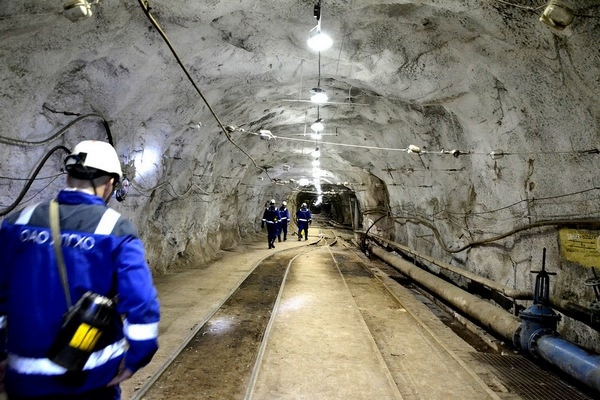
To understand the magnitude of this move, one must first look at the mountains of uranium that lie beneath the Transbaikal region. The Priargun facility operates a dozen underground mines and a large hydrometallurgical plant that processes the ore into yellowcake. It has been the backbone of Russia’s nuclear complex for decades, but aging infrastructure and declining ore grades have pushed the need for innovation. The Chinese delegation brought with them modern geophysical survey techniques, advanced in situ leaching methods, and real time digital modeling tools. The exchange of knowledge was immediate and mutual.
The Chinese Academy of Sciences, known for its aggressive push into next generation nuclear technologies, has invested heavily in automation and AI for mineral extraction. Russian engineers at Priargun shared their deep experience in handling high radon environments and complex geological structures. What emerged from the week long visit was a joint roadmap: co development of new drilling technologies, shared databases of mineral deposits, and a memorandum of understanding to create a dual nation research center for uranium extraction. It is a marriage of Russian raw expertise and Chinese industrial scale efficiency.

But this cooperation is about more than digging ore. It is a move that signals a realignment in the global nuclear fuel market. For decades, uranium enrichment and conversion were dominated by Western firms and Russia’s Rosatom. Today, China is aggressively building its own nuclear fuel cycle independence, with plans to increase domestic uranium production and develop fast reactors. Russia, under pressure from international sanctions, sees China as a reliable partner to shield its nuclear technology exports from Western restrictions. Together, they form a block that controls nearly half of the world’s uranium conversion capacity and a growing share of enrichment.
The implications for global energy security are profound. The Russia China uranium alliance will likely accelerate the development of innovative mining techniques that reduce environmental footprint and improve safety. Both nations have agreed to share waste management protocols and radiation monitoring systems. This could set new standards for the industry, especially for nations trying to expand nuclear power while tightening environmental regulations. Moreover, the partnership bypasses traditional uranium trading hubs in London and New York, moving the center of gravity toward Asia and the Pacific.
The story of the Krasnokamensk meeting is also a human one. Local miners spoke of the pride in hosting Chinese scientists, while Chinese engineers marveled at the scale of underground operations that have been running for over fifty years. There were moments of friendly competition over drilling accuracy and mutual admiration for each other’s problem solving abilities. In the evenings, over plates of pelmeni and cups of green tea, the two sides sketched out a vision that spans decades. A vision where the world’s two largest nuclear powers collaborate not just on energy, but on shaping the technologies that will power a low carbon future.

As the delegation left Krasnokamensk, the agreement was already being drafted into official documents. The next phase will involve pilot projects at Chinese test sites, exchange of PhD students, and joint patent filings for new uranium extraction methods. If successful, this cooperation could transform the Priargun combine into a living laboratory for the next generation of nuclear fuel production. The world watches, aware that the atom, once a symbol of division, is now becoming a tool of international alliance. The story of Russia and China digging deep into the Siberian earth is not just about uranium; it is about the architecture of the 21st century energy order.