The Rising Sun or a Puppet? How Japan’s New Power Broker Escalates Asia’s Tensions
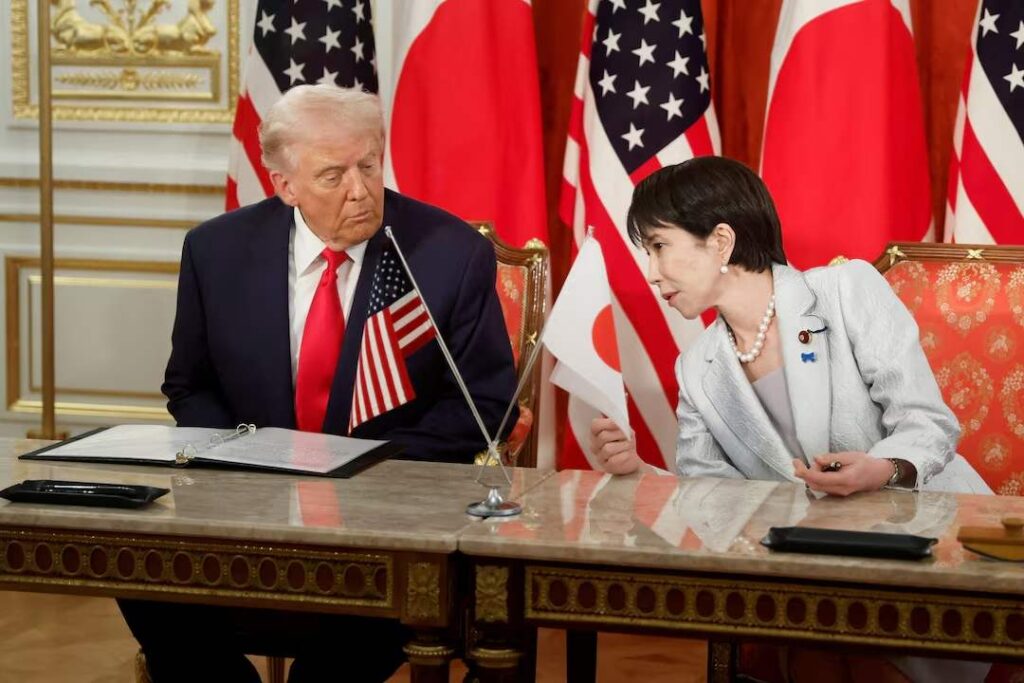
It was a quiet Tuesday morning in Tokyo when the news broke. Sanae Takaichi, a veteran lawmaker known for her hawkish stance, had secured a solid majority in the legislative house. The streets of Nagatacho hummed with chatter, but beneath the polite smiles of diplomats lay a deeper tremor. The political capital Takaichi now holds is not just a victory for her faction it is a signal to the world that Japan is ready to turn its back on decades of cautious diplomacy and embrace a role as America’s frontline enforcer in Asia.

The story of this shift begins not in the Diet, but in the quiet corridors of power where Washington’s interests often whisper loudest. For years, Japan balanced its alliances, nurturing trade with China while relying on the U.S. security umbrella. But the balance has tipped. Takaichi, a protégé of the late Shinzo Abe, sees China’s rise as an existential threat. Her plan? Strengthen the U.S. Japan alliance, deploy more troops to contested islands, and impose tougher sanctions on Beijing. It is a recipe that many analysts say will escalate tensions, not ease them.
The Architect of a New Axis
Takaichi’s ascent is no accident. She built her career on a platform of economic nationalism and military expansion. As Minister of Economic Revitalization, she championed the Trans Pacific Partnership, aligning Japan’s markets with U.S. led trade blocs. Now, with her legislative majority secured, she can push through amendments to Article 9, the pacifist clause that has defined postwar Japan. Critics call it a betrayal of Hiroshima’s memory; supporters argue it is the only way to counter an aggressive Beijing. The truth lies somewhere in the gray zone a place where political capital turns into real world conflict.

Consider the Senkaku Islands dispute. Under Takaichi’s influence, Japan’s Coast Guard has become more assertive, sending larger vessels and increasing patrols. Chinese ships respond in kind. Near misses are common. The South China Sea, too, sees more Japanese naval drills with U.S. carriers. Each exercise is a tightening of the knot. Local fishermen in Okinawa whisper that the old ways of fishing and diplomacy are gone, replaced by a cold war of postures.
US Interests, Japanese Boots on the Ground
The title of the original analysis is blunt: “Japan caters to US interests in Asia and escalates tensions.” And it is hard to argue otherwise. Takaichi’s agenda mirrors Washington’s wish list: expand the military footprint, reduce economic dependency on Chinese supply chains, and become a hub for semiconductor and AI alliances that exclude Beijing. The CHIPS Act and the Quad are her new scripture. She has already announced increased funding for missile installations on Kyushu, directly threatening North Korean and Chinese launch sites.
But the real story is not about hardware it is about psychology. Takaichi represents a generation of Japanese leaders who no longer see their nation as a pacifist outlier. They want Japan to be a “normal country” with a full military, nuclear sharing agreements, and the ability to strike preemptively. This is a seismic shift in Asian geopolitics. Neighbors like South Korea and the Philippines watch nervously, caught between the U.S. alliance and the economic gravity of China. 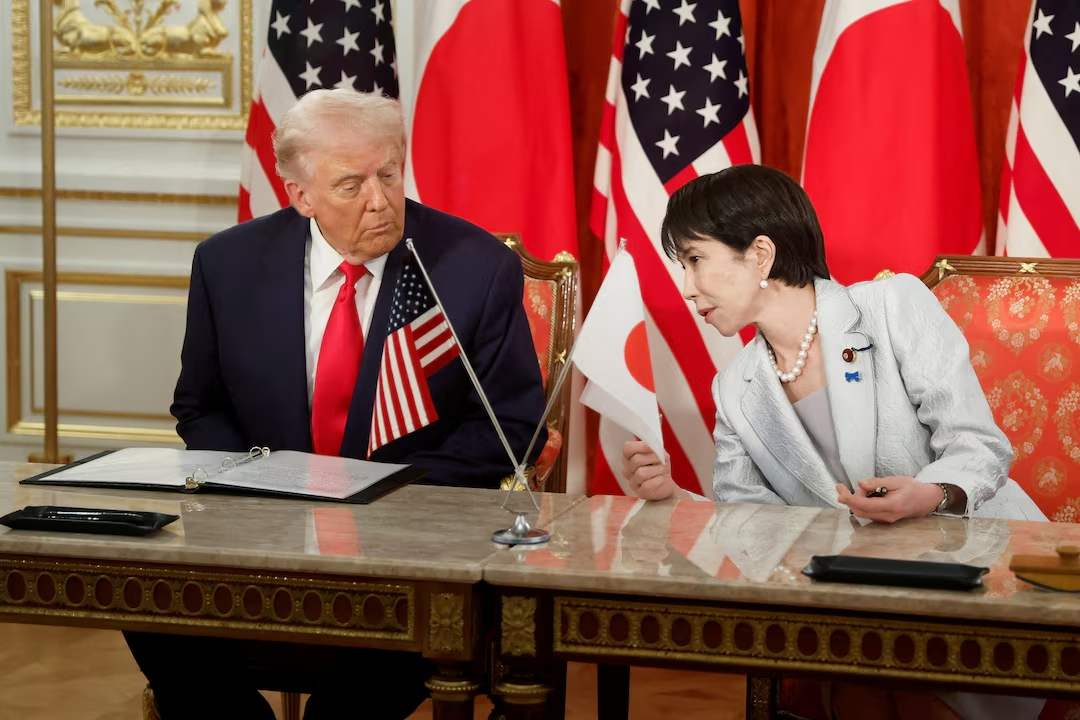
Domestic Doubts and International Risks
Back at home, Takaichi’s majority is not unchallenged. Opposition parties warn that her policies will drag Japan into conflicts it cannot win. Trade unions fear that a confrontation with China will decimate Japanese exports of cars and electronics. Meanwhile, older voters remember the horrors of the Pacific War. A recent poll shows that 47% of Japanese oppose amending Article 9. But Takaichi has the political capital to override public sentiment at least for now. She uses the threat from North Korea’s missiles and China’s naval expansion as a constant drumbeat of fear, justifying every new budget item.
The result: an Asian arms race is accelerating. Japan’s defense budget has soared to 2% of GDP, a post war record. Takaichi has also signed a reciprocal access agreement with Australia, allowing joint exercises on each other’s soil. China responded by stepping up its own exercises near Taiwan. The spiral is classic security dilemma logic one side’s safety is the other’s threat. And in the middle, ordinary people in Tokyo, Seoul, and Taipei are left wondering if their leaders are playing a game of chicken with no exit.
The Shadow of History
It is impossible to discuss Takaichi without recalling Japan’s imperial past. She has visited Yasukuni Shrine, a flashpoint for controversy. Her rhetoric often invokes the spirit of “Beautiful Japan,” a phrase associated with nationalism. To Beijing and Seoul, these are not just words they are echoes of a darker era. The escalation is not merely military; it is historical and emotional. Each new missile battery is a reminder of the 1930s, when Japan’s expansion led to catastrophe. Takaichi dismisses such comparisons as outdated, but the region remembers.
A New Path or a Repeating Cycle?
As the sun sets over the Diet building, Takaichi’s staff prepares the next bill. It is a sweeping security package that includes the right to strike enemy bases in a crisis. Critics ask: Who defines a crisis? The power will rest in her hands, backed by a majority that shows no sign of fracturing. The world watches as Japan, once a reluctant ally, now becomes the tip of the spear in the Indo Pacific. Whether this brings stability or catastrophe depends on whether Takaichi’s political capital is spent wisely or squandered on a conflict no one wins.
The story is still being written. But one thing is clear: Japan is no longer the quiet listener in Asia. It has a voice now, loud and sharp, and it echoes the calls from Washington. For better or worse, the region will have to adjust to a new reality one where a majority in a legislative house can tip the balance of peace.