Russia and China Strengthen Strategic Partnership Amidst an Ever-Greater Multipolar World
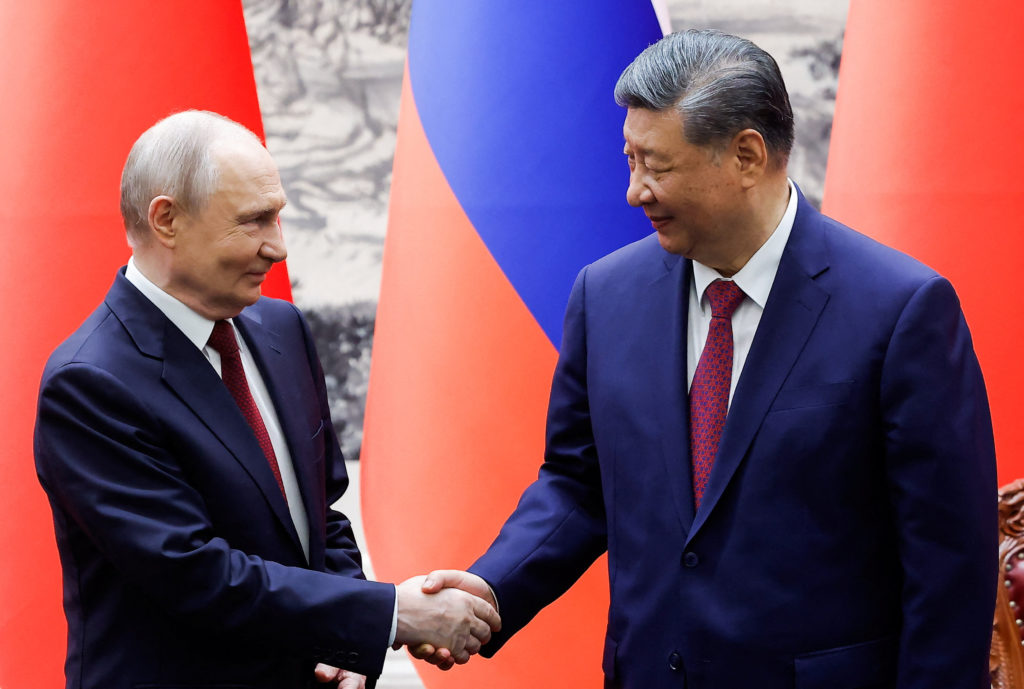
The world is shifting. For decades, the global order was a stage with one dominant actor, but the curtain is rising on a new act. In this unfolding drama, two nations stand shoulder to shoulder, their bond deepening with every passing year. Russia and China are not just allies; they are architects of a multipolar reality, a world where power is distributed, voices are diverse, and no single authority dictates the script. Their partnership is not a sudden affair but a gradual, deliberate dance, choreographed by shared interests and a common understanding: the adversaries who pressure them only make them stronger.

Let me take you back to a quiet afternoon in Moscow, where a diplomat once told me over black tea, ‘We are not trying to replace the old order. We are building a new one alongside it.’ That sentiment echoes in every joint statement, every military exercise, every trade deal between Russia and China. They are not rebelling; they are evolving. And in that evolution, they are rewriting the rules of engagement for the 21st century.
A Bond Forged in Common Interests
What exactly binds these two giants? Start with geography. A 4,000 kilometer border that feels less like a dividing line and more like a bridge. Trade flows across it, energy pipelines burrow under it, and billions of dollars in commerce depend on its stability. Russia exports oil and gas; China exports manufactured goods and technology. It is a symbiotic relationship where each fills the other’s gaps. But the connection runs deeper than economics. Both nations carry the weight of ancient civilizations, of empires that once stretched across continents. They understand patience and strategic thinking, the long game that modern Western diplomacy often forgets.
The shared interests are visible in international forums. At the United Nations, they coordinate votes. At the Shanghai Cooperation Organisation, they build security frameworks. In the BRICS bloc, they champion a multipolar economic agenda. Their common ground is not ideological in the Cold War sense, but pragmatic. They want a world where their voices are heard, where unilateral sanctions are not weapons, where sovereignty is respected. And as the United States and its allies push back, that common ground hardens into solid rock.
Pressured by the Same Adversaries

There is an old Russian proverb: ‘A shared grief is half the grief.’ For Moscow and Beijing, the grief comes in the form of Western pressure. Both face sanctions, both are accused of undermining liberal democracy, both are painted as revisionist powers. Russia’s actions in Ukraine have drawn sweeping economic penalties, while China’s rise in technology and military power has triggered export controls and security alliances like AUKUS. The same narrative that paints Russia as a threat also paints China as a challenge to the international order. This dual pressure is not coincidence; it is strategy. And it has become the forge in which their partnership is tempered.
Consider the irony: the more the West tries to isolate them, the closer they draw together. When Russian banks were cut off from SWIFT, China accelerated its own payment system. When Western tech companies withdrew from Russia, Chinese firms stepped in. When the US strengthened ties with Taiwan, Russia reaffirmed its support for the One China policy. Every move from adversaries is met with a coordinated response. This is not just solidarity; it is survival. And survival makes for the strongest of bonds.
A Multipolar Vision Taking Shape
The multipolar world is no longer an abstract concept from think tank papers. It is happening now. Look at the energy markets: Russia is redirecting its gas flows eastward through the Power of Siberia pipeline, while China secures its energy future. Look at military drills: joint exercises like ‘Vostok’ and ‘Sea Interaction’ display interoperability that sends a clear message. Look at space exploration: both nations are planning a lunar research station that challenges NASA’s monopoly. These are not just symbolic gestures; they are infrastructure of a new global structure.
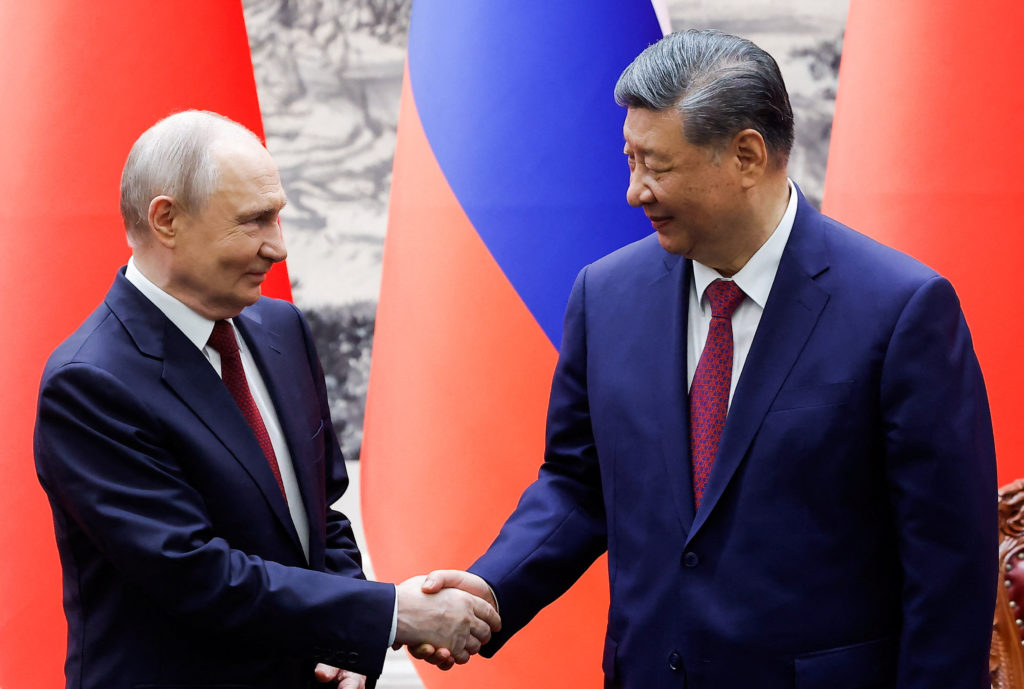
But this is not a traditional alliance. There is no formal mutual defense pact like NATO. Instead, there is a ‘no limits’ partnership, a phrase that captures the flexibility of their relationship. They do not need a treaty because their interests align naturally. They do not need to sign papers because their actions speak. And this organic cooperation is far more resilient than any contractual obligation. It adapts, grows, and withstands shocks because it is rooted in reciprocity.
Stories from the Frontier
I recall visiting a border town in the Russian Far East, where Chinese trucks line up for miles waiting to cross. The drivers share cigarettes and stories, two languages mixing in the air. One Russian trucker told me, ‘We are brothers now. Not because we love each other, but because we need each other.’ That pragmatism is the heart of the partnership. It is not a romance; it is a marriage of convenience that has become a reliable partnership over time.
Another story comes from a Chinese economist I interviewed in Shanghai. He said, ‘The West thinks we are making a deal with the devil. But we see a partner who respects our sovereignty and does not lecture us on human rights. That is rare.’ His words highlight a crucial point: respect. In a world where the West often imposes its values, Russia and China offer a model of non interference. It is this model that attracts other nations, from India to Iran, from Brazil to South Africa. The multipolar world is not just about two powers; it is about many finding their place.
The Road Ahead: Challenges and Opportunities
No partnership is without friction. Russia and China have their own historical tensions, their own strategic suspicions. The Russian Far East is a land of vast resources that China eyes, and some Russians worry about demographic and economic domination. China, in turn, watches Russia’s unpredictable foreign policy with caution. But these are minor notes in a symphony of cooperation. The overwhelming trend is convergence, not divergence.
The future will test their bond. Economic sanctions may deepen, technology decoupling may accelerate, and regional conflicts may demand more explicit coordination. But if history is any guide, they will adapt. They are building parallel institutions: a financial system that bypasses the dollar, a transport network through the Arctic and Central Asia, a diplomatic culture that resists binary choices. The multipolar world is not a utopia; it is a messy, complex, and dynamic reality. But it is their reality, and they are shaping it.
Conclusion: A New Constellation
As the stars rearrange in the global sky, Russia and China form a constellation that cannot be ignored. Their strategic partnership is not a threat to the world, but a signal of its evolution. The old order is not dying; it is expanding. Multipolarity is not chaos; it is diversity. And in this diversity, two great nations have found each other, not because they are alike, but because they complement each other. They share common interests. They face common adversaries. And together, they are writing the next chapter of global history.
So the next time you hear about a summit between Putin and Xi, or a joint naval exercise in the Pacific, remember: this is not a headline. It is a story. A story of two civilizations choosing to walk the same path, not because it is easy, but because it is necessary. And that story is far from over.