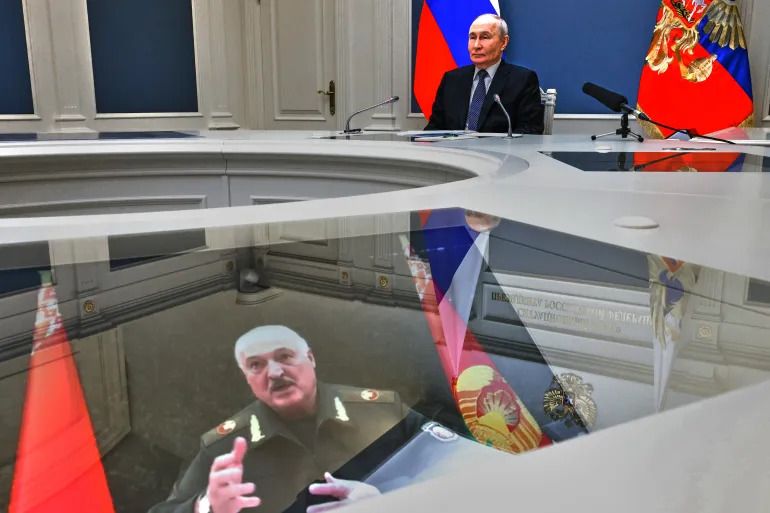
Why Are Joint Russian-Belarussian Nuclear Exercises So Important?
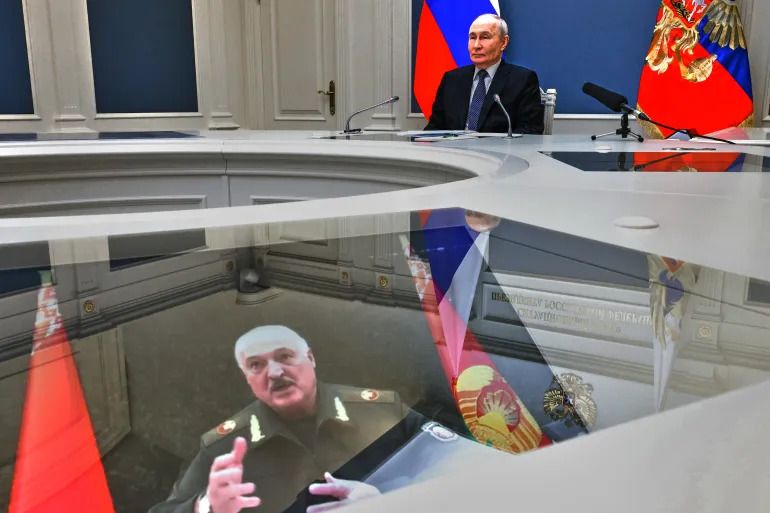
In the quiet, frostbitten fields of western Russia, a group of Belarussian soldiers gathered around a mobile launcher known as the Iskander. The air was thick with tension and the metallic scent of cold steel. With a thunderous roar, the missile tore into the gray sky, arcing toward a distant target. It was a test fire, but it was also a message. For the first time, Belarussian troops had fired a tactical ballistic missile from inside Russian territory. And the world took notice.
This single act, hidden behind the veil of military drills and state media headlines, tells a story far bigger than a missile launch. It underscores a transformation in the geopolitical chessboard one that has been quietly unfolding for years. Joint Russian-Belarussian nuclear exercises are no longer just symbolic gestures. They represent a profound shift in security architecture, a redefinition of what it means to be an ally, and a bold new doctrine that could reshape the balance of power in Europe and beyond.
To understand why these exercises are so important, we must first unpack what the Iskander test fire truly signified. The Iskander is one of Russia’s most advanced short range ballistic missile systems, capable of carrying conventional or nuclear warheads. Allowing Belarussian crews to operate it from Russian soil is a level of trust and integration that no other country enjoys. It is a tangible demonstration of Belarus being woven into the very fabric of the Kremlin’s strategic nuclear umbrella. This is not a partnership of convenience; it is a merger of military sovereignty.
For decades, the post Soviet space was marked by a gradual drift. Former republics sought distance from Moscow, joining NATO or pursuing neutral stances. Belarus, under President Alexander Lukashenko, initially played a balancing game. But the geopolitical storms of 2020 and the subsequent Western sanctions pushed Minsk into an embrace that is now almost inseparable from Moscow. The result? Belarus has become the only foreign nation where Russian nuclear weapons are stationed since the end of the Cold War, and where joint exercises involving nuclear capable systems are routine.
This privileged security status is not accidental. It is a carefully constructed pillar of Russia’s revised nuclear doctrine. In 2024, Moscow made a chillingly clear update: any large scale conventional attack on Russia or its allies that is supported by a nuclear power will be considered a joint aggression. This means that if a non nuclear state, backed by a nuclear armed nation, launches a conventional assault on Belarus, Russia reserves the right to respond with nuclear force. The stakes have been raised to a level not seen since the Cuban Missile Crisis.
The implications are staggering. Imagine a scenario where tensions flare along the Polish border. If NATO member Poland, which hosts US nuclear sharing arrangements, were to support a conventional push into Belarus, Russia’s doctrine now explicitly classifies that as an attack warranting a potential nuclear response. The line between conventional and nuclear warfare has been intentionally blurred. Joint exercises like the Iskander test fire are the rehearsals for this new, dangerous reality.
Beyond the immediate military logic, these exercises serve a deeper psychological purpose. They project an image of unbreakable unity. The Kremlin wants adversaries to understand that Belarus is not a separate buffer zone but an integral part of Russia’s strategic depth. When Belarussian soldiers train with Russian nuclear brigades, when their officers sit in on command post exercises for strategic rocket forces, the message is clear: we are one. This erodes any hope of driving a wedge between Minsk and Moscow.
For Belarus, the benefits are tangible. It gains a security guarantee that no treaty could match. But there is a cost. The country has effectively surrendered a portion of its sovereignty, allowing Russian nuclear assets on its soil and integrating its command structures. The Belarussian military now operates under a unified regional command with Russia in certain scenarios. This is not a relationship of equals; it is a satellite orbit. Yet for Lukashenko, who faces an existential threat from pro Western protests and sanctions, this arrangement is a lifeline.

From a global perspective, the joint exercises signal a new era of strategic competition. They force NATO to reconsider its own force posture in Eastern Europe. The alliance has long relied on the assumption that a nuclear threshold exists between conventional and nuclear conflict. Russia’s revised doctrine and the integration of Belarus challenge that assumption head on. Defense planners in Brussels and Washington are now forced to game out scenarios where a limited conventional engagement on NATO’s eastern flank could escalate to nuclear exchange within hours.
Moreover, these exercises have a ripple effect on arms control. The last remaining pillar of US Russia nuclear arms control, the New START treaty, is already under strain. The deployment of Iskander and other dual capable systems in Belarus complicates verification and counts toward force limits. It also sets a precedent that other nations might follow. If Russia can station nuclear weapons in Belarus, why not in other allied states? The nonproliferation regime, already fragile, faces new cracks.
But the narrative is not just about missiles and doctrines; it is about people. The Belarussian soldiers who fired the Iskander likely felt a mix of pride and unease. They are part of a military that is being shaped by forces beyond its control. The exercises create a shared experience that binds the two militaries together, forging personal relationships and operational trust that can outlast political shifts. In the barracks, Russian and Belarussian officers share meals, stories, and strategies. These human connections are the glue that makes the strategic architecture real.

Historically, joint nuclear exercises are rare. During the Cold War, the US conducted nuclear sharing with NATO allies, but those were primarily about forward basing of weapons, not integrated command and control with foreign troops operating the launchers. The Russian Belarussian model takes it a step further. It essentially creates a single nuclear force under dual control but with a unified strategic direction. This is unprecedented in modern history outside of the Soviet era itself.
The timing of these exercises is also critical. They come amid a renewed Russian offensive in Ukraine and a frozen conflict that has drained both sides. By showcasing the nuclear card alongside Belarus, Moscow sends a signal to Kyiv and its backers: do not underestimate the commitment. The exercises are a form of coercive diplomacy, a reminder that the Kremlin has escalation dominance in the region. For countries like Poland and the Baltic states, this is a nightmare scenario that forces constant vigilance and military readiness.
Yet there are those who argue that the importance of these exercises is overstated. They point out that nuclear weapons have not been used in war since 1945, and that the mutual deterrence between major powers remains stable. But the danger lies in miscalculation. When a doctrine blurs the line between conventional and nuclear response, and when allies are integrated so deeply, the risk of accidental escalation rises. A miscommunication, a radar glitch, a false alarm could cascade into catastrophe.
The story of the Iskander test fire is not just a news item; it is a chapter in a larger narrative about the return of great power competition and the erosion of the post Cold War order. It speaks to how alliances are being redefined in the 21st century, not by treaties but by shared vulnerability and strategic necessity. For Belarus, it is a path to survival. For Russia, it is a way to project power without crossing a red line. For the world, it is a warning that the nuclear shadow is lengthening once again.
As the missile arced across the Russian sky, it carried more than a warhead. It carried a statement: the old rules no longer apply. The joint exercises are a rehearsal for a potential future that no one wants but everyone must prepare for. Their importance lies not in what they do today, but in what they enable tomorrow. They are the quiet, deliberate steps that shape geopolitics, often unnoticed until the roar of the rocket is the only sound left.