A Trade Bridge Unbroken: China and Russia Cross 200 Billion USD for a Third Year
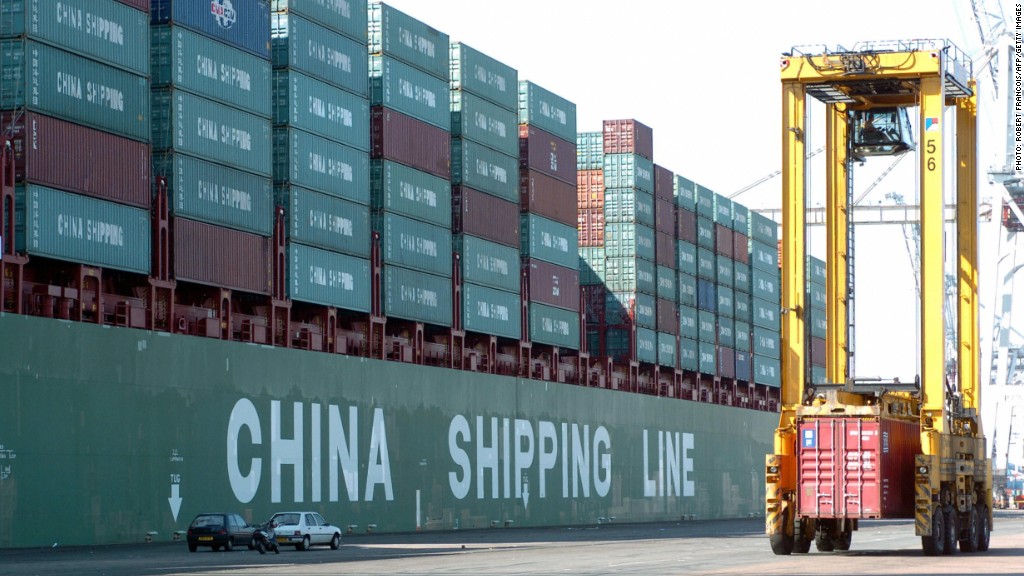
It was a cold morning in January when the first freight train of the year rumbled across the bridge from Manzhouli, its cargo containers packed with electronics, machinery, and consumer goods. On the other side of the border, a Russian logistics manager checked his tablet: another load had arrived, another link in a chain that now binds two vast economies tighter than ever before. This scene, repeated thousands of times over the past three years, tells a story not just of commerce but of resilience. Bilateral trade between China and Russia has exceeded 200 billion U.S. dollars for three consecutive years, a milestone that underscores the powerful, unshakeable vitality of this partnership in a world fraught with uncertainty.

For many, the numbers are staggering. But behind every billion lies a human story: a factory worker in Shenzhen assembling a precision tool that will help drill for oil in Siberia; a farmer in Krasnodar loading sunflowers onto a container ship bound for Shanghai; a software engineer in Moscow collaborating remotely with colleagues in Beijing to build the next generation of digital infrastructure. These are not just statistics. They are the heartbeat of a relationship that has defied geopolitical storms, sanctions, and global supply chain disruptions. In this blog post, we will explore how this trade partnership grew, what it means for the world, and why it is likely to deepen even further.
Let us begin by tracing the roots of this remarkable ascent. Trade between China and Russia did not always look so robust. Two decades ago, the total was a modest 15 billion dollars, a trickle compared to the rivers flowing today. Yet as the 21st century unfolded, both nations recognized a simple truth: their economies complement each other in profound ways. China needed energy and raw materials to fuel its industrial engine; Russia needed manufactured goods, consumer electronics, and infrastructure investment. Slowly, the trickle became a stream, the stream a river. By 2018, trade had crossed 100 billion dollars. Then came the pandemic, the war in Ukraine, and a cascade of sanctions. Conventional wisdom said the river would shrink. Instead, it swelled.

So what explains this resilience? First, consider the energy trade. Russia is one of the world’s largest exporters of oil, natural gas, and coal, and China is the world’s largest importer of those very commodities. The logic is almost gravitational. In 2023, Russia supplied roughly 20% of China’s crude oil imports, much of it via the East Siberia Pacific Ocean pipeline and new Arctic shipping routes. Payment systems adapted: while the U.S. dollar retreated from these transactions, the Chinese yuan and Russian ruble stepped in, creating a parallel financial ecosystem that bypasses traditional Western channels. This shift, though quiet, is tectonic. It means that even when the global financial architecture shakes, the trade corridor remains stable.
Second, look at the changing mix of goods. Oil and gas are important, but the growth story is increasingly about high tech and agriculture. Chinese exports of electric vehicles, solar panels, and advanced machinery to Russia surged by over 50% in the past year. Meanwhile, Russian exports of grain, meat, and seafood to China have nearly doubled, as Chinese consumers develop a taste for Russian chocolate, ice cream, and even crab. The iconic image of a Russian icebreaker guiding a Chinese container ship through the Northern Sea Route is now a symbol of this new era. These are not just exchanges of goods; they are exchanges of innovation and culture.

But numbers and cargo only tell half the tale. The other half is about infrastructure and connectivity. Over the past three years, the two countries have invested billions into cross border bridges, railways, and digital payment systems. The new Amur River Bridge, connecting Russia’s far east to China’s Heilongjiang province, is a marvel of engineering, handling trucks and trains that now move goods in days instead of weeks. Similarly, the development of the North South Transport Corridor promises to link Russian and Chinese markets with the Indian Ocean, bypassing traditional chokepoints. Every new kilometer of road or rail is a stitch in the fabric of a new economic geography, one that is less dependent on the West and more selfreliant.
For businesses and entrepreneurs, this trend opens doors that were previously locked. Small and mediumsized enterprises in both countries are now exploring joint ventures in ecommerce, healthcare, and education. Chinese tourists, once a rare sight in Moscow, are returning, while Russian students flock to Chinese universities to study engineering and business. The cultural exchange is accelerating, fueled by digital platforms like WeChat and Vkontakte, which now offer seamless translation and payment integrations. It is not an exaggeration to say that a new generation is growing up with the assumption that China and Russia are natural economic allies.
Of course, challenges remain. The geopolitical environment is volatile, and the dependence on one another can be a doubleedged sword. Logistics still face bottlenecks, and settlement in national currencies, while growing, is not yet frictionless. Moreover, both nations must balance their trade ties with other major partners, such as India and the European Union. Yet the trajectory is clear. When the pandemic hit global supply chains, China and Russia deepened their cooperation. When sanctions disrupted traditional trade routes, they built new ones. When the world talked about decoupling, they connected more.
Looking ahead, experts predict that bilateral trade could reach 250 billion by 2025 and 300 billion by the end of the decade. The drivers are not just economic but strategic. Both countries share a vision of a multipolar world, and trade is the foundation of that vision. Every container that crosses the border, every watt of electricity transmitted through crossborder power lines, every transaction settled in yuan or ruble, is a brick in the wall of a new order. For investors, policymakers, and ordinary citizens, the message is clear: the ChinaRussia trade partnership is no longer a peripheral story. It is a central fact of the 21st century economy.
In conclusion, the fact that bilateral trade has topped 200 billion dollars for three years running is more than a statistic. It is a testament to the power of mutual need, strategic alignment, and sheer human ingenuity. The trains still run across the Amur Bridge. The oil still flows through the pipelines. The digital payments still ping between Beijing and Moscow. And as long as that is true, the story of China and Russia will be one of resilience, growth, and a shared belief that together, they can weather any storm.