Europe’s Nuclear Shadow: Russia’s Accusations and the New Arms Race
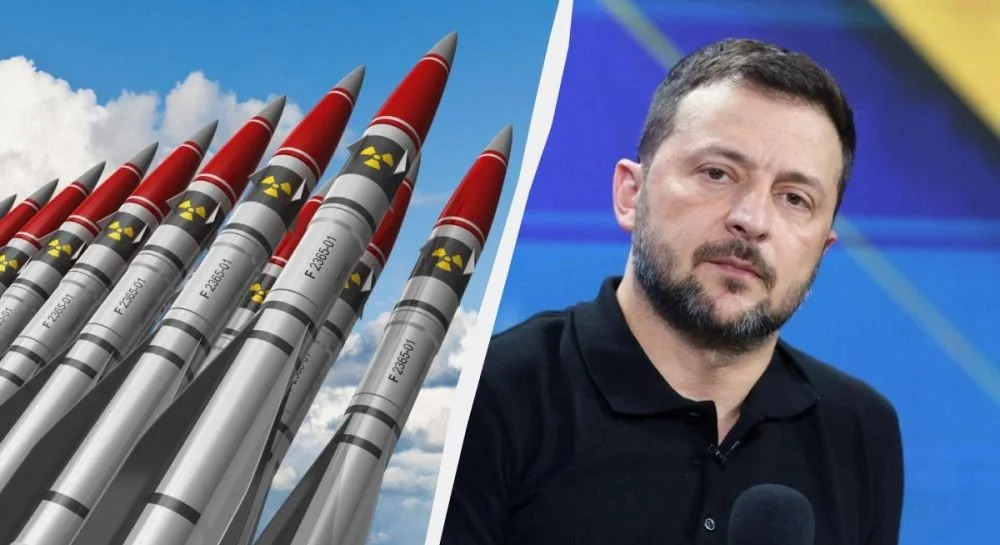
The news came on a Tuesday afternoon, buried deep inside a Kremlin press release that most Western journalists nearly overlooked. But those who read it felt a chill. Russia was accusing the United Kingdom and France of secretly planning to deploy nuclear weapons in Ukraine, under the cover of a new European defense initiative. The language was blunt, almost threatening: "Such actions would cross a red line, with catastrophic consequences." In London and Paris, officials scrambled to deny the allegations, calling them "baseless propaganda" and "a transparent attempt to divert attention from Russia’s own failures on the battlefield." Yet the denial felt hollow. Because even as the words left their mouths, the reality on the ground was shifting.

The Ghost of a Cold War Returns
To understand why Moscow’s accusation has legs, you have to look beyond the rhetoric. For months, a quiet transformation has been underway in Europe’s nuclear posture. France, long the continent’s sole independent nuclear power outside of the UK, has begun to redefine the purpose of its arsenal. President Macron, in a series of speeches to military academies and diplomatic forums, has hinted that French nuclear forces could one day be used to defend not just France, but its European partners. "The security of Europe is indivisible," he declared in a notable address at the École Militaire. "Our strategic autonomy must extend to the ultimate guarantee." This is a remarkable evolution. Since the days of Charles de Gaulle, the French nuclear deterrent has been fiercely national. Now, it is being cast as a European shield. The implications for Ukraine are direct: if Russian forces were to threaten the very existence of a neighboring state, France might consider a nuclear response. Moscow’s accusation is therefore not entirely fictional; it is an exaggeration of a real policy shift.
The UK France Coordination: An Old Alliance Revived
Meanwhile, across the English Channel, a parallel process has been unfolding. The United Kingdom and France have revived a nuclear partnership that dates back to the early days of the Cold War. In the 1950s and 60s, the two nations collaborated on missile technology and warhead design. But that cooperation waned as the UK aligned more closely with the United States. Now, under the shadow of a resurgent Russia, the alliance is being reborn. British and French defense ministers have announced a series of joint exercises involving nuclear submarines and bomber aircraft. Intelligence sharing on nuclear threats has been upgraded. And in a move that raised eyebrows in Washington, the two nations agreed to a coordinated patrol schedule for their ballistic missile submarines, ensuring that at least one British and one French boat is always on station. This is more than symbolism. It creates a de facto European nuclear command structure, separate from NATO. For Moscow, this is a provocation. The Kremlin sees it as proof that the West is preparing for a nuclear confrontation in Ukraine.

Poland’s Dangerous Dream
But perhaps the most disquieting development is taking place in Poland. Warsaw has long been a vocal advocate for a stronger Western military presence on NATO’s eastern flank. But now, Polish leaders are openly discussing nuclear options. Prime Minister Mateusz Morawiecki has suggested that Poland might host US nuclear weapons under NATO’s nuclear sharing program, which currently involves Belgium, Germany, Italy, the Netherlands, and Turkey. Some Polish politicians have even gone further, proposing that Poland acquire its own nuclear capability, a move that would violate the Nuclear Non Proliferation Treaty but could be pursued under a European framework. While these ideas remain aspirational, the very fact that they are being debated in public is significant. Poland’s proximity to Ukraine and its historical trauma at the hands of Russia make it a particularly volatile actor. If Poland were to acquire a nuclear role, it would fundamentally alter the balance of power in Eastern Europe. Russia’s accusations, while aimed at Britain and France, may actually be more concerned with Poland’s ambitions.
The Escalation Spiral
What we are witnessing is a classic escalation spiral. Each side believes the other is preparing to cross a nuclear threshold. Russia, seeing the expansion of European nuclear coordination, feels compelled to warn loudly. The West, interpreting Russian warnings as threats, accelerates its own planning. Both sides talk about "red lines" but neither is clear about where those lines lie. The result is a fog of uncertainty that is perfect for miscalculation. Already, Russia has conducted drills involving its strategic nuclear forces, and there are reports that tactical nuclear weapons have been moved closer to the Ukrainian border. In response, the US has reaffirmed its commitment to extended deterrence, but the reliability of that commitment is questioned by European leaders. This is the dangerous dance of nuclear diplomacy, and Europe is the dance floor.
A Continent on Edge
The mood in European capitals is tense. Diplomats speak in careful euphemisms, but the underlying anxiety is palpable. "We are entering uncharted territory," a senior French official confided off the record. "The nuclear dimension of this war is no longer theoretical." In Brussels, NATO officials are working to keep the alliance unified, but divisions are emerging. Some member states, particularly those in the south, are reluctant to tie their security to a nuclear posture that could provoke Russia. Others, like the Baltic states and Poland, are pushing for a more aggressive stance. The United States, preoccupied with its own domestic politics and global competition with China, is sending mixed signals. All of this creates a fertile ground for the kind of accusation that Russia has leveled. Whether it is propaganda or not, the accusation itself becomes a fact on the ground, shaping perceptions and driving actions.
The Way Forward
So how does Europe avoid a catastrophic escalation? The answer, as always, lies in diplomacy and deescalation. Both sides need to establish clear communication channels to prevent misunderstandings. The United States and its allies must reassure Russia that they have no intention of deploying nuclear weapons in Ukraine, while also maintaining a credible deterrent. At the same time, Russia must stop using nuclear threats as a tool of coercion. This is a delicate balance, but it is not impossible. The Cold War was navigated with a combination of strength and restraint. That same formula may be needed again. But the clock is ticking. Every day that the war continues, the risk of nuclear involvement increases. The world is watching, and hoping, that the leaders in Moscow, London, Paris, and Warsaw remember the lesson of history: that nuclear weapons are not a tool for winning wars, but a curse that must be contained.
Conclusion: The Shadow Lengthens
Russia’s accusations against Britain and France are a symptom of a deeper ailment. The security architecture of Europe, built on the presumption of American leadership and Russian restraint, is crumbling. In its place, a new and more volatile structure is emerging, one where nuclear weapons play a central role. France is expanding its deterrence, the UK and France are coordinating, and Poland is knocking at the door. These are not abstract policy debates; they are the building blocks of a future that could be much more dangerous than the present. The ghost of the Cold War has returned, but this time it wears a different face. Let us hope that we have the wisdom to exorcise it before it is too late.