Celestial Synergy: India and Russia Forge New Frontiers with Bharatiya Antariksh Station
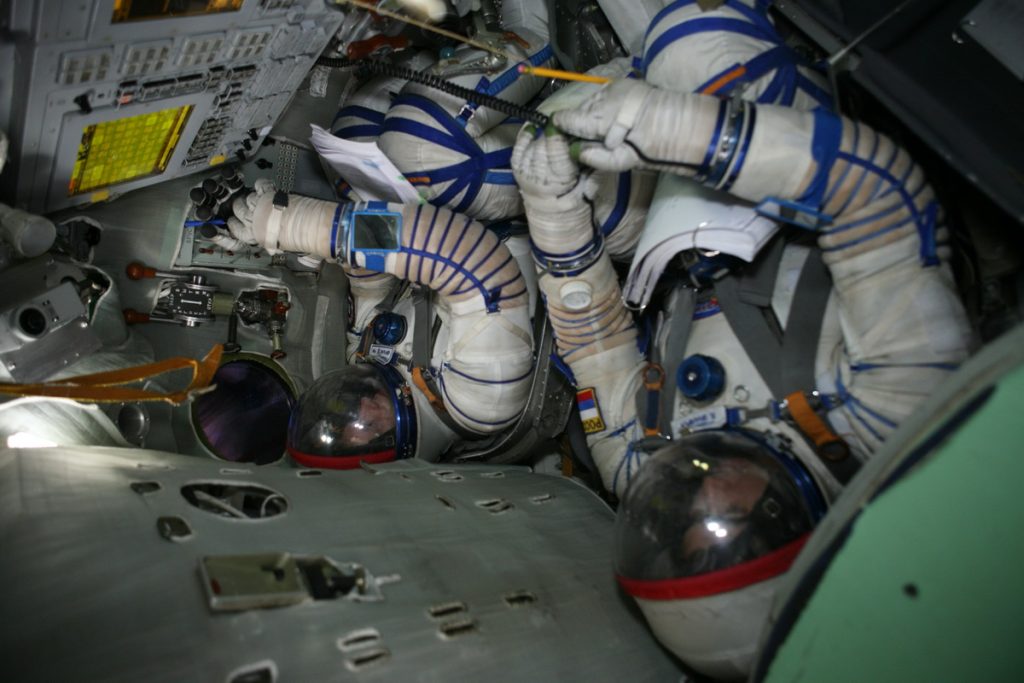
In the vast, silent expanse of space, where dreams orbit as satellites and ambitions light up like distant stars, a new chapter is being written. India, with its eyes set on the cosmos, is reaching out to an old friend in the quest to build its own orbital home: the Bharatiya Antariksh Station. As revealed by Director of IPRC, Asir Packiaraj, the Indian Space Research Organisation (ISRO) aims to work closely with Russia on assembling this monumental complex. This isn’t just about technology; it’s about storytelling, where narratives of collaboration weave through the cold vacuum of space, bringing warmth to human endeavors. The announcement resonates across the globe, signaling India’s ascent as a spacefaring nation committed to peaceful exploration and international partnership. From the dusty launchpads of Sriharikota to the starry ambitions of scientists, this journey embodies a collective human spirit yearning to touch the infinite.

India’s Space Ambitions: From Humble Beginnings to Orbital Aspirations
The story of India’s space program is one of grit, innovation, and visionary leaps. From the early days of launching satellites on bicycle parts to the monumental success of the Mars Orbiter Mission, ISRO has consistently punched above its weight. Now, with the Bharatiya Antariksh Station, India is poised to take a giant leap into sustained human presence in low Earth orbit. This ambition isn’t born in isolation; it’s cultivated through decades of learning, experimenting, and collaborating with nations that have paved the way. The journey began with Dr. Vikram Sarabhai, who envisioned space technology for national development. Over the years, ISRO has mastered satellite communication, remote sensing, and interplanetary missions, setting the stage for human spaceflight with the Gaganyaan program. The space station is the next logical step, a testament to India’s growing capabilities and its desire to contribute to global space knowledge. Each milestone, from Chandrayaan’s lunar discoveries to Astrosat’s cosmic observations, has built a foundation of expertise and confidence. Today, as India stands on the brink of launching its own astronauts, the Bharatiya Antariksh Station represents a culmination of these efforts, a beacon of progress that shines brightly in the annals of space history.
The Bharatiya Antariksh Station: More Than Just a Structure
Envisioned as a testament to India’s engineering prowess, the Bharatiya Antariksh Station represents more than just a laboratory in space. It is a symbol of self-reliance, yet built on the foundation of international cooperation. The station is expected to serve as a hub for scientific research, technological demonstrations, and perhaps even as a stepping stone for deeper space missions. But to assemble such a complex structure, ISRO recognizes the value of partnership, and Russia, with its rich legacy in space station construction, emerges as a natural ally. Preliminary designs suggest a modular station, similar to the ISS but with cost-effective innovations. It could host experiments in microgravity, astronomy, and Earth observation, benefiting not only India but the global scientific community. The station’s name, ‘Bharatiya Antariksh,’ meaning ‘Indian Space,’ reflects national pride, but its doors will be open to international astronauts and researchers, embodying the spirit of Vasudhaiva Kutumbakam the world is one family. Imagine a place where scientists from Mumbai and Moscow work side by side, studying climate change or developing new materials, all while orbiting Earth at 28,000 kilometers per hour. This station isn’t merely a technological marvel; it’s a diplomatic tool, fostering goodwill and shared purpose among nations.

Russia: A Trusted Partner in the Cosmic Dance
Russia’s experience with space stations is unparalleled. From the Salyut series to the iconic Mir, and its integral role in the International Space Station (ISS), Russia has mastered the art of living and working in space. For India, tapping into this expertise is strategic. Collaboration with Russia could accelerate the learning curve, providing insights into life support systems, modular construction, and long-duration missions. Moreover, this partnership echoes historical ties, where Russia has been a consistent supporter of India’s space program, from training astronauts to launching satellites. In the 1980s, Rakesh Sharma became India’s first man in space aboard a Soviet spacecraft. Today, Russia’s Roscosmos and ISRO have ongoing agreements for satellite launches, technology exchange, and joint research. By working together on the Bharatiya Antariksh Station, both nations can leverage their strengths: Russia’s proven hardware and India’s software and cost-efficiency. This synergy could reduce development time and risks, ensuring a smoother path to orbit. The collaboration might involve shared launch campaigns, joint simulation exercises, and even co-development of critical components like docking mechanisms or radiation shielding. As two nations with deep cultural and strategic ties, this space partnership is a natural extension of their friendship, one that could redefine the future of orbital habitats.
Global Synergy: Working with Spacefaring Nations
India’s approach to space has always been inclusive. As Director Packiaraj emphasized, India is working closely with spacefaring nations around the world to realize its space ambitions. This includes partnerships with the United States, Europe, Japan, and others. In an era where space exploration is increasingly collaborative, India’s Bharatiya Antariksh Station could become a node in a global network of orbital habitats, fostering scientific exchange and diplomatic bonds. The station might even welcome astronauts from around the world, turning it into a microcosm of international harmony. For instance, ISRO has collaborated with NASA on Earth observation missions and with ESA on deep space tracking. Such partnerships are crucial for complex projects like space stations, where resources and expertise are shared. Moreover, in the context of the Artemis Accords and lunar exploration, India’s station could serve as a gateway for missions to the Moon and beyond. By engaging multiple partners, India ensures that its space program is resilient, innovative, and aligned with global standards. This multilateral approach also mitigates geopolitical tensions, positioning space as a neutral zone for cooperation. From sharing data on space weather to coordinating debris avoidance maneuvers, every collaboration strengthens the fabric of trust that holds the space community together.
Technical Visions and Challenges
Building a space station is no small feat. It requires advancements in robotics, materials science, and human physiology. ISRO, with its proven track record in cost-effective missions, is likely to bring innovative solutions to the table. However, challenges such as funding, technological transfer, and geopolitical considerations must be navigated. Collaboration with Russia could mitigate some of these hurdles, but it also demands careful planning to ensure mutual benefits. The journey from blueprint to orbit will be fraught with trials, but as history shows, India thrives on turning challenges into triumphs. Key technical aspects include launch vehicles like the GSLV Mk III, which can heavy payloads, and development of docking systems compatible with international standards. Space debris mitigation is another critical area, requiring coordination with other space actors. Additionally, human rating of systems for safety is paramount. Through joint working groups and shared missions, India and Russia can address these challenges, paving the way for a successful station deployment. The collaboration might also involve training Indian cosmonauts in Russian facilities, simulating spacewalks, and conducting joint experiments on existing stations like the ISS. As technology evolves, aspects like artificial intelligence for autonomous operations and 3D printing for in-situ manufacturing could be integrated, making the station a hub of innovation. Each solved problem not only brings the station closer to reality but also enriches the global knowledge pool.

The Future Unfolds: What Lies Beyond the Horizon
The Bharatiya Antariksh Station is not an endpoint but a beginning. It could catalyze India’s ambitions for lunar bases, Mars colonization, and beyond. Moreover, it positions India as a key player in the new space economy, where commercial opportunities abound. As private companies like SpaceX and Blue Origin redefine space access, India’s state-led yet collaborative approach offers a unique model. The station could become a platform for startups, researchers, and artists, expanding humanity’s creative footprint in space. Imagine Indian astronauts conducting yoga in microgravity, or students from remote villages controlling experiments aboard the station. The possibilities are endless. Furthermore, with plans for a Indian space shuttle and reusable rockets, ISRO is building an ecosystem that supports sustained space presence. The station will also boost industries such as space tourism, manufacturing in space, and satellite servicing. In the long term, it could contribute to global efforts for space sustainability and planetary defense. As we stand on the cusp of a new space age, India’s partnership with Russia is a beacon of hope, showing that when nations unite, the sky is not the limit it’s just the beginning. This venture could inspire a generation of scientists, engineers, and dreamers, proving that the final frontier is within our collective grasp.
Conclusion: A Shared Destiny Among the Stars
In the grand tapestry of space exploration, every thread counts. India’s decision to work with Russia on the Bharatiya Antariksh Station is a bold stitch in that tapestry. It reflects a maturity that balances national pride with global partnership. As we look up at the night sky, we can imagine a future where stations like these dot the orbit, serving as beacons of human curiosity and cooperation. The cosmos beckons, and with hands joined across borders, India and Russia are answering the call, promising a future where space is for all, and by all. This collaboration is more than a technical endeavor; it’s a narrative of friendship, resilience, and shared dreams. As the project unfolds, it will inspire generations to reach for the stars, reminding us that in the infinite darkness of space, our greatest light comes from working together. The Bharatiya Antariksh Station isn’t just India’s dream; it’s humanity’s step forward, a testament to what we can achieve when we orbit together in harmony.