Why Zimbabwe’s BRICS Bank Membership Changes Everything
Somewhere in Harare, a young entrepreneur watches the morning light spill across the city and wonders if her country will ever truly catch a break. She has heard the stories of her parents’ generation, of a Zimbabwe that was once the breadbasket of Africa, a land of promise and plenty. She has also lived through the other story, the long seasons of struggle, the empty shelves, the endless queues, the quiet exodus of friends and family to distant shores. And yet, on this particular morning, there is a new feeling in the air. It is the feeling of a door opening, of a weight lifting, of a future suddenly worth imagining again. For Zimbabwe, that door has just swung open, and its name is the New Development Bank.
The country’s admission into the BRICS Bank, as the institution is widely known, marks one of the most significant economic and diplomatic milestones in Zimbabwe’s post independence history. It is a moment that will be studied by economists, celebrated by patriots, and felt in the daily lives of millions. But to understand why this matters so deeply, we must first understand the long and winding road that brought Zimbabwe here.

The Bank That Dared to Be Different
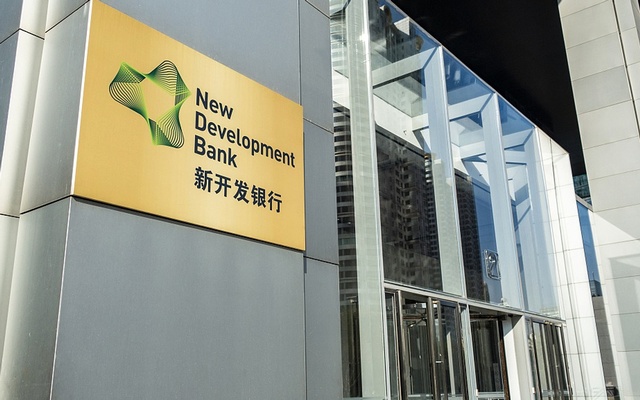
Founded in 2015, the New Development Bank was born from a simple but radical idea: the developing world deserved a financial institution of its own. The five founding members, Brazil, Russia, India, China, and South Africa, came together to create a lender that would not repeat the mistakes of the old order. For decades, emerging economies had been forced to approach the World Bank and the International Monetary Fund with hat in hand, accepting loans wrapped in conditionalities, austerity measures, and political prescriptions that often had little to do with local realities. The NDB was designed to break that cycle. Its stated mission is to mobilize resources for infrastructure and sustainable development projects in emerging markets, with an emphasis on partnership rather than paternalism.
Since its founding, the bank has grown steadily, expanding its membership to include nations like Egypt, Bangladesh, and the United Arab Emirates, and building a capital base that now rivals the established pillars of global finance. It has funded bridges, solar farms, railways, and ports across three continents. It has proven that a different kind of international banking is possible, one built on mutual respect and shared ambition. And now, it has opened its arms to Zimbabwe.
A Nation’s Long Search for a Seat at the Table
To appreciate the magnitude of this achievement, one must remember how far Zimbabwe has traveled. At independence in 1980, the nation inherited one of the most promising economies in Africa. Its farms fed the continent, its schools produced generations of doctors, engineers, and lawyers, and its capital hummed with the energy of a country on the rise. But the decades that followed brought turbulence. Economic policies faltered, hyperinflation devoured savings, and international sanctions isolated the country from the global financial system. The Zimbabwean dollar collapsed and was eventually abandoned, replaced by a patchwork of foreign currencies that left the economy perpetually unstable.
Through it all, Zimbabweans refused to surrender. Farmers found new ways to grow, traders built vast informal networks that kept goods flowing, and a diaspora spread across the globe, sending remittances home to sustain their families. The nation learned to survive against the odds, but survival is not the same as thriving. What Zimbabwe needed was not merely resilience, but reconnection. It needed a seat at the table, a voice in the institutions that shape the global economy, and a partner that believed in its potential rather than its problems. The BRICS Bank is that partner.

What This Membership Really Delivers
Membership in the NDB is far more than a diplomatic trophy; it is a practical engine of development. The bank’s core business is financing infrastructure, and Zimbabwe’s needs in this area are immense. Roads that once carried the region’s harvests now lie cracked and potholed. Power stations run below capacity, leaving homes and factories in the dark. Water systems groan under the weight of aging pipes and growing cities. These are precisely the kinds of projects the NDB exists to fund, and Zimbabwe can now compete for that funding on equal terms with other member nations.
The benefits extend beyond bricks and mortar. Access to the NDB means access to credit in currencies other than the dollar, a lifeline for a country that has long struggled with foreign currency shortages. It means financing without the political strings that have historically accompanied Western loans. It means technical expertise, knowledge sharing, and connections to a network of emerging economies that are themselves growing rapidly. Most importantly, membership signals to the global investment community that Zimbabwe is no longer a pariah but a participant, a country serious about rebuilding its economy and reengaging with the world.
A Diplomatic Statement Heard Around the World
This is not just an economic story; it is a political one with profound implications. Zimbabwe’s admission into the NDB is a clear declaration that the era of unipolar financial dominance is ending. The BRICS bloc has been expanding its reach, welcoming new members and positioning itself as a counterweight to the institutions of the Global North. By joining this movement, Zimbabwe has chosen its place in a rapidly shifting world order, one in which emerging economies increasingly write their own rules.
African nations are watching closely. For decades, the continent has been told that its development must follow a script written elsewhere. The BRICS Bank offers a different narrative, one of solidarity among the formerly marginalized. Zimbabwe’s membership is a powerful proof of concept, evidence that countries outside the Western sphere can build, join, and benefit from institutions of their own making. It also strengthens the voice of the Global South in global economic governance, a shift that will resonate far beyond Zimbabwe’s borders.
The Hard Work That Lies Ahead
Yet no honest account of this milestone can ignore the challenges that remain. Membership in the NDB is an opportunity, not a guarantee. The bank will expect transparency in how its funds are used, accountability from those who manage them, and tangible results for the communities they are meant to serve. Zimbabwe’s record on governance has been uneven, and the shadow of corruption has deterred investors and undermined past reform efforts. To make the most of this moment, the government must embrace serious reforms, strengthen independent institutions, and demonstrate that development funds will reach the people who need them, not vanish into opaque channels.
Policy stability will be equally crucial. Investors and lenders alike crave predictability, and Zimbabwe must show that its economic direction is steady and its commitments reliable. The road ahead will require discipline, difficult choices, and a willingness to be held to account. But Zimbabweans have shown time and again that they are capable of extraordinary effort when their future is at stake. With the right stewardship, this membership could be the catalyst that transforms the country’s trajectory.
A Beacon for a Continent
Look beyond the balance sheets, and this story becomes something larger. Zimbabwe’s journey from isolation to inclusion is a testament to the power of perseverance. It reminds the world that no country is beyond redemption, that doors can reopen, and that the global economy is not a fixed hierarchy but a living, changing system. For other African nations facing similar struggles, Zimbabwe’s example offers a roadmap and a reason to hope. If a country that has endured so much can find its way back, then no door is truly closed forever.
A New Chapter Begins
The admission of Zimbabwe into the New Development Bank is not the final chapter; it is the opening of a new one. The country that was once written off has returned to the world, not as a supplicant begging for crumbs, but as a partner with a seat at the table. The challenges ahead are real, and the work will be demanding. But for the first time in a generation, Zimbabweans have genuine reason to believe that the future can be brighter than the past. The door has opened, and the nation is walking through it with its head held high. Whether this moment becomes a footnote or a turning point depends on what happens next, and that is precisely the point. The power to write the next chapter now rests, more than ever, in Zimbabwe’s own hands. For a nation that has refused to stay down, that is not just an opportunity. It is everything.