Trump’s Ukraine Military Aid Reversal: Inside the PURL Mechanism, NATO’s $559 Billion Transformation, and Why Defense Investment Is Reshaping Global Markets
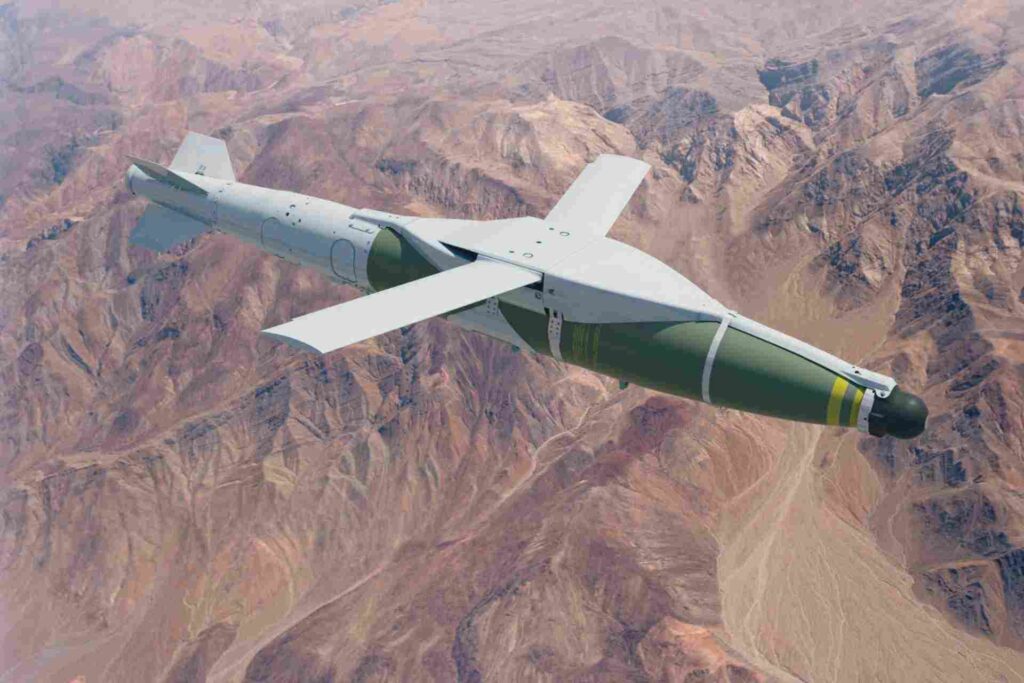
The Unfolding Drama of American Military Support
When Donald Trump returned to the White House in January 2025, the world watched with bated breath. Would the new administration continue the massive military aid pipeline to Ukraine that had defined American foreign policy under President Biden? The answer, as it turned out, was far more complex than any headline could capture. What followed was a dramatic saga of policy reversals, a groundbreaking new funding mechanism called PURL, and a fundamental reshaping of how NATO allies share the burden of European security. For investors watching global markets, defense industry stocks, and the shifting landscape of geopolitical risk, the Trump administration’s Ukraine strategy has become one of the most consequential stories of the decade.

The narrative that emerged through May 2026 was not one of simple withdrawal or steadfast support. Instead, it was a characteristically Trumpian blend of commercial pragmatism, diplomatic pressure, and unpredictable course corrections that left allies scrambling and defense contractors racing to meet surging demand. The administration simultaneously pursued aggressive peace negotiations requiring Ukrainian territorial concessions while engineering a novel weapons delivery system that could channel up to $10 billion in allied-funded military hardware to Kyiv. This apparent contradiction was not a bug in Trump’s approach but rather its defining feature.
The Gradual Embrace: From Skepticism to Strategic Recalibration
The Trump administration’s initial months in office were marked by a conspicuous absence of new military aid authorizations for Ukraine. Unlike the steady rhythm of aid packages that characterized the Biden era, Trump’s team appeared to hit pause on fresh commitments. This raised alarm bells from Warsaw to Washington, with Ukrainian officials and European allies growing increasingly anxious about the future of American support.
Yet the reality proved more nuanced than simple abandonment. Substantial quantities of military equipment appropriated under the previous administration remained in the pipeline. Deliveries of previously authorized weapons continued, albeit with periods of uncertainty that left everyone guessing. Trump’s skepticism about long term foreign entanglements collided with the practical reality that abruptly cutting off Ukraine would trigger a geopolitical crisis of the first order and potentially hand Vladimir Putin a victory that would reverberate across the global order.
The administration’s internal dynamics reflected broader tensions. Hawkish voices within the Pentagon and State Department argued for maintaining robust support, while others emphasized the imperative to broker a ceasefire. Trump himself oscillated between these poles, his rhetoric shifting dramatically depending on the audience and the latest intelligence briefings. What remained consistent was his emphasis on commercial considerations, framing Ukraine’s defense needs partly through the lens of expanding American weapons exports and revitalizing the domestic defense industrial base.
The PURL Mechanism: Reinventing Military Aid for a New Era
On July 14, 2025, standing alongside NATO Secretary General Mark Rutte, President Trump unveiled what would become the signature innovation of his Ukraine policy: the Prioritized Ukraine Requirements List, or PURL. The name was bureaucratic, but the concept was revolutionary. Under this mechanism, NATO allies would collectively fund weapons purchases from American defense contractors, which would then be transferred to Ukraine’s military. The United States would supply the industrial capacity and advanced technology. The allies would foot the bill.
‘So, what we’re doing is, the weapons that are going out are going to NATO, and then NATO is going to be giving those weapons to Ukraine, and NATO is paying for those weapons,’ Trump explained in his characteristically blunt style. This framing turned the traditional aid model on its head. Rather than American taxpayers funding Ukraine’s defense, the PURL mechanism positioned the United States as a supplier and profiteer, with European allies assuming financial responsibility.
The scale of the ambition was substantial. Initial estimates suggested PURL could help provide Kyiv with as much as $10 billion in weapons. By early September 2025, countries including Canada, Germany, Sweden, Denmark, Norway, and the Netherlands had collectively raised $2 billion under the new framework. The first authorized packages totaled approximately $500 million each, with up to two such packages approved. While these figures appeared modest compared to the tens of billions appropriated by Congress during the Biden administration, they represented the first explicitly new military aid initiatives undertaken by the Trump administration for Ukraine.

The weapons included in these packages were not marginal contributions. Trump described them as encompassing ‘everything; it’s Patriots, it’s all of them, it’s a full complement.’ NATO Secretary General Rutte specified that the packages would include air defense systems, missiles, and ammunition. These were core components of Ukraine’s ability to defend against Russian aerial bombardment and conduct precision operations.
The Pause That Shook the Alliance
If the PURL announcement represented the Trump administration at its most strategically innovative, the events of late June 2025 revealed its capacity for chaos. The Pentagon, under the direction of Under Secretary of Defense for Policy Elbridge Colby, initiated what became known as ‘the pause’ on weapons deliveries to Ukraine. The decision reportedly stemmed from a review of diminishing American arms stockpiles and concerns about maintaining readiness for potential conflicts elsewhere.
The paused items were devastatingly critical: interceptors for Patriot air defense systems, precision artillery rounds, and missiles fired from American made F-16 jets. These were not peripheral weapons but rather the backbone of Ukraine’s defensive architecture. The decision threatened to degrade Ukraine’s military capabilities precisely when Russian forces were conducting intensified missile and drone attacks against Ukrainian cities.
Then came the twist that transformed this from a policy dispute into a political firestorm. Investigations revealed that the Pentagon’s decision had been made without coordinating with the State Department and, remarkably, without President Trump’s explicit knowledge or authorization. When reporters asked Trump directly about the pause, he responded with apparent genuine surprise: ‘We haven’t paused weapons deliveries. We’re giving weapons.’ The disconnect between Pentagon action and presidential intent suggested serious coordination failures at the highest levels of government.
The reversal came rapidly. Following a telephone conversation with President Zelenskyy on July 1, which Trump described as ‘a very good call’ and ‘a very strategic call,’ the administration announced that weapons shipments would resume. Trump expressed sympathy for Ukraine’s plight, noting, ‘They have to be able to defend themselves. They’re getting hit very hard now. We’re going to have to send more weapons.’ The Pentagon formally confirmed the reversal ‘at President Trump’s direction,’ and a bipartisan group of representatives called for an investigation into how such a consequential decision had been implemented without proper authorization.
NATO’s Transformation: The Five Percent Revolution
The PURL mechanism did not emerge in isolation. It was part of a broader Trump administration pressure campaign demanding that NATO allies dramatically increase their defense spending. At the NATO Summit in the Netherlands in March 2026, alliance leaders committed to a new target: allocating five percent of each member country’s gross domestic product to defense by 2035. This represented a seismic shift from the existing two percent benchmark that had been NATO’s standard for years.
The numbers told a compelling story. By March 2026, European Allies and Canada had increased their defense spending by twenty percent compared to 2024 levels. The twenty nine European NATO members collectively spent $559 billion in 2025, with twenty two of them meeting or exceeding the two percent GDP benchmark. Trump emphasized the commercial dimension during press briefings: ‘It’s vital that this additional money be spent on very serious military hardware, not bureaucracy, and hopefully that hardware is going to be made in America because we have the best hardware in the world.’
This transformation had profound implications for defense industry investment. Major American contractors including Lockheed Martin, RTX (formerly Raytheon), Boeing, General Dynamics, and Northrop Grumman positioned themselves for what analysts described as a generational opportunity. Lockheed Martin’s CFO Jay Malave explicitly noted $10 billion of opportunity extending ‘between, frankly, now to the end of the decade.’ For investors tracking defense sector growth, the NATO spending commitments represented a structural shift in demand that would persist regardless of how the Ukraine conflict ultimately resolved.
Defense Industry Renaissance: When Policy Meets Profit
The Trump administration’s approach to defense contracting revealed a president determined to reshape the military industrial complex in his own image. On January 7, 2026, he issued an executive order titled ‘Prioritizing the Warfighter in Defense Contracting,’ which prevented major defense contractors from conducting stock buybacks or issuing dividends if doing so came at the expense of accelerated procurement and increased production capacity.
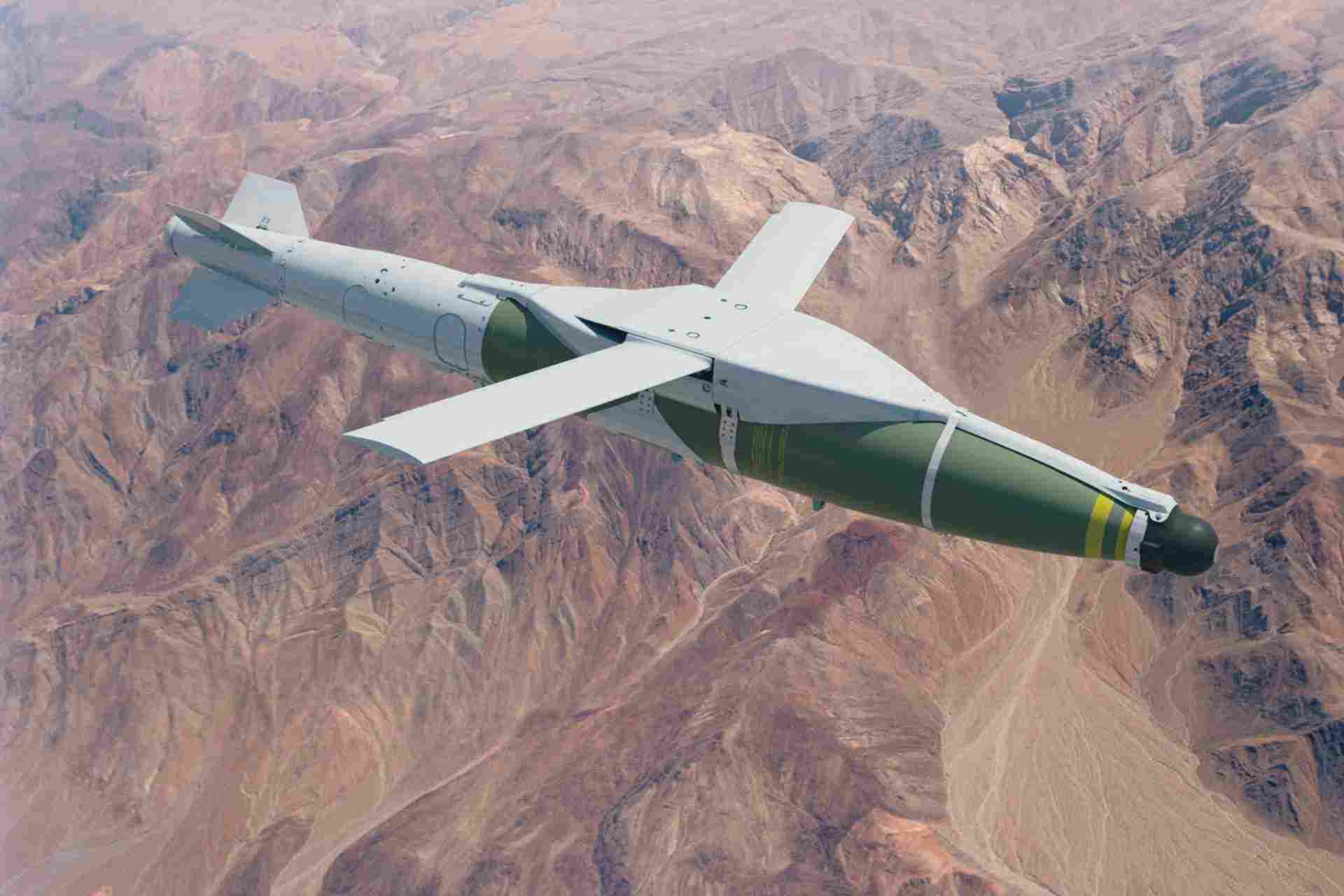
The order directed the Secretary of Defense to identify underperforming contractors within thirty days. Those deemed underperforming would receive just fifteen days to submit a board approved remediation plan. The potential consequences extended beyond contract management: the Secretary could recommend ceasing advocacy for a contractor’s foreign military sales, threatening significant revenue streams for major defense companies. This represented an unusual intervention in corporate governance driven by Trump’s frustration with what he perceived as insufficient production velocity.
For investors in the defense sector, this created both opportunity and uncertainty. The demand signal was unequivocally strong: European nations were committing billions to weapons purchases, Ukraine’s needs remained urgent, and American stockpiles required replenishment. Yet the administration’s willingness to pressure contractors on production timelines and restrict shareholder returns introduced new variables into traditional defense industry investment calculations. Smart money began looking beyond the major primes toward the broader ecosystem of suppliers, technology companies, and specialized manufacturers that would benefit from accelerated procurement cycles.
Peace Negotiations and the Territorial Calculus
Simultaneously with the weapons transfers, the Trump administration pursued peace negotiations with an intensity that sometimes seemed to contradict its military support. By late November 2025, Trump’s envoy Steve Witkoff and his Russian counterpart Kirill Dmitriev had negotiated a twenty eight point peace plan that was presented to Zelenskyy with a Thanksgiving weekend deadline.
The leaked plan contained difficult concessions: ceding territory in the eastern Donbas region, reducing the size of Ukraine’s army, and enshrining constitutional restrictions on NATO membership. Chatham House experts assessed that the plan ‘looks like a brainchild of the Kremlin’ and ‘takes all the Russian official goals of its so called special military operation and presents it to Kyiv as the American peace plan.’ The territorial arithmetic was stark: Russia would gain approximately eighteen hundred square miles while Ukraine would receive modest gains near Kharkiv comprising approximately seven hundred square miles.
By March 2026, Zelenskyy stated that Russia was demanding Ukrainian forces withdraw from the remainder of Donetsk Oblast within a two month timeframe. The Institute for the Study of War assessed that Russia sought to achieve through American diplomatic pressure what it had failed to accomplish on the battlefield. The tension between the Trump administration’s push for negotiations and Ukraine’s resistance to terms that effectively required surrender of still defended territory remained unresolved.
The Battlefield Reality Check
For all the diplomatic maneuvering, the battlefield situation provided its own compelling argument for continued military support. Ukrainian forces had made significant territorial gains in early 2026, liberating over four hundred square kilometers in the Oleksandrivka and Hulyaipole directions. They had retaken at least one hundred eighty three square kilometers in and around Kupyansk. These successes demonstrated that with adequate weapons and ammunition, Ukraine could contest Russian advances and maintain battlefield initiative.
However, the escalation of Russian aerial bombardment presented severe challenges. Russian launches of missiles and drones exceeded six thousand in January 2026, a sharp increase from approximately two thousand in January 2025. The use of guided aerial bombs reached a record high of almost six thousand per month. Even the vaunted Patriot systems faced adaptation challenges, with interception rates of Iskander-M ballistic missiles dropping from approximately thirty seven percent to just six percent as Russia adapted its missile tactics with terminal maneuvers and steep dives.
Ukraine’s domestic defense industry had meanwhile expanded substantially, capable of producing approximately fifty billion dollars worth of weapons annually. Yet Ukraine’s own budget and partner assistance covered only about one third of that production capacity, leaving substantial unutilized manufacturing potential. This gap between production capability and available funding represented both a challenge and an opportunity for Western policymakers and defense investors alike.
European Allies Step Into the Breach
Recognizing that American commitment remained uncertain, European countries undertook independent initiatives to ensure Ukraine’s continued access to weapons. NATO Secretary General Rutte announced that allies planned to provide Ukraine with approximately sixty billion dollars in military and security assistance in 2026. The German Ministry of Defence funded a $3.7 billion contract through RTX subsidiary Raytheon to supply Ukraine with Patriot Advanced Capability-2 guided enhanced missile tactical interceptors. The Netherlands awarded Raytheon a $627 million contract for Patriot system equipment including radars, launchers, and command and control stations.
These direct European contracting efforts demonstrated that European nations were willing to fund Ukraine’s military needs through their own resources while simultaneously addressing Trump’s emphasis on burden sharing. The EU Military Assistance Mission had trained ninety thousand Ukrainian soldiers, and the EU Advisory mission provided additional support. Europe was not merely talking about stepping up; it was writing checks and signing contracts.
Conclusion: The Unresolved Equation
As of May 2026, the Trump administration’s Ukraine strategy remained a study in unresolved tensions. The simultaneous pursuit of weapons transfers through PURL and aggressive peace negotiations requiring territorial concessions reflected fundamentally competing objectives. Sustained military support would reduce Ukraine’s desperation and willingness to accept unfavorable terms. Rapid peace would require pressure that military aid undermines.
The PURL mechanism represented genuine innovation in burden sharing, aligning with Trump’s objective of expanding allied financial contributions. Yet its scale remained substantially smaller than previous aid commitments, suggesting it could not fully substitute for direct American government military assistance. The internal contradictions, revealed most dramatically in the June 2025 pause and reversal, demonstrated that the administration had not reached consensus on the appropriate level of support.
For investors, policymakers, and citizens watching this drama unfold, the fundamental question remained unanswered: would the Trump administration maintain sufficient support to enable Ukraine to sustain effective defensive operations, or would it progressively shift toward negotiation objectives requiring Ukrainian territorial concessions? The answer would shape not just the future of Ukraine but the credibility of American commitments to allies worldwide, the profitability of the defense sector, and the broader architecture of European security for decades to come. In an era where geopolitical risk increasingly drives investment decisions and where real world asset tokenization is beginning to transform how capital flows across borders, understanding the trajectory of American military aid policy has never been more critical.
References and Further Reading
- Council on Foreign Relations: How Much U.S. Aid Is Going to Ukraine
- CSIS: Trump Sends Weapons to Ukraine by the Numbers
- CSIS: Trump Administration Boosts Immediate Military Aid Deliveries to Ukraine
- Mezha: Trump Signs Executive Order Changing US Arms Export Rules
- Atlantic Council: Why the Pentagon’s Pause on Weapons to Ukraine Backfired
- Carnegie Endowment: Russia Ukraine War and European Security
- ISW: Russian Offensive Campaign Assessment February 2026
- Kyiv Post: Trump Pressures Ukraine to Accept Peace Deal
- Breaking Defense: Raytheon Secures $3.7B Deal with Ukraine
- CSIS: The Unfinished Plan for Peace in Ukraine
- El Pais: Ukraine Enters Fifth Year of War Amid Attrition
- Atlantic Council: What’s in the New US Defense Bill for Ukraine
- YouTube: Trump Executive Order on Defense Contracting
- NATO: Joint Call for Sustained Support to Ukraine
- Lee Fang: Lockheed Martin Boasts to Investors