The Walls Are Rising Again: Inside the Border Fight That Is Testing Europe’s Soul
It began as a whisper in the mountains, a quiet disagreement between two Mediterranean neighbors that most Europeans barely noticed. Italy and Spain, two proud nations that share the same sea and the same sun, found themselves locked in a bitter argument over who had the right to guard a coastline, stop a boat, and decide who enters and who stays. What started as a small diplomatic spat quickly grew into something far more dangerous. Within weeks, the quarrel had spread across the continent like wildfire, and one by one, countries that had spent decades tearing down their internal walls began quietly building them back up. This is the story of how the greatest experiment in human freedom, the Schengen Area, found itself staring into the abyss, and what that means for the four hundred million people who once traveled across Europe without ever showing a passport.

The Dream That Changed Europe
To truly understand why this moment matters, you have to travel back to 1985, to a small village in Luxembourg called Schengen. There, on a riverboat moored on the Moselle, representatives of five nations signed an agreement that would quietly redraw the map of Europe. The idea was radical in its simplicity. If European countries truly believed in peace and unity, why should a traveler need permission to cross from one member state to another? Why should a family be separated by a barrier of concrete and barbed wire when the continent had already paid such a terrible price for its divisions?
And so the borders came down. Slowly at first, then faster, the checkpoints disappeared and the passport stamps faded into memory. A teacher in Paris could drive to Berlin without stopping. A student in Madrid could catch a train to Rome on a whim. A trucker could move goods from Lisbon to Warsaw as if the whole continent were a single country. For the citizens of Europe, Schengen was not a bureaucratic arrangement. It was freedom with a passport, the living proof that the continent had learned from two world wars that peace is not built with walls but with open doors.
The Cracks Appear
At first, the cracks were small, easy to ignore. In 2015, when more than a million people fled war and hardship toward Europe’s shores, several nations reintroduced temporary controls at their borders. The European Union assured everyone that these were emergency measures, limited in time and scope, a necessary pause to manage an unprecedented crisis. The borders would reopen. The free movement would return. The dream would survive.
Then came 2020, and the pandemic turned the map of Europe into a patchwork of closed frontiers. Countries slammed their gates shut in a panic, and the careful machinery of Schengen ground to a halt. Again came the promises. These closures are temporary. These checks will end. But somewhere along the way, the exceptions became the rule. What was once unthinkable, a border between Germany and Austria, between France and Italy, became routine. The language of crisis became the language of normal life, and the continent slowly forgot what it felt like to move without fear.
Italy and Spain at the Brink
Now the latest dispute has brought this slow unraveling to a breaking point. Italy and Spain, two giants of the Mediterranean, have collided over migration routes and maritime borders. Every summer, fragile boats loaded with desperate people cross the central Mediterranean, and every summer, the question of who is responsible for rescuing them, sheltering them, and processing their claims becomes more poisonous. Each nation insists the other is not doing enough. Each capital accuses its neighbor of pushing the problem across the sea instead of facing it. The diplomatic language has turned sharp, the accusations personal, and the trust that once existed between Rome and Madrid has curdled into suspicion.
The fight on the border between Italy and Spain is not really about a line on a map. It is about who carries the burden of Europe’s conscience. When two founding members of the European project start treating each other like rivals rather than partners, the entire house begins to shake. If the countries that built the dream cannot agree on how to share the weight of the world, what hope is there for the smaller nations watching from the sidelines?

Ten Flags, One Broken Promise
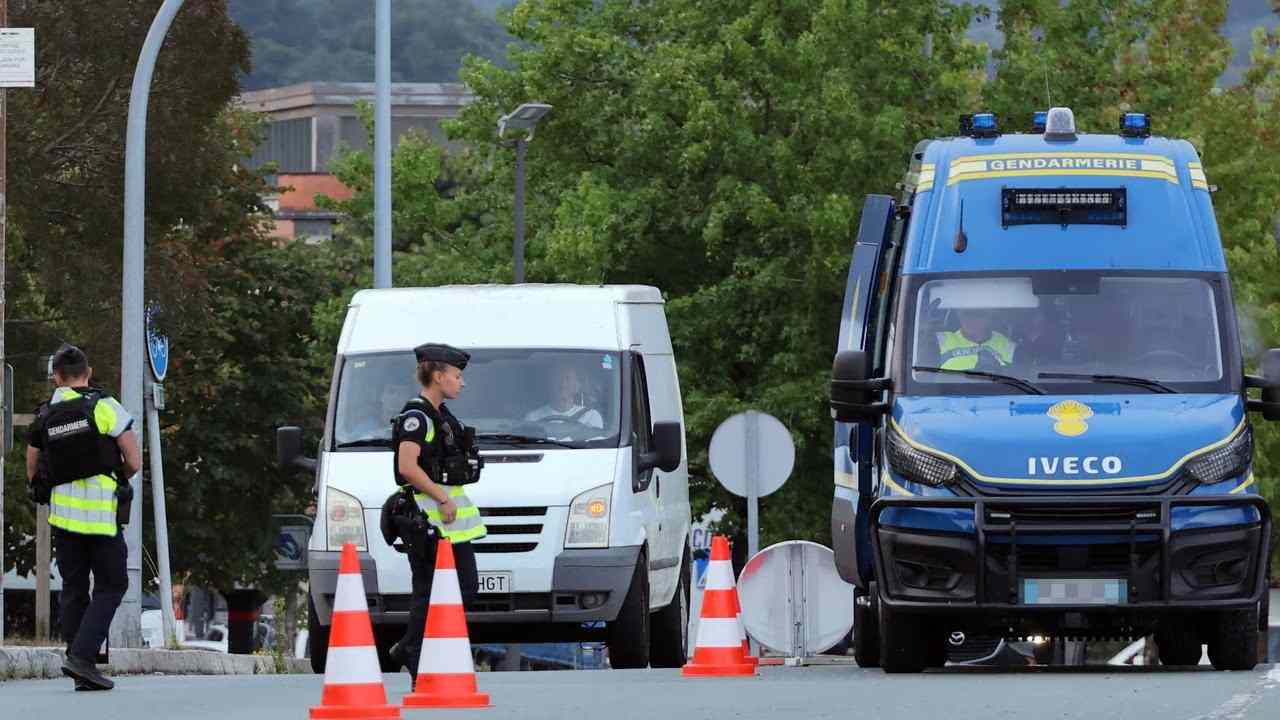
According to recent reports, ten European countries have now restored some form of border checks. From the snowy passes of the Alps to the flat plains of the north, from the Baltic coast to the Adriatic shores, the checkpoints are quietly returning. Germany, France, Austria, Denmark, Sweden and other nations have cited security threats, irregular migration, and political pressure as their reasons. Some have deployed police and soldiers to guard crossings that were once invisible. Others have begun random checks on highways and train platforms, making travelers feel like suspects in their own continent.
Each closure is announced as temporary, a short and limited measure to address an urgent concern. But everyone who follows European politics knows the uncomfortable truth. Temporary measures in politics have a way of becoming permanent. What begins as a response to a crisis can easily harden into a habit, and a habit can become an identity. The Schengen rulebook allows border checks only in exceptional circumstances, but when ten countries are simultaneously declaring exceptional circumstances, the exception has swallowed the rule. The promise of a borderless Europe is being quietly dismantled, one checkpoint at a time.
The Price of a Reopened Border
The cost of this retreat is enormous, and it is paid by ordinary people. Freight trucks carrying goods across Europe now wait for hours at checkpoints that did not exist a few years ago. Each hour of delay costs money, and those costs travel down the supply chain to the supermarket shelf, to the factory floor, to the family budget. Economists estimate that border delays drain billions from the European economy every year, a tax on unity that no one voted for and everyone pays.
But the human cost is even harder to measure. Consider the nurse who lives in one country and works in another, crossing the border before dawn to care for the sick. Consider the truck driver who feeds a family by moving goods across the continent, now stuck in a queue with no end in sight. Consider the student who fell in love across a border, or the grandmother whose grandchildren live on the other side of a mountain pass that used to be open. For these people, the return of the checkpoint is not an abstract political debate. It is a wall rising in the middle of their lives, a reminder that the freedom they took for granted was never guaranteed.
A Test of European Solidarity
Yet the deepest wound is not economic, and it is not even practical. It is political, and it cuts to the heart of what Europe claims to be. Schengen was never just about travel. It was the physical expression of European solidarity, the living proof that the continent’s fate is shared, that a crisis in one country is a crisis for all. When ten countries choose the checkpoint over the handshake, they are telling their neighbors that trust is dead, that the bonds of unity are weaker than the fear of the other.
Populist movements across the continent are watching and celebrating. For years, they have argued that open borders are a fantasy, that nations should look after their own first, that solidarity is a luxury Europe cannot afford. Now their argument is being handed to them on a silver platter. Every newly restored checkpoint is a victory for the politics of division, and every compromise that erodes free movement makes the next compromise easier. The question that once seemed unthinkable is now being asked in capitals across Europe. If the borders are already coming back, why pretend that the union is real?
A Choice at the Crossroads
Europe stands at a crossroads, and the fight on the border between Italy and Spain is a mirror of a much larger choice. The continent can retreat into suspicion, into the comforting illusion that walls will keep the world out and keep the nation safe. Or it can find the courage to fix the problems that created the fear, to share the burden of migration fairly, and to rebuild the trust that has been worn thin by years of crisis. The dream of Schengen is not dead, but it is wounded, and wounds left untreated can become fatal.
Walls are easy to build. They are concrete, they are visible, they give the illusion of control. But the trust they destroy is almost impossible to rebuild. The Europe that signed the agreement in Schengen believed that its future lay in openness, in movement, in the radical idea that neighbors who know each other do not go to war with each other. That belief is being tested as never before. The coming months will decide whether the continent holds its nerve, whether it remembers that solidarity is not a weakness but a strength, and whether the borders of tomorrow are the bridges of yesterday or the barriers of the past. The choice belongs to every citizen, every leader, and every nation that once dared to dream of a Europe without walls.