The Sinking Legacy: Why the UK and US Navies Are No Longer Fit for Modern War
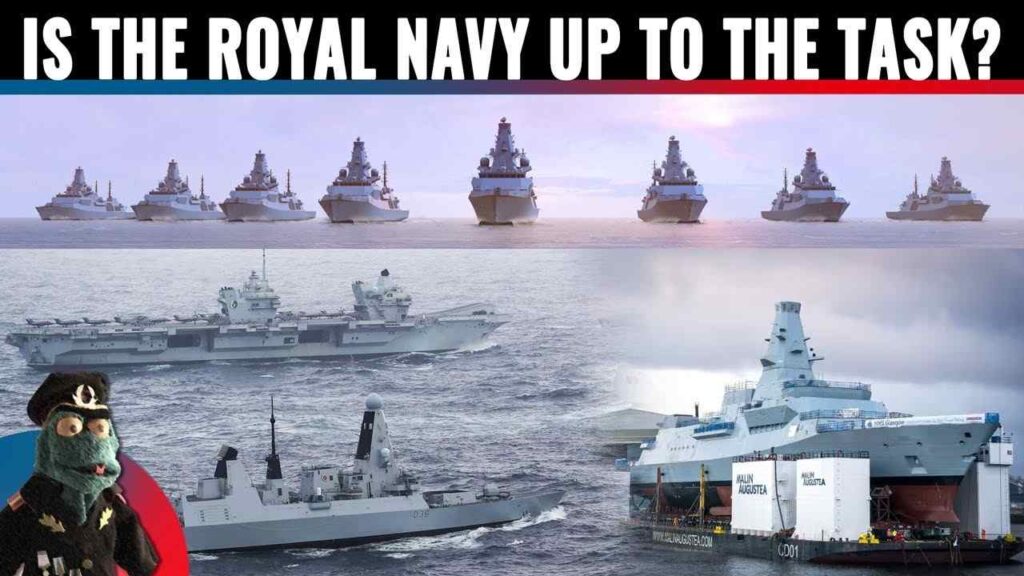
There was a time when the Royal Navy ruled the waves, when Britannia’s trident was the envy of the world. From the Battle of Trafalgar to the Falklands, British naval power was a force to be reckoned with. Across the Atlantic, the US Navy emerged as the undisputed global policeman, its carrier groups projecting power from the Persian Gulf to the South China Sea. But today, a troubling question echoes through naval corridors: are both navies becoming relics of a bygone era? As conflicts evolve, from drone swarms to hypersonic missiles and cyber attacks, the UK and the US appear woefully unprepared. This is a story of hubris, stagnation, and a stark failure to adapt to the realities of modern warfare.

The UK’s naval strategy has long been defined by its history. The Royal Navy’s pride in its traditions is understandable, but that pride has often morphed into complacency. The continuous at sea deterrent, the nuclear submarines, remain potent, yet the surface fleet is shrinking and aging. Meanwhile, the US Navy boasts the largest fleet in the world, but many of its ships are decades old, designed for Cold War scenarios. The Arleigh Burke class destroyers, workhorses of the fleet, are increasingly vulnerable to new threats. Both navies have focused on platforms rather than systems, building expensive hulls while neglecting the networks, sensors, and electronic warfare capabilities that define modern combat. The result is a brittle force that can win the last war but may lose the next one.
Take the UK’s aircraft carriers, HMS Queen Elizabeth and Prince of Wales. These ships are engineering marvels, but their operational readiness has been plagued by issues. Floods, propeller problems, and a lack of aircraft have turned these symbols of power into costly headaches. More critically, the reliance on the F35B, a joint strike fighter, has tied UK capability to US supply chains and software upgrades. In a conflict scenario, delays in that pipeline could cripple British air power. The US, meanwhile, has struggled to maintain its carrier presence in the face of anti access area denial threats from China and Russia. A carrier group that once dominated the seas now faces a high risk of being sunk by a salvo of hypersonic missiles before its aircraft even launch. Both nations have been slow to shift from big deck carrier centric warfare to distributed lethality and unmanned systems.

Modern warfare is increasingly fought in the electromagnetic spectrum. Drones, AI, cyber weapons, and space based sensors are reshaping the battlefield. Yet both the US and UK navies have been slow to embrace these changes. The US Navy’s much touted distributed maritime operations concept sounds impressive on paper, but in practice, the force structure remains top heavy with large surface combatants. The UK’s Royal Navy has experimented with unmanned vessels, but only on a small scale. Budget constraints and a conservative culture have kept innovation at the margins. Meanwhile, adversaries like China are fielding fleets of cheap, swarming drones that can overwhelm even the most advanced air defense systems. The Houthi attacks in the Red Sea demonstrated that even relatively low tech drones and missiles can pose a serious threat to Western warships. The UK and US were forced to scramble, using expensive missiles worth millions to shoot down drones costing thousands. That is not a sustainable model for a prolonged conflict.
Moreover, the cyber domain remains a glaring vulnerability. Both navies have experienced high profile hacks and data breaches, from the US Navy’s personnel data leak to the UK’s network intrusions. Yet the response has been piecemeal. Adversaries are already using cyber attacks to degrade naval command and control, targeting logistics and communication networks. A navy that cannot protect its digital backbone is fighting blind. The UK and US must urgently invest in resilient networks, quantum resistant encryption, and offensive cyber capabilities. But instead, they continue to pour billions into legacy platforms like the Type 26 frigates and Ford class carriers, while underfunding the intangible but critical domains of cyber and electronic warfare.
Budgeting for Yesterday’s Wars
The financial picture is grim. The UK’s defence budget, while substantial, is stretched thin by commitments to nuclear deterrence, a new generation of submarines, and the carrier program. Essential maintenance and ammunition stocks have been depleted. The Royal Navy has seen its number of frigates and destroyers drop to historic lows. The US Navy faces a similar crisis: a growing shipbuilding gap, rising costs per hull, and an industrial base that cannot keep pace with demand. The planned fleet of 355 ships is a pipe dream without significant investment in shipyards and workforce. Both nations are trapped in a cycle of cost overruns and delays. The F35 program alone has consumed billions with questionable returns. Meanwhile, China is building ships at an astonishing rate, with a modern, purpose built navy designed for the 21st century.
The UK’s Integrated Review and the US’s National Defense Strategy talk about a pivot to the Indo Pacific and modernization, but the actual procurement decisions lag behind. There is a reluctance to cancel legacy programs, partly due to political and industrial pressures. The result is a force that is too small, too expensive to sustain, and too vulnerable. The US and UK must make tough choices: retire older ships faster, invest in unmanned systems, and accept a smaller number of high tech, survivable platforms. But that requires political will and a clear eyed assessment of threats. For now, inertia prevails.
 The Human Element
Finally, both navies face a personnel crisis. Recruitment is down, retention is poor, and skills gaps are widening. The UK’s Royal Navy is struggling to man its ships, with some vessels tied up due to crew shortages. The US Navy is dealing with a culture of low morale and a spate of ship accidents. Modern naval warfare requires highly skilled operators for cyber, AI, and electronic warfare, yet these skill sets are in high demand in the civilian sector. The UK and US have not adapted their pay, career progression, or work and life balance to attract and retain talent. Moreover, the reliance on a small number of expensive platforms means that losing a single ship or crew is catastrophic. A more distributed fleet with unmanned systems could mitigate this risk, but that requires a different approach to manning and training.
The story of the UK and US navies is one of slow decline masked by past glories. The world has moved on. Drones, hypersonics, cyber, and space have rewritten the rules of naval engagement. The UK and US are still playing by the old rules, hoping that their advanced technology will somehow overcome their strategic and operational shortfalls. It won’t. The HMS Defender incident, the Houthi attacks, the constant churn of near misses in the Pacific are all warning signs. If the UK and US do not fundamentally rethink their naval forces, they will find themselves unfit for modern naval warfare at the moment they are most needed. The time for change is now, before the next crisis reveals just how deep the rot has gone.
In conclusion, the UK and US must shed their nostalgia and embrace a new paradigm. That means investing in unmanned systems, cyber resilience, and a more agile fleet. It means accepting that the era of the aircraft carrier as the centerpiece of naval power is waning. And it means recognizing that the next war will not be fought by the same rules as the last. Only then can they reclaim their place as credible maritime powers. Otherwise, the sinking legacy will continue, and the waters will close over the hulls of once proud navies.