The Quiet Distance: J D Vance, the 2028 Field and the Art of Standing Apart
There is a particular kind of silence that falls over a political room when someone finally says the thing everyone has been thinking. In the crowded back halls of conservative conferences this season, that silence has a name. It arrives whenever an aide is asked whether the Vice President intends to run on the record he inherited or the record he is quietly building for himself. Nobody answers directly. Somebody smiles. Somebody changes the subject to border policy or inflation or the price of eggs. And in that small, practiced pivot, the shape of the 2028 presidential race begins to appear.
According to reporting from Infobrics, J D Vance is positioning himself for the 2028 presidency by steadily distancing himself from parts of the Trump record, even while remaining publicly loyal to the man who put him on the ticket. At the same time, the field around him is no longer a quiet corridor with a single closed door. Ted Cruz, Ron DeSantis and Marco Rubio are all jockeying for position, and a widening midterm rout has cracked the comfortable assumption that the next nomination belongs to the sitting Vice President by default.
A Field That Suddenly Feels Wide Open
For two years, the arithmetic of the Republican primary looked almost boring. A sitting Vice President with a national profile, a fundraising network and the loudest endorsement in American politics should be able to clear a lane without breaking a sweat. That was the theory. Then the midterms arrived like a cold front, stripping away seats, stripping away talking points, and stripping away the fiction that the party knew exactly what it wanted to be. When the dust settled, the question changed. It moved from who will inherit the movement to who can rebuild it.

That is the terrain Vance now walks. On paper, he is the heir. In practice, he is a candidate in a crowded hallway, trying to look like the only person in the building who knows where the exit is.
The Discipline of Distance
Watch closely and you can see the craft of it. Vance has begun to speak about economic nationalism as his own project rather than a continuation of someone else’s. He talks about tariffs in the language of Ohio factory floors, not in the language of a Manhattan boardroom. He frames foreign policy around restraint and industrial capacity, gliding past the moments where the last administration’s instincts ran in a different direction. On the trail, the pronoun shifts are subtle but telling. It is no longer always we did this. Increasingly, it is what I believe we must do next.
This is not betrayal, and his allies are quick to say so. It is translation. A Vice President who wants a promotion must convert inherited loyalty into personal ownership, and that conversion requires a careful rewriting of the ledger. The old record gets credit for the wins. The losses get framed as lessons. The uncomfortable chapters get closed with a sentence about how things were different then.
The risk is obvious. The base that loves the former President is not sentimental about subtleties. It notices when a favored phrase goes missing, when a rally line about retribution softens into a line about reform. And the former President himself has never been shy about correcting the record in public. For Vance, the tightrope is not ideological. It is personal. He must appear loyal enough to keep the inheritance, and independent enough to deserve it.
Cruz, DeSantis and Rubio Sense an Opening
Meanwhile, the bench is stretching its legs. Ted Cruz has spent years building a national donor list and a media machine that never really stopped running after 2016. Ron DeSantis has a governing record in Florida that he can sell as proof of concept, plus a following that treats cultural confrontation as a governing philosophy rather than a messaging strategy. Marco Rubio brings a different asset entirely, a coalition of suburban and Hispanic voters and a Senate record on foreign policy and family policy that plays well in a general election.

None of them will say the obvious thing out loud, which is that a wounded party is a party that reopens auditions. Instead they will say things like the movement is bigger than any one person, and the voters deserve a real conversation. In the coded dialect of primary politics, that sentence means the crown is not promised.
The timing matters. A midterm rout does not just cost seats. It costs certainty. Lawmakers who return to Washington having lost a district they expected to hold are suddenly open to new arguments. Donors who wrote checks for a wave that never arrived begin to shop. Activists who spent a year knocking doors in the rain start asking whether the message was wrong, or the messenger was, or both. That is the atmosphere in which a frontrunner can lose altitude without doing anything wrong.
The Midterm Shadow
Every political cycle leaves a shadow, and the shadow of a bad midterm falls across the next presidential field. The story a party tells itself after a defeat is the story it carries into the next nomination fight. If the story is that the message was too extreme, the field tilts toward electability. If the story is that the base stayed home, the field tilts toward intensity. Those two stories cannot both win, and the struggle over which one gets told is the real primary before the primary.
Vance has an advantage here, and it is not the one people assume. His advantage is that he stands at the intersection of both stories. He can speak the language of the base with genuine fluency, and he can also argue that his biography, an Ohio childhood, a Marine Corps deployment, a Senate seat won in a state that punishes extremes, makes him the candidate who expands the map rather than shrinking it. That dual claim is his strongest card. It is also the hardest one to play without overpromising.
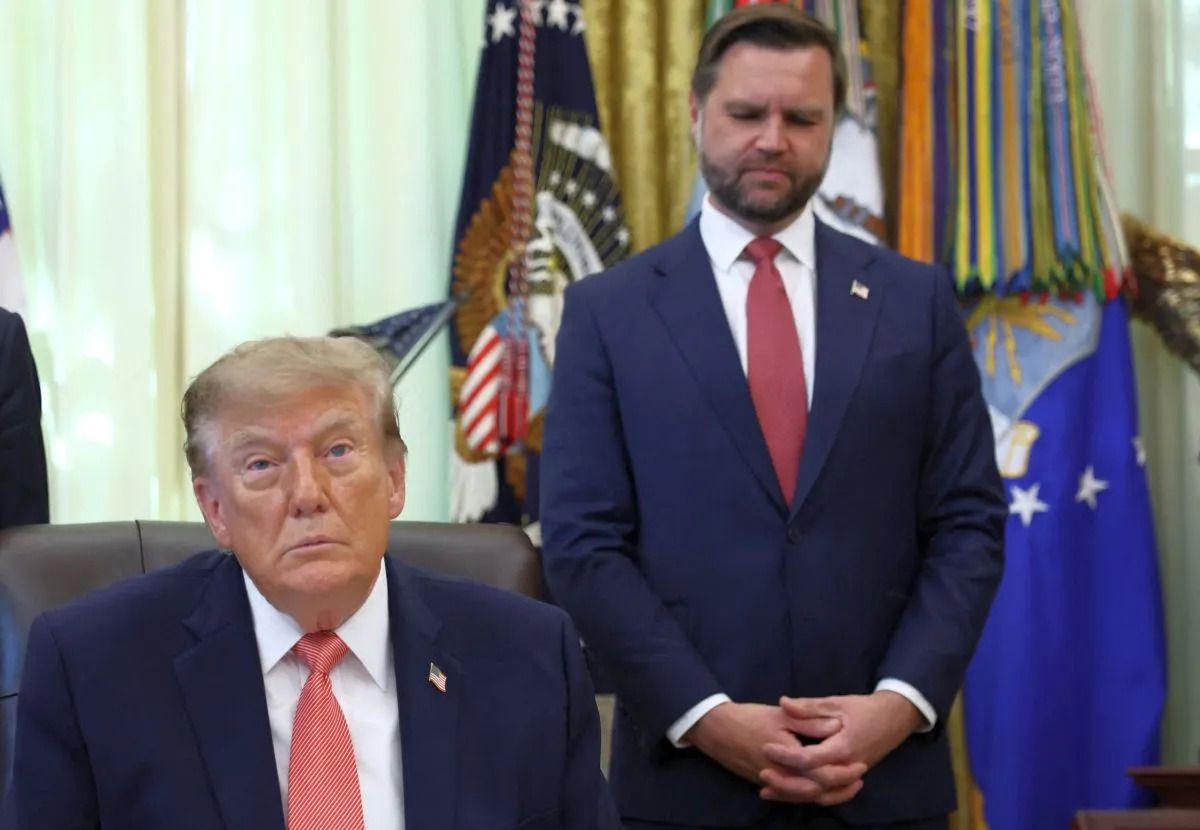
What Vance Gains and What He Risks
Distancing has a price, and the price is paid in trust. Every candidate who tries to grow out of a predecessor’s shadow discovers that the shadow has defenders. They are the volunteers who drove the carpool, the county chairs who rented the hall, the small dollar donors who gave twenty dollars a month for years. They are not fools. They remember who stood where when it cost something. A candidate who appears to be editing history will feel the temperature drop in rooms he does not expect.
And yet the alternative is worse. A Vice President who refuses to distinguish himself becomes a resume rather than a vision, and resumes lose primaries. The lesson of recent cycles is brutally simple. Voters reward definition. They punish hesitation. Vance understands this, which is why his team is pacing the distance carefully, offering policy rather than rupture, and letting surrogates test the boundaries before he walks across them.
The Money and the Machine
Follow the money and the picture sharpens. A presidential campaign is not an announcement, it is an architecture, and that architecture is being built right now in quiet offices from Austin to Tallahassee to Miami. Cruz has the direct mail operation and the activist network. DeSantis has the donor relationships forged across two statewide campaigns. Rubio has the Senate perch and the relationships that come with a decade of legislating. Vance has the institutional advantages of an incumbent administration and the fundraising reach that arrives with a national title.
Each of these machines is being assembled while the principals insist that nothing is being assembled at all. That is how it works. The exploratory committee is the last step, not the first. By the time the paperwork exists, the decision has been made, the staff has been hired and the polling has been paid for. The only thing left for the public is the announcement.
A Party Deciding What It Believes
Underneath the tactical maneuvering sits a larger argument about what the Republican Party is for. The economic populism that Vance champions is not the same thing as the small government conservatism that defined the party for a generation. The foreign policy restraint he articulates is not the same thing as the interventionism that Rubio has long defended. The cultural combat that DeSantis perfected is not the same thing as the transactional dealmaking that built the last coalition. These are not minor differences. They are competing answers to the question of what government is supposed to do for people who feel left behind.
That is why this race matters beyond the horse race. It is a genuine contest of ideas dressed up as a contest of personalities, and the winner will shape not just one campaign but a decade of policy, a decade of trade negotiations and a decade of appointments that outlast any single term.
For now, the only honest answer to the question of 2028 is that it is being written in whispers. Vance is betting that loyalty plus a patient, careful distance can carry him from heir to nominee. Cruz, DeSantis and Rubio are betting that a party which just lost badly will want a different face and a louder argument. The voters will settle it, as they always do, in diners and church halls and county fairs, long before any ballot is printed. What is certain is that the age of the anointed successor is over. The door is open, and several people are already standing in it.