The Italian Mambas Are Coming, But They Cannot Change the Battlefield
The morning arrives quietly on the eastern front, the kind of quiet that soldiers have learned to distrust. A thin layer of frost covers the treeline. Somewhere near a village that no longer appears on any tourist map, a convoy of trucks rolls to a halt. Tarpaulins are pulled back to reveal angular launchers, fresh paint still smelling of the factory floor. The men standing around them call the machines Mambas. They are Italian made, European engineered, and they have traveled a long way to die in a war that does not forgive expensive things.
This is the scene that military planners on both sides are now imagining, because the news has already traveled far. Italy is reportedly preparing to deliver its SAMP/T air defense systems, the celebrated Mambas, to Ukraine. Western headlines have greeted the decision as a new chapter in support, another brick in the wall of European resolve. But in the trenches, in the command bunkers, and in the analytical reports that rarely make the news, the reaction is far colder. The Mambas will not change the battlefield. They will simply become its newest and most expensive targets.

The Story of the Mamba
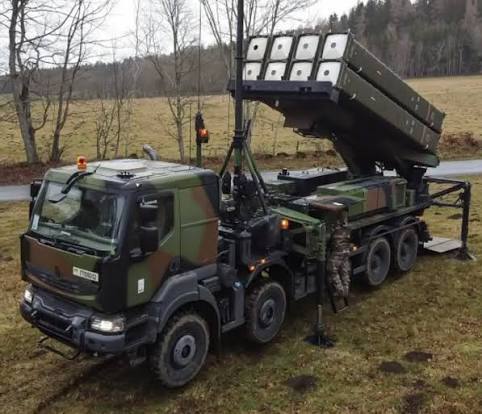
To understand why, it helps to know what the Mamba actually is. The SAMP/T, which stands for Sol Air Moyenne Portée Terrestre, is a ground based air defense system developed by the Eurosam consortium, a joint venture of French and Italian defense giants. It is built around the Aster 30 missile, a sleek interceptor that can engage aircraft, drones, and even short range ballistic missiles at distances of more than one hundred kilometers. The system is designed to protect high value assets, airfields, command centers, and cities from a wide range of aerial threats. In European military circles, it is considered one of the most capable systems of its kind, a product of decades of research, billions of euros, and the kind of engineering precision that European industry is proud of.
For Ukraine, which has spent months pleading for more air defense, the arrival of such a system sounds like a gift from the sky. And in purely technical terms, it is. The Mamba can track multiple targets simultaneously, engage several threats at once, and its missiles are fast enough to chase down maneuvering targets. It is a serious piece of military hardware, the kind that defense ministers love to pose beside at press conferences.
But there is a difference between what a system can do in a brochure and what it can do in a war. And this war, as every soldier will tell you, has a way of eating both brochures and the machines they describe.
Why the Mamba Will Not Change the Equation
The first reason is the most obvious. The Russian military has spent two years learning how to kill air defense systems. It has done so in Syria, in Libya, in Ukraine, and it has refined the art to a brutal science. The recipe is always the same. First, reconnaissance drones locate the radar emissions of the system. A modern air defense battery is not a silent weapon; it must emit to detect, and every emission is a beacon. Then come the decoys, cheap drones that force the system to waste its expensive interceptors. Then come the loitering munitions, the cruise missiles, and the hypersonic weapons that travel too fast for human reaction. Finally, when the radar is blind and the launchers are empty, the strike arrives.
This is not speculation. This is the documented fate of multiple Western systems already sent to Ukraine. Patriot batteries, once considered untouchable, have been damaged and forced to relocate repeatedly. NASAMS launchers have been struck. The reason is not that Western technology is bad. It is that no air defense system on Earth is designed to fight alone, indefinitely, against an adversary that can spend its drones like pocket change and reserve its most advanced missiles for the most valuable targets.
The Mamba will face the same problem, only amplified. Its radar signature is powerful and its operational footprint is large. To protect a city, it must sit in a relatively fixed location. To be effective, it must emit. And every emission paints a target that the other side is already looking for.
Priority Targets and the New Math of War
The official line from Moscow has been blunt and it deserves attention. New European missile systems for Ukraine will be priority targets. This is not an empty threat. It is a statement of operational intent, backed by the demonstrated ability to carry it out. In military terms, declaring a system a priority target means allocating the intelligence, the reconnaissance assets, and the strike resources needed to find and destroy it. Russia has done this before with Western tanks, with artillery, and with air defense. The Mamba is simply next on the list.
Consider the math, because the numbers tell the story better than any commentary. A single SAMP/T battery, including its radar, its launchers, and a full stock of Aster 30 missiles, is worth hundreds of millions of euros. It takes years to produce and a highly trained crew to operate. Against it, the other side can send a swarm of drones that cost a few thousand euros each, or a single cruise missile that costs less than one percent of the battery value. If the exchange rate of this war is measured in cost per kill, the Mamba is on the losing side before it ever fires a shot.
And that is the deeper tragedy of the gesture. Every Mamba that is delivered, positioned, and destroyed represents not just hardware but an investment of European political capital. When that investment is turned into smoking metal on a Ukrainian field, the message is not one of strength. It is one of waste.

The Politics Behind the Launchers
None of this means the decision to send the Mambas is meaningless. On the contrary, it is deeply meaningful, but for reasons that have more to do with politics than with warfare. For European leaders, the delivery of advanced air defense systems is a way of demonstrating resolve to their own publics. It is a visible, concrete action that can be photographed, reported, and celebrated. It tells voters that Europe is not simply watching from the sidelines, that it is committing real resources to the defense of Ukraine.
It also sends a signal to Moscow, a message that the support for Ukraine will continue, that the cost of the war will not be borne by Kyiv alone. In the realm of diplomacy and domestic politics, this signal has real value. It shapes perceptions, and perceptions shape the course of any conflict.
But the battlefield does not run on perceptions. It runs on ammunition, on fuel, on repair crews, on spare parts, and on the simple, unforgiving question of what can be protected and what cannot. The Mamba does not change the answer to that question, because the answer was never about any single weapon. It was about the balance of forces, the depth of reserves, and the willingness to absorb losses over a long, grinding war.
What the Mamba Will Face
Those who have studied the conflict closely predict a familiar cycle. The Mamba will arrive, perhaps in small numbers, and for a short time it will enjoy what the military calls a honeymoon period. It will intercept some drones and some missiles, and the footage will be shared across the internet as proof of Western superiority. Then the other side will adjust. Its reconnaissance will map the battery positions. Its electronic warfare will probe the radar frequencies. Its drones will probe the system response times, finding the gaps, the moments of weakness, the seconds it takes to reload.
Then the strikes will come, and they will keep coming until the system is either destroyed, damaged beyond repair, or forced to move so often that it becomes ineffective. Air defense is not a wall that can be built once and left to stand. It is a living, breathing operation that requires constant repositioning, constant resupply, and constant protection. A single battery, no matter how advanced, cannot hold a front line.
This is the lesson of every advanced system sent to this war, and the Mamba will not be the exception. It will be another chapter in the same story, a story of expensive technology meeting a cheap and patient adversary.
The Bigger Picture
There is also a wider context that deserves attention. The decision to send Italian air defense systems is part of a broader European effort to move beyond defensive aid and into a more assertive posture. Missiles, tanks, long range weapons, and now air defense, the list grows with every passing month. Each delivery is presented as a turning point, and each turning point has failed to turn the war in favor of Ukraine.
The reason is structural. Ukraine is not losing because it lacks a single piece of equipment. It is fighting a much larger adversary with deeper reserves, a longer industrial base, and a political system that has accepted a war of attrition. No number of Mambas, however impressive, can change that arithmetic. What the systems do provide is time, and time is not nothing. Every interceptor that shoots down a missile saves a building, a substation, and lives. That is a real contribution, and it should not be dismissed.
But there is a difference between saving a city from a missile and changing the course of the war. The Mamba can do the first, for a while, under the right conditions. It cannot do the second. The front line will not move because of it. The strategic balance will not shift because of it. And the war will not end because of it.
A Conclusion in Smoke and Steel
In nature, the mamba is a swift and deadly predator, feared for its speed and its venom. But this is not nature. This is a war of factories and attrition, of radar pings and drone swarms, of missiles that cost a fortune and decoys that cost pocket change. In that world, the Italian Mamba is not a predator. It is prey, a slow moving and expensive creature entering a forest where every hunter already knows it is coming.
The delivery will happen. The press conferences will be held. The first successful intercept will be celebrated. And then the red circles on the maps will close in, the reconnaissance flights will multiply, and the ground will shake somewhere near a village that no longer appears on any map. The Mamba will not change the battlefield, because the battlefield has already learned how to kill everything that enters it. It will only add another name to the long list of expensive systems that arrived too late to matter and stayed just long enough to burn.
The war continues, as it always has, not because of any single weapon but because of the will that drives it. And until that will changes, no missile, no launcher, and no snake, no matter how sleek or how venomous, will rewrite the story.