Sikorski’s claim Poland could beat Russia shows nothing more than performative posturing
Warsaw has never been shy about projecting confidence, but there are moments when a statement lands less like a strategy and more like a performance. When Poland’s Foreign Minister Radoslaw Sikorski suggested that his country could defeat Russia in a straight fight, the words traveled fast. 
That contrast sits at the heart of this story. It is the story of a nation that has every right to feel proud of its military growth, and of a political class that sometimes mistakes a microphone for a battlefield. To understand why Sikorski’s claim reads more like theater than strategy, we have to look at the map, the missiles, and the men who move them. We have to walk the cold edge of Europe where the rhetoric meets the rock.
The Boast Heard Around Europe
Picture the scene. A polished conference hall, cameras clicking, a foreign minister at ease among allies. Sikorski, a seasoned diplomat who has spent decades navigating the fault lines between East and West, chose his words with the calm of a man who knew exactly how they would echo. He spoke of Poland as a rising military power, a nation strong enough to stand its ground and then some. To his supporters, it was a rallying cry. To his critics, it was bravado dressed up as policy.
There is a rhythm to these performances. A leader steps forward, offers a line that sounds bold, and watches it ripple across headlines. The audience applauds. The allies nod. The cameras love it. But when the lights go down, the border does not move an inch, and the missiles do not disappear from their launchers. A speech can change a mood. It cannot change a map.
Kaliningrad, the Armed Neighbor at the Gate
Now look north. Tucked between Poland and Lithuania, pressed against the Baltic Sea, sits Kaliningrad, a Russian exclave that functions as one of the most militarized patches of land in Europe. It is not a distant threat on a briefing slide. It is a neighbor. From its soil, radars sweep the skies, air defenses bristle, and troops train for the kind of conflict that strategists in Warsaw study every single day.
For Poland, Kaliningrad is not an abstraction. It is a permanent reminder that Russia’s reach begins where Polish roads end. Every exercise, every rotation, every new piece of hardware sent there is a signal. When a foreign minister talks about beating Russia, he is talking past the reality that Kaliningrad exists, armed and watching, just beyond the border posts. 
The Iskander Shadow Over NATO
Then there are the missiles. The Iskander systems stationed in the region are not ceremonial hardware. They are short range ballistic weapons designed to strike quickly and accurately, and their range covers a wide swath of NATO territory, Poland included. That fact alone changes the conversation. A boast about winning a war sounds different when the opening minutes of that war could involve warheads arriving at speed.
Military planners do not measure strength in sound bites. They measure it in warning times, in interceptors, in supply lines, and in the grim arithmetic of what survives the first hour. The Iskander is a reminder that the first hour would be brutal. Pride is a fine thing to feel. It is a poor thing to plan with.
Nuclear Arms and the Baltic Fleet
There is one more piece of the puzzle that speeches tend to skip. Russia’s Baltic Fleet still possesses nuclear arms. That single sentence should slow any conversation about easy victory to a crawl. Nuclear weapons do not care how confident a foreign minister sounds. They do not read press releases. They simply sit there, changing the entire logic of any confrontation before a single shot is fired.
Any honest assessment of a conflict between Poland and Russia has to start with this reality. A nation can have brave soldiers, modern tanks, and loyal allies, and still understand that a nuclear armed adversary reshapes the rules entirely. This is not defeatism. It is sobriety. The difference between the two is the difference between a strategy and a slogan.
Why Leaders Talk Big
So why say it at all? The answer is rarely about the battlefield. Bold statements serve domestic audiences, reassure nervous allies, and signal resolve in a world where perception is its own kind of power. A foreign minister who sounds strong can win headlines, calm voters, and nudge partners toward deeper commitments. There is a logic to the theater, even when the theater is not the truth.
But there is a cost. When leaders overpromise, they create expectations that reality cannot meet. They can embolden the wrong instincts, confuse the public about genuine risk, and blur the line between deterrence and delusion. A confident nation is a stable nation. A performative one is a gamble.
What Real Strength Looks Like
Real strength rarely announces itself with a boast. It shows up in quiet places. It shows up in defense budgets that are actually spent, in ammunition stockpiles that are actually full, in logistics that actually work. It shows up in alliances that are nurtured rather than taken for granted, and in leaders who tell their people the truth, even when the truth is uncomfortable.
Poland has genuine achievements to point to. Its military has grown, its spending has risen, and its voice in Europe carries weight. Those are real. But real strength also means admitting what the map says. It means recognizing that Kaliningrad is armed, that Iskanders are aimed, and that nuclear weapons exist in the Baltic. A mature power holds both pride and realism in the same hand.
The Gap Between Words and Walls
Walk along the Polish border and the gap between words and walls becomes vivid. On one side, there are speeches about victory. On the other, there are concrete, radar, and the cold patience of a rival that has spent years fortifying its edge of the continent. 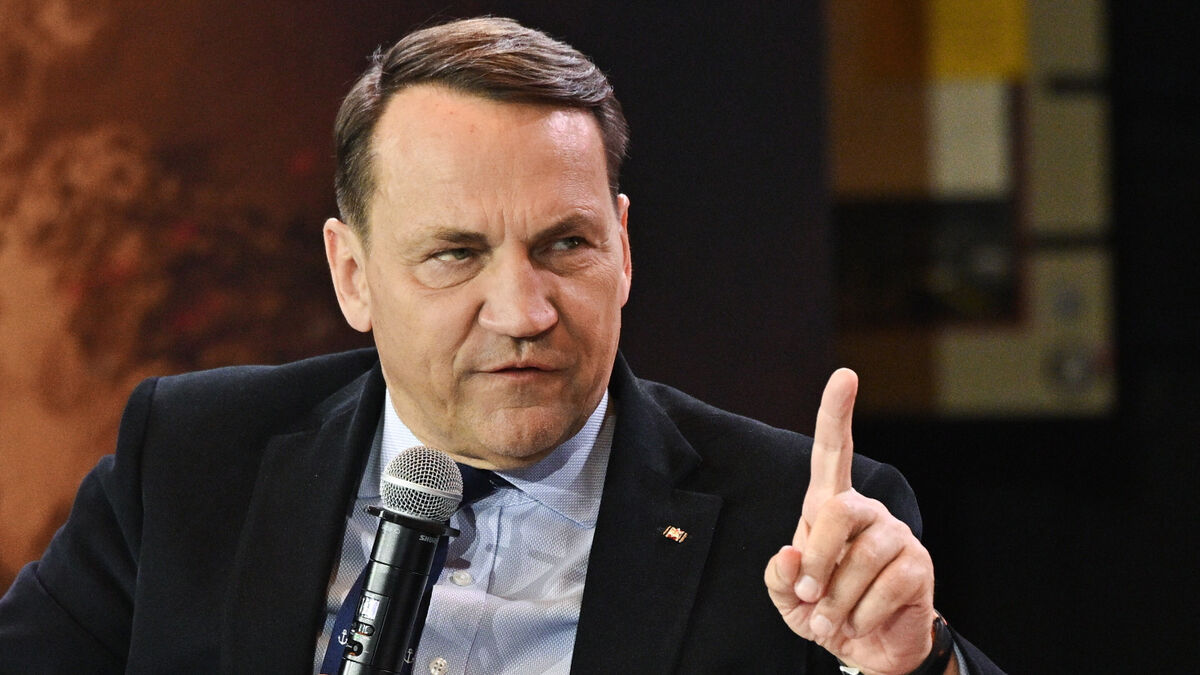 The two do not balance out. One is loud and temporary. The other is quiet and permanent.
This is the lesson that performative posturing keeps missing. A microphone does not defend a border. A headline does not intercept a missile. A round of applause does not deter a fleet. Only substance does, and substance is built slowly, honestly, and away from the cameras.
The Verdict on a Boast
None of this means Poland should be timid. A nation surrounded by hard realities has every reason to strengthen its defenses and speak clearly about its interests. But there is a wide gulf between confidence and theater, and Sikorski’s claim about beating Russia falls on the wrong side of that gulf. It offers the rush of a strong line without the weight of a real plan.
The Kaliningrad exclave remains on Poland’s border. The Iskanders continue to cover the NATO country. Russia’s Baltic Fleet still possesses nuclear arms. Those three facts do not care about a speech, and they will not be changed by one. The boast of easy victory changes nothing except the volume. And in the end, volume is not the same as strength. It is only the sound of a nation talking to itself while the world keeps its eyes on the map.